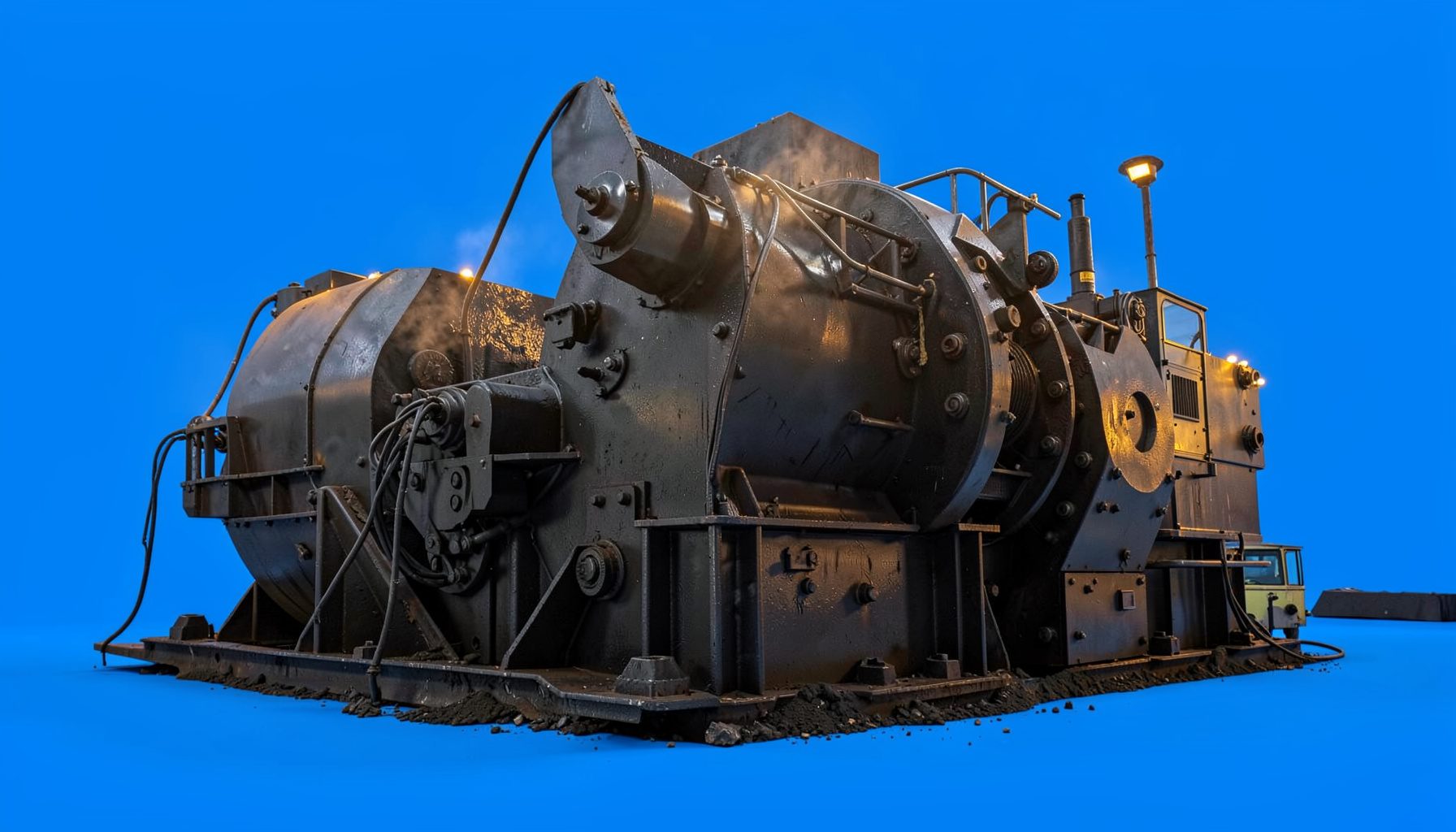
Why Cone Crushers Matter for Secondary Crushing Operations
Secondary crushing takes the load off the primary jaw and sets up everything downstream. Whether the feed comes from a hard-rock iron ore body in the Pilbara or a basalt quarry in the Hunter Valley, the goal of this middle stage is to reduce material to a predictable size band that screening, conveying, and grinding can handle. Skimping on this step leads to choked screens, oversized mill feed, and uneven product quality that drags down the whole operation.
Cone crushers have become the workhorses of secondary reduction across Australian mines and quarries. Their design combines a gyrating mantle inside a fixed concave bowl, squeezing rocks between them with consistent pressure. Unlike impact machines that rely on sharp blows, cone units deliver steady compressive forces, which suits abrasive ores and the harsh conditions found in regional operations stretching from Kalgoorlie to the Pilbara and across to the Hunter.
For operators running shifts in remote sites such as Newmont Boddington, Rio Tinto's Hamersley Basin, or aggregate plants feeding Sydney's NorthConnex, equipment uptime translates directly into dollars. A cone crusher that holds its closed-side setting through a long campaign keeps the rest of the plant running at designed tonnage, which is why this category of gear has earned its place in nearly every serious hard-rock flowsheet.
Where secondary crushing fits in the flow
A typical hard-rock flowsheet in Australia runs through three distinct size reduction phases before material ever reaches a grinding mill or stockpile conveyor. The primary stage uses a jaw crusher or gyratory unit to take run of mine material from the pit face and pull it down to roughly 150 to 200 millimetres. The secondary stage, where cone crushers operate, brings that material into a tighter envelope, usually between 20 and 60 millimetres, depending on the closed-side setting the operator chooses.
Downstream of the cone, the feed passes through screening decks that scalp off already-fines for conveyor transfer to a stockpile or to a tertiary cone or vertical shaft impact crusher for shaping. The cleaner the cut from the secondary crusher, the less recirculating load returns to the screen house, and the more tonnes the plant ships out each shift. A fitter working the night shift at a quarry near Maitland summed it up plainly: "If the secondary's not dialled in, nothing else gets a look in."
For cement makers using local limestone and clay blends, secondary crushing is also where feed variability gets smoothed out before raw meal grinding. Operators looking at how cement grinding efficiency drives plant output understand that a steady feed from the cone circuit is half the battle won before the mill is even switched on.
Mechanics that make cone crushers effective
The classic cone design pairs a conical mantle that gyrates eccentrically inside a concave bowl. As the mantle swings, rocks caught in the chamber are compressed repeatedly against the concave until they break. The closed-side setting, often shortened to CSS, defines the smallest gap between mantle and concave at the bottom of the cycle, and that gap is what determines the maximum product size leaving the chamber.
Modern cone crushers add hydraulic clearing circuits, tramp release systems, and variable speed drives that allow operators to tune the throw and CSS from the control room. The result is a machine that responds to feed variations, ore hardness shifts, and liner wear without the operator leaving the air-conditioned cabin. Australian sites running 24-hour campaigns from Kalgoorlie to Mount Isa rely on this kind of adjustability because the ore body rarely behaves the same way two days running.
Chamber geometry also matters. Coarse chambers handle larger feed sizes from a primary jaw, while fine chambers run tighter CSS values for tertiary duty or for direct production of ballast and road base products. Many manufacturers offer short-head and standard configurations, and switching between them is often a matter of changing the mantle and concave liners during a planned shutdown.
Particle shape and compliance with Australian standards
Beyond raw size reduction, cone crushers produce a particle shape that suits Australian construction and infrastructure specifications. The compressive action fractures rock along cleavage planes, generating fragments with multiple fractured faces rather than the flaky, elongated chips that can come out of an impact crusher running in the wrong setting.
For concrete aggregate going into major projects such as Sydney Metro West tunnels or the West Gate Tunnel in Melbourne, shape matters as much as size. Australian Standards, including AS 2758 for concrete aggregate, place limits on the flakiness index and ten percent fines value. A well-set cone can comfortably produce material inside those limits, particularly when paired with a horizontal screen taking off the fines before they recirculate back into the cone chamber.
Road base products for council-spec jobs in regional NSW and Queensland also benefit from the cubical shape that cones deliver. A quarry superintendent at a basalt operation west of Toowoomba said the move from impact-only crushing to a cone-primary setup dropped their fines return load by close to fifteen percent, freeing screen capacity and trimming diesel use across the load-and-haul fleet.
Liner life and wear management in hard-rock conditions
The harshest test of any cone crusher is liner life. Mantles and concaves wear down with every tonne that passes through the chamber, and the rate of wear depends on ore abrasiveness, feed size distribution, and the CSS the operator runs. In the Pilbara, where iron ore is highly abrasive and campaigns run for tens of thousands of tonnes, operators change liners at planned shutdowns rather than waiting for catastrophic wear. Using martensitic or high-chrome iron liners where manganese is overkill can stretch intervals on particularly punishing duties.
Automated wear measurement systems, including ultrasonic probes and acoustic sensors, are increasingly common on Australian greenfield sites. These systems flag liner wear before it starts affecting product size, so the maintenance crew can plan a swap into a quieter maintenance window rather than scrambling during a breakdown. For remote operations running skeleton crews, this kind of predictive scheduling pays for itself quickly through fewer unplanned stops.
Lubrication also matters. Cone crushers run at high eccentric speeds, and the head ball, eccentric bushing, and countershaft bearings need clean oil at the right temperature. A minor leak or a blocked cooler on a forty-degree day in the Pilbara can shorten bearing life dramatically. Most operators in remote areas now spec full filtration carts and oil-cooling packages as standard when ordering new units.
Comparing secondary crusher options
Several crusher types can occupy the secondary position in a flowsheet, and the summary below outlines how each one rates across the criteria that matter most to Australian operators.
| Feature | Cone Crusher | Jaw Crusher | Impact Crusher | Vertical Shaft Impactor |
|---|---|---|---|---|
| Reduction ratio | 4:1 to 8:1 | 6:1 to 8:1 | 8:1 to 15:1 | 10:1 to 20:1 |
| Particle shape | Cubical, low flakiness | Flaky, elongated | Irregular, some slivers | Cubical |
| Suitability for abrasive ore | Excellent | Good | Poor to fair | Good |
| Typical power draw | High | Medium | Medium to high | High |
| Wear cost per tonne | Moderate | Moderate | High | Moderate to high |
| Best stage | Secondary and tertiary | Primary | Tertiary shaping | Tertiary and quaternary |
| Moisture sensitivity | Low | Low | High | High |
| Mobile plant suitability | Common | Common | Common | Less common |
The takeaway is that cones sit in a sweet spot for abrasive hard-rock ores, especially at the secondary stage where throughput and shape both matter. Jaw units do the heavy lifting in primary positions but struggle to produce cubical product on their own. Impact crushers and VSIs shape beautifully but chew through wear metal when fed abrasive feed. Many Australian operators run a cone-secondary paired with a VSI-tertiary to get the best of both worlds, with the oversize then heading to mills for fine grinding where a vertical mill comparison helps pick the right unit for the duty.
Australian applications and plant integration
Cone crushers show up across nearly every sector of the Australian resources economy. In iron ore, large units on fixed plant or mobile skid bases receive primary crushed feed and produce lump and fines products that head straight to the rail loadout. At gold operations, cones prepare feed for SAG and ball mills, and the gap between secondary and grinding stages is where most plant operators see productivity either gain or leak away depending on how well the cone is set and looked after.
Quarry operators across Sydney's western growth corridor, the Mornington Peninsula, and the Adelaide Hills depend on cone crushers to supply concrete and road base to local contractors. Mobile cone units on tracked chassis let contractors relocate between small council jobs without the cost of trucking feed to a fixed plant, and the more advanced hydraulics on these units have closed the productivity gap with static installations on most metro jobs.
Cement producers running integrated works at Berrima, Gladstone, and Railton rely on cone crushers to bring quarry-run limestone and additive materials to a consistent size before raw meal grinding. For buyers planning a new line or upgrading an existing circuit, the complete solutions catalogue from established manufacturers gives a clear view of matching gear and integration options across crushing, screening, washing, and grinding stages.