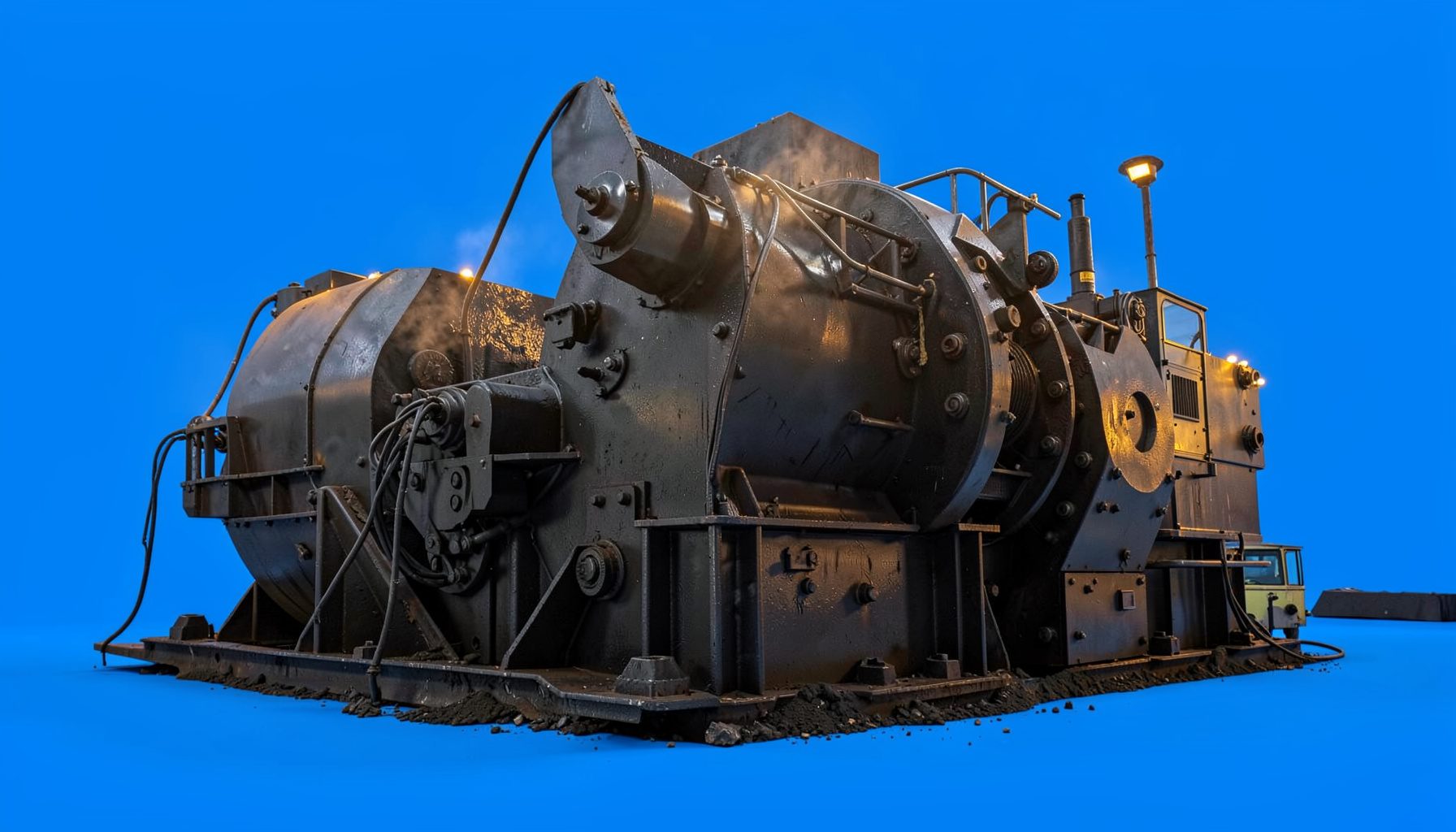
Vertical Mill vs Trapezium Mill for Mineral Grinding
Mineral grinding equipment has a direct effect on product quality, energy consumption and the operating cost of a processing plant. Two common options are vertical mills and trapezium mills, both of which reduce material to a controlled powder for use in cement, construction products, mineral fillers and industrial processing.
Although the machines may appear similar from a distance, their internal grinding systems and operating strengths are different. A vertical mill generally uses grinding rollers pressed against a rotating grinding table, while a trapezium mill uses grinding rollers suspended from a rotating assembly inside a ring-shaped grinding chamber.
The best choice depends on the feed material, required fineness, moisture level, throughput target and available maintenance resources. A high-capacity cement or mineral plant may favour a vertical roller mill, whereas a smaller operation seeking flexible control of medium-fine powders may find a trapezium mill more suitable.
Australian conditions make the decision particularly important. Quarry operators near Melbourne, Brisbane and Sydney often manage strict dust and noise requirements, while mining projects in Western Australia and Queensland must consider remote access, water availability, spare-parts logistics and long-distance transport between the mine and processing facility.
How Each Mill Grinds Material
A vertical mill feeds crushed material onto a rotating table. Rollers apply pressure as the table turns, and hot gas passes through the grinding zone to lift fine particles towards a classifier. Coarse particles fall back onto the table for further grinding, while material that reaches the selected size leaves with the air stream.
This arrangement combines grinding, drying and classification in one compact unit. The grinding force is primarily compression, which is efficient for many brittle materials such as limestone, clinker, coal, slag and selected ores. The vertical layout also reduces the floor area required compared with some conventional horizontal grinding circuits.
A trapezium mill operates through a set of suspended rollers that rotate around a central shaft while pressing against a grinding ring. Feed material enters the grinding chamber, is crushed and ground between the rollers and ring, and is then carried upwards by an airflow to a classifier. Oversized particles return to the grinding zone.
Modern trapezium mills may include improved roller suspension, higher-pressure grinding components and adjustable classifiers. They are designed for reliable production of fine and medium-fine powders, particularly where a plant needs a straightforward dry grinding process with moderate capital requirements.
Feed Material and Product Fineness
Vertical mills are well suited to large and continuous production lines. Their compression-based action can handle relatively hard feed when the upstream crusher provides a consistent size distribution. In cement manufacturing, a vertical roller mill can grind raw meal, fuel and clinker-related materials, depending on the configuration and process design.
The machine is also useful where feed contains residual moisture. Heated process gas can dry the material during grinding, reducing the need for a separate dryer. This is valuable for mineral deposits or industrial by-products that arrive damp after washing, stockpiling or exposure to seasonal rainfall.
Trapezium mills are commonly selected for limestone, dolomite, gypsum, talc, kaolin, barite and other non-metallic minerals. They can produce a controlled range of powder sizes for concrete additives, paint extenders, road materials and manufactured sand-related applications. Their classification system allows the finished product to be adjusted without changing the entire grinding circuit.
The practical fineness range depends on the model, classifier, material characteristics and operating conditions. A vertical mill may deliver high throughput at a moderate-to-fine size, while a trapezium mill can be attractive when the required product is fine but the plant does not need the very high capacity associated with a large integrated grinding line.
Capacity Energy and Moisture
For high-volume operations, the vertical mill’s combined grinding, drying and classification functions can reduce the number of separate machines and transfer points. Fewer conveyors, elevators and intermediate storage stages may lower auxiliary power demand and simplify the plant layout. This is especially relevant when a facility must process thousands of tonnes per day.
Energy performance still depends on material hardness, product fineness, grinding pressure, airflow and classifier settings. A poorly balanced system can create excessive recirculation, unstable vibration or high fan power. Correct feed preparation and automatic control are therefore essential to achieving the expected efficiency.
Trapezium mills generally suit low-to-medium and medium-to-high production duties, depending on their size and configuration. They offer a practical solution for producers that need several powder grades or operate multiple smaller lines rather than one large central mill. This modular approach can make staged expansion easier for Australian quarry businesses.
Moisture is a key dividing factor. A vertical mill with suitable hot-air integration can accept wetter feed, while a trapezium mill may require pre-drying when the material contains substantial moisture. In regions such as North Queensland, where wet-season conditions can affect stockpiles, the cost and reliability of drying should be included in the equipment comparison.
Wear Maintenance and Plant Integration
Vertical mills have fewer major moving parts than some traditional grinding systems, but their rollers, grinding table segments, hydraulic components and classifier parts remain subject to wear. Abrasive minerals can accelerate damage, particularly when tramp iron or unusually coarse feed enters the mill. A reliable magnetic separator and effective upstream screening can protect the grinding zone.
Maintenance access must be considered at the design stage. Large vertical mills may require lifting equipment, planned shutdowns and specialised wear-part handling. Remote mines in the Pilbara or the Northern Territory may need to hold critical spares on site because a delayed delivery from Perth or the eastern states can extend downtime.
Trapezium mills are generally familiar to maintenance teams that already operate crushers, feeders and air-classification systems. Roller and ring replacement can be scheduled according to wear measurements and product quality. Their comparatively accessible mechanical arrangement may benefit smaller plants that do not have a large resident reliability department.
Grinding performance also depends on the rest of the circuit. A stable vibrating feeder, correctly sized conveyor and properly controlled classifier are as important as the mill itself. Operators reviewing a complete crushing and grinding line can also examine guidance on crusher circuit performance, since inconsistent crusher discharge often becomes a grinding problem later in the process.
Applications Across Australian Operations
A vertical mill is often the stronger candidate for integrated cement works, mineral processing hubs and large industrial plants. It can support continuous operation, automated feed control and heat recovery from other parts of the process. In a cement facility near Newcastle or Adelaide, for example, the ability to grind and dry feed in a single system can improve material flow and reduce building requirements.
Large mining companies may also consider vertical mills for selected dry grinding duties where a steady ore supply and centralised control room justify the investment. However, ore variability must be assessed carefully. Some metallic ores require specialised stirred mills, ball mills or beneficiation equipment rather than either of these air-swept powder mills.
Trapezium mills are a useful option for quarry operators, independent mineral processors and regional manufacturers producing limestone powder, dolomite, gypsum or construction additives. A plant serving the Perth building market or the concrete industry around Brisbane may value a flexible mill that can produce different grades without the scale of a cement works.
Local working practices also influence the decision. Australian sites commonly place strong emphasis on guarding, isolation procedures, dust extraction, noise management and documented maintenance. A machine that is technically efficient but difficult to inspect or service may create higher whole-of-life costs, especially where skilled technicians travel on a FIFO schedule.
Selecting Equipment For Australian Plants
A sound selection process starts with a representative sample of the feed material. Testing should establish hardness, abrasiveness, moisture, bulk density and the desired product size. The test work should also examine whether the material changes significantly between dry and wet seasons, as this can affect the value of integrated drying.
Capacity should be calculated from the actual production schedule rather than a nominal peak figure. A quarry in Victoria may need flexible operation around local construction demand, while a mine-linked processing plant in Western Australia may require continuous service with minimal interruption. These operating patterns lead to different choices even when the target powder size is similar.
| Selection factor | Vertical mill | Trapezium mill |
|---|---|---|
| Typical operating scale | Medium to very high continuous production | Small to medium, with scalable multi-line arrangements |
| Main grinding action | Compression between rollers and rotating table | Compression and attrition between rollers and grinding ring |
| Moisture handling | Strong when hot gas drying is integrated | Usually requires drier feed or separate drying |
| Layout advantage | Combines grinding, drying and classification | Straightforward modular dry-grinding circuit |
| Best-fit materials | Cement raw meal, clinker-related feed, coal, slag and selected minerals | Limestone, dolomite, gypsum, talc, kaolin and similar non-metallic minerals |
| Maintenance profile | Planned shutdowns and specialised wear-part handling | Accessible roller and ring maintenance for smaller teams |
| Capital and control requirements | Higher investment with advanced automation | Often simpler for regional or independent producers |
| Australian fit | Large cement, mining and industrial processing sites | Quarries and mineral powder plants requiring product flexibility |
Vertical mills usually justify their higher investment when throughput, moisture control and process integration are priorities. Their automation can help maintain a stable product under changing feed conditions, but the plant needs competent commissioning, instrumentation and maintenance support.
Trapezium mills can provide a balanced solution when the product range is broad, the feed is reasonably dry and the required capacity is moderate. Shanghai CME Mining and Construction Machinery Co., Ltd. supplies grinding equipment alongside crushers, screens, feeders, conveyors and mobile crushing plants, allowing the mill to be considered as part of a complete mineral-processing arrangement rather than as an isolated machine.
The decision should ultimately reflect the full operating environment: feed preparation, airflow, dust collection, power supply, water availability, access to wear parts and the required product specification. For Australian users, the most economical mill is the one that maintains consistent output through local climate conditions and can be serviced reliably over its working life.