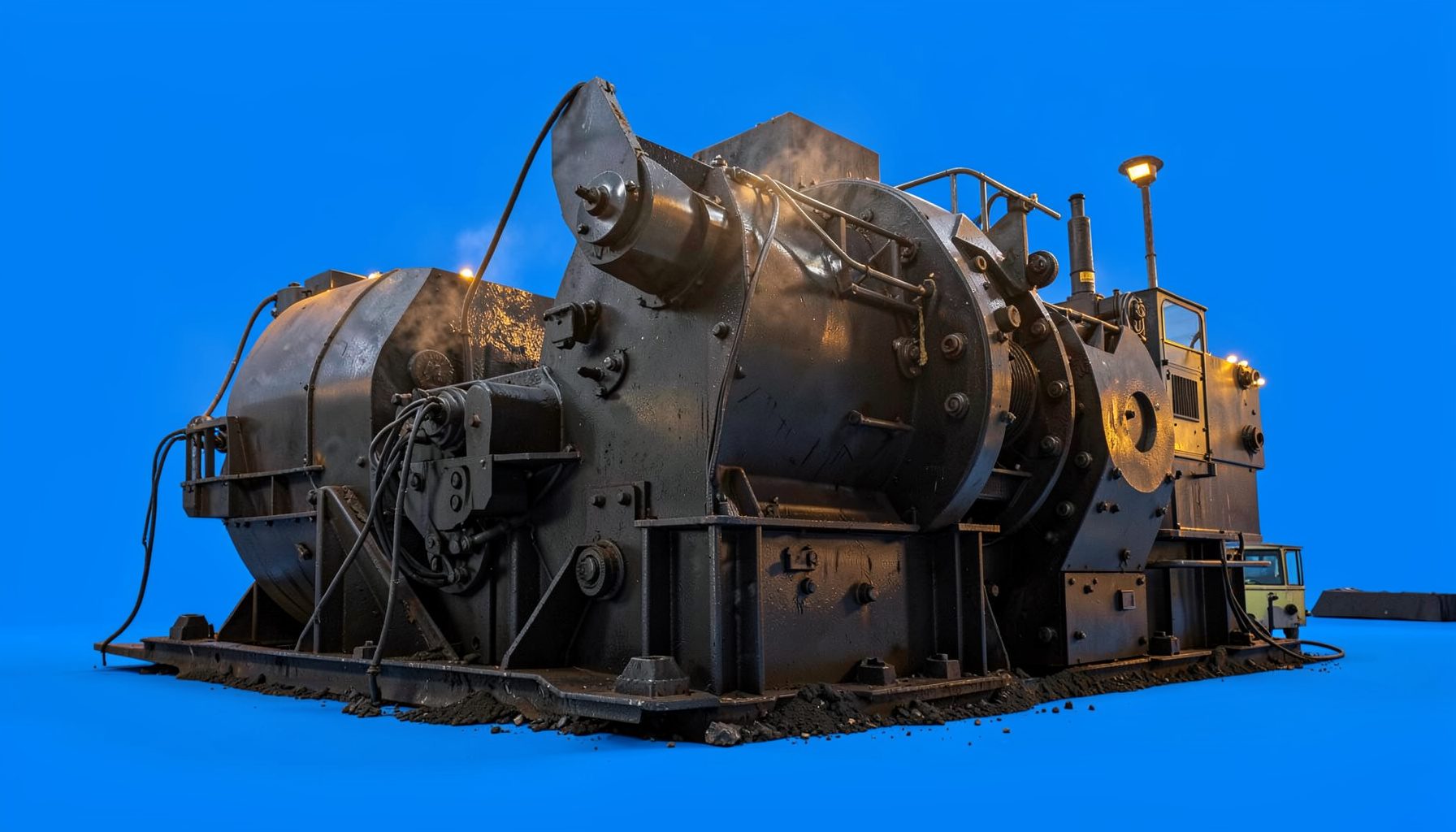
Understanding Gyratory And Cone Crushers In Mining
Selecting the right primary or secondary crusher has a direct effect on throughput, product quality, energy use and maintenance costs. Gyratory and cone crushers both use compression to break rock, yet their geometry, operating range and typical position in a processing circuit are quite different. Understanding those differences helps mine operators, quarry managers and plant designers match equipment to feed size, duty and site conditions.
For Australian operations, the decision may involve a high-capacity iron ore project in the Pilbara, a hard-rock quarry outside Brisbane, or an aggregate plant serving Melbourne’s expanding construction market. The best choice depends on more than a catalogue capacity figure. Feed characteristics, haulage distances, moisture, power availability, liner life and the required final product all need to be assessed together.
| Feature | Gyratory Crusher | Cone Crusher |
|---|---|---|
| Typical duty | Primary crushing | Secondary, tertiary or quaternary crushing |
| Feed size | Very large run-of-mine rock | Medium-sized material from a primary crusher |
| Crushing action | Compression between a mantle and concave | Compression between a mantle and concave |
| Capacity | Extremely high, suited to continuous operation | High, with flexible settings for different products |
| Product control | Generally less fine adjustment in primary duty | Precise closed-side setting and chamber options |
| Installation | Large foundations and substantial structural support | Smaller footprint and simpler installation |
| Best application | Large mines and high-throughput plants | Quarries, mines and aggregate circuits requiring shaped products |
Core Operating Difference
A gyratory crusher has a conical crushing head, known as the mantle, suspended within a concave shell. An eccentric arrangement causes the mantle to gyrate rather than rotate as a simple wheel. Rock fed from the top is compressed as the gap between the mantle and concave narrows, then falls through the wider opening as the crushing head moves away.
This design creates a deep, steep crushing chamber capable of accepting very large rocks. The feed opening is usually much larger than that of a cone crusher, and the crushing action continues throughout most of the chamber. Large gyratory units are therefore well suited to primary crushing, where blasted run-of-mine material must be reduced before it enters conveyors, stockpiles or downstream crushers.
A cone crusher follows the same broad compression principle but uses a shorter, more compact chamber and a rotating eccentric motion. Its mantle moves within a concave bowl, and the distance between these surfaces determines the size reduction. The machine is commonly choke-fed, meaning the chamber remains consistently full to support stable crushing and a more even product.
Where Gyratory Crushers Fit
Gyratory crushers are commonly selected for large open-cut mines where production rates are measured in thousands of tonnes per hour. Their ability to accept large blasted boulders can reduce the need for extensive primary breaking before material reaches the crusher. This is particularly valuable in bulk commodities such as iron ore, copper and gold, where the initial feed may be coarse and highly variable.
A fixed primary crusher can also support a long-life mine with a permanent processing plant. In Western Australia’s Pilbara, for example, a major iron ore operation may justify the civil works, heavy foundations, high-voltage supply and maintenance access required by a large gyratory installation. The machine’s continuous crushing action helps maintain flow into long overland conveyor systems.
The trade-off is scale. Gyratory equipment costs more to purchase and install, and the supporting structure must withstand substantial loads and vibration. Relocating one is difficult, so mine planners need confidence in the long-term pit development and plant location. A poorly selected gyratory crusher can leave a smaller operation carrying unnecessary capital and maintenance costs.
Where Cone Crushers Excel
Cone crushers are versatile reduction machines for secondary and tertiary stages. They can receive material from a jaw or gyratory primary crusher and produce a controlled discharge for screening, washing or further crushing. Different chamber profiles allow the same general machine type to handle coarse secondary work, fine aggregate production or hard-rock shaping.
The closed-side setting, liner profile and eccentric throw influence the final gradation. A larger setting allows more throughput and a coarser product, while a tighter setting produces smaller material at the cost of higher power demand and potentially greater liner wear. Modern hydraulic systems can also help clear the chamber if uncrushable material enters the feed.
Cone crushers are widely used in Australian quarrying because they can fit into compact circuits and serve several product specifications. A quarry near Sydney may need manufactured sand and road base, while a regional operation near Adelaide may produce concrete aggregate and railway ballast. With suitable screening and recirculation, one cone can contribute to several saleable sizes.
Capacity Product Shape And Control
Gyratory crushers generally provide outstanding capacity when accepting large feed continuously. Their large chamber and deep crushing zone allow operators to process material without the frequent interruptions associated with smaller primary machines. However, the discharge is usually intended for further size reduction, so the product may contain a broad range of sizes.
Cone crushers provide more control over gradation and particle shape. When operated with a full chamber and suitable liners, they can generate a more consistent product with a useful cubical profile. This matters in concrete and asphalt applications, where flaky particles can reduce workability or affect compaction. Product shape also influences the performance of screens, stockpiles and final blending.
Capacity should never be considered in isolation. A crusher rated for a particular throughput may perform differently when processing abrasive basalt, wet clay-bound ore or friable limestone. Operators should examine bulk density, moisture, compressive strength, abrasiveness and the target CSS before comparing models. Reliable feed distribution is equally important; segregation or intermittent loading can reduce the practical capacity of either crusher type.
For plants handling slurry or recycled process water, measurement quality also matters downstream. A useful explanation of turbidity sensor limits shows why a single optical reading may not fully represent changing solids conditions in wash circuits. This is relevant when crusher selection is part of a wider crushing, screening and washing design.
Installation Power And Maintenance
A gyratory crusher normally requires substantial concrete foundations, structural steel, lifting capacity and access for major component replacement. Its size can affect the entire primary station, including dump pocket geometry, apron feeders, rock breakers and conveyor transfer points. The layout must leave enough room for maintenance teams to remove the mantle, spider assembly and concaves safely.
Cone crushers generally have a smaller footprint, although large models still require robust foundations and careful alignment. Hydraulic adjustment and tramp-release systems simplify some operating tasks, while automation can monitor power draw, lubrication, temperature and chamber pressure. These features reduce the likelihood of extended damage when feed conditions change.
Maintenance planning remains essential for both machines. Mantles, concaves and bowl liners wear according to rock abrasiveness, feed distribution and operating settings. A crusher that is regularly choke-fed and protected from tramp metal may deliver longer liner life than one with a higher nominal rating but unstable loading. Australian sites must also account for long supply routes to remote regions, where holding critical spares can avoid costly production delays.
Dust, heat and water management influence equipment reliability. A dry summer near Perth can intensify airborne dust around transfer points, while wet-season conditions in northern Queensland can introduce sticky fines and access problems. Sealed lubrication systems, effective spray control, drainage and planned shutdowns are practical parts of crusher selection rather than secondary concerns.
Choosing For Australian Operations
The scale and remoteness of an Australian project are major decision factors. A large mine in the Pilbara may favour a stationary gyratory crusher because the operation has the throughput, infrastructure and mine life to support it. A mid-sized quarry in New South Wales may obtain better value from a jaw-and-cone arrangement that can be expanded as local demand grows.
Regulatory and community expectations also affect the design. Dust suppression, noise control, visual impact and water management can influence where a crusher is placed and whether the plant is enclosed. Near Melbourne, Brisbane or Perth, haulage distances and urban development may make a compact, efficient circuit more attractive than a very large installation. In remote areas, diesel generation, limited workshop facilities and fly-in, fly-out maintenance arrangements can alter the lifecycle calculation.
Feed variability should be considered alongside production targets. Hard, abrasive ore may favour a robust primary gyratory followed by heavy-duty cone crushers. Softer limestone may allow a different arrangement with lower energy demand. Clay contamination can require scalping before the primary crusher, while wet feed may call for grizzly bars, apron feeders or bypass arrangements to prevent blockages.
Mobile equipment can change the answer when a pit, road project or temporary quarry is expected to move frequently. For guidance on applications where relocation and short-term production matter, mobile crushing plants can be compared with fixed stations before civil works are committed.
Integrating Crushers Into The Plant
Crusher performance depends heavily on what comes before and after the machine. A gyratory primary crusher needs a suitable dump pocket, feeder and oversize-breaking strategy. A cone crusher needs consistent feed, a correctly sized screen and a recirculating conveyor if the circuit must meet a tight product specification. Transfer chutes should limit segregation, impact damage and spillage.
Plant balance is often more important than the maximum rating of one crusher. If the screen cannot separate material quickly enough, the cone will be starved or overloaded. If a conveyor has insufficient surge capacity, stoppages at the primary crusher can interrupt the whole circuit. A practical plant layout approach considers material flow, access, stockpile capacity, maintenance zones and future expansion.
Automation can help maintain stable operation by adjusting feed rate, CSS and recirculation according to power draw and chamber pressure. It does not remove the need for experienced operators, particularly when ore properties change. Regular sampling of feed and product confirms whether the crusher is producing the required gradation rather than simply reaching a tonnage target.
Equipment selection should therefore be evaluated as a complete circuit. Manufacturers such as Shanghai CME Mining and Construction Machinery Co., Ltd. supply crushing, grinding, screening, washing and conveying equipment for integrated mineral-processing applications; their wider equipment range illustrates how crushers can be considered alongside feeders, screens and conveyors.
Matching The Machine To The Duty
The clearest distinction is functional: a gyratory crusher is usually a high-capacity primary machine for very large feed, while a cone crusher is generally a flexible secondary or tertiary machine for controlled reduction. Their operating principles are related, but their chamber geometry, installation requirements and normal roles are not interchangeable.
A mine or quarry should begin with the duty rather than the preferred machine name. Define the feed envelope, required throughput, target products, operating hours, abrasiveness, moisture and expansion plan. Then compare capital cost, energy use, liner consumption, access requirements and the consequences of an unplanned shutdown.
For a large permanent mine, the capacity and ruggedness of a gyratory crusher may justify its substantial installation. For a quarry, construction project or staged development, cone crushing may offer the adjustment range and product control needed for commercial aggregates. In either case, the strongest result comes from balancing the crusher with the feeder, screen, conveyor, controls and maintenance strategy that surround it.