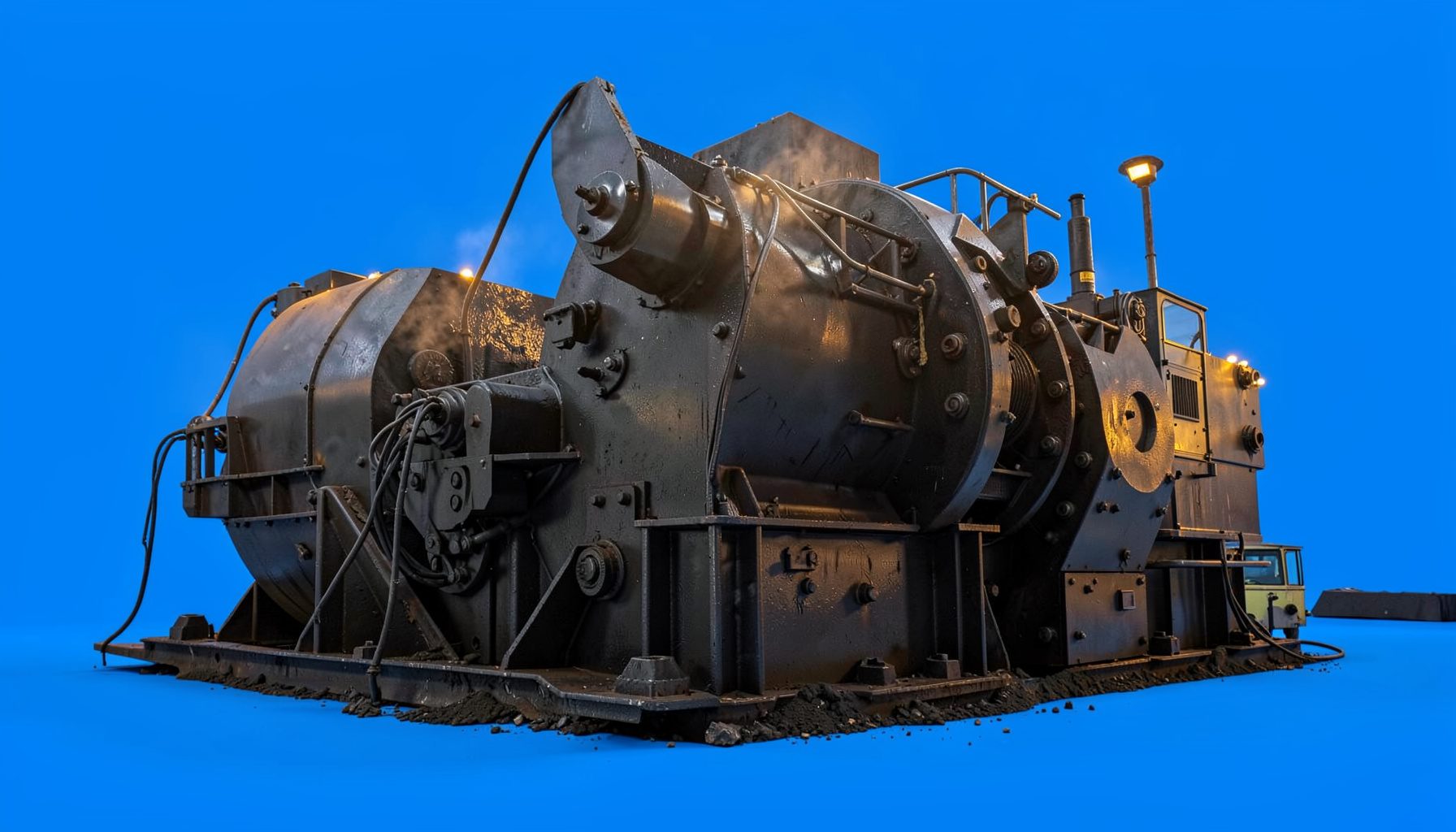
Buying a Used or New Crusher for an Australian Plant
Choosing between a used crusher and a new machine affects far more than the purchase price. The decision influences production capacity, maintenance planning, energy consumption, site safety, product consistency and the amount of working capital tied up in the plant. A low-priced jaw crusher can become expensive if it needs a major rebuild, while a new cone crusher may take longer to pay back than expected.
Australian operators also need to account for distance, weather, local approvals and the availability of skilled technicians. A quarry outside Perth, a hard-rock operation near Adelaide and a recycling plant in western Sydney can face very different costs even when they process similar tonnes per hour.
The right comparison begins with the duty required from the machine. Feed size, rock hardness, abrasiveness, moisture, target gradation and operating hours will determine whether a primary jaw crusher, impact crusher, cone crusher or complete mobile crushing plant is suitable. Plant layout and downstream screening capacity matter just as much as the crusher itself.
A sound buying process combines engineering checks with commercial discipline. Assess the whole crushing circuit, verify the machine’s history, calculate its cost per tonne and examine whether the supplier can support the equipment in Australia. That approach makes the choice between used and new equipment clearer and less dependent on headline price.
Define The Required Crushing Duty
Start with the material rather than the machine catalogue. Granite, basalt and iron ore place severe demands on liners, bearings and drive systems, while limestone and recycled concrete may allow a different configuration. A crusher selected for a soft quarry product can struggle when moved into abrasive hard rock, causing excessive wear and unstable output.
Document the expected feed size and the required final product. A primary jaw crusher may reduce run-of-mine rock to a manageable size, followed by a cone crusher for secondary or tertiary reduction. An impact crusher can be effective where shaping and cubical aggregate are important, especially in some quarrying and recycling applications.
The production target should be expressed in tonnes per hour under actual operating conditions, not merely the manufacturer’s maximum rating. Allow for choke feeding, liner wear, moisture, blockages, planned stoppages and the efficiency of the screen and conveyor system. If the crusher can produce 300 tonnes per hour but the screen can handle only 220, the additional capacity provides little value.
Compare Capital Cost With Whole-Life Cost
A used crusher generally offers a lower entry price and may be available quickly through a dealer, auction or plant relocation sale. It can suit a contractor testing a new market, a temporary project or a business that already has maintenance staff and spare components. Existing foundations, electrical equipment and conveyors may further reduce the installation cost.
The purchase price tells only part of the story. A pre-owned machine may require new mantle and concave sets, jaw plates, blow bars, belts, bearings, hydraulic hoses, relays or control upgrades. Freight from an interstate seller can also be significant. Transporting heavy equipment from Brisbane to a remote Western Australian project may involve permits, escorts, multiple trailers and long mobilisation delays.
New equipment normally carries a higher capital cost, yet it provides a clearer warranty position, current safety features and a known starting condition. It may also include commissioning, operator training, software support and recommended spare parts. When depreciation, finance, fuel, labour, wear parts, downtime and resale value are included, the difference in annual cost can be narrower than the initial quotes suggest.
For a useful comparison, calculate the expected cost per saleable tonne over the first three to five years. Include a realistic utilisation rate rather than assuming continuous operation. A crusher that is 25 percent cheaper but unavailable for several weeks during a major project can lose its apparent advantage very quickly.
Inspect A Used Crusher Before Purchase
A used machine should be inspected under safe conditions by someone familiar with crushing equipment. Request the serial number, service records, operating hours, previous applications, repair invoices and oil-analysis reports. Ask whether the crusher worked in a hard-rock quarry, a recycling yard, a mine or a less demanding application. Its past duty often reveals more than its age.
Check the main frame for cracks, welding repairs, distortion and corrosion. On a jaw crusher, inspect the cheek plates, toggle assembly, pitman, eccentric shaft and bearing housings. On a cone crusher, examine the head, bowl, main frame, lubrication system and hydraulic adjustment. For an impact crusher, check the rotor, blow bar seating, apron settings and internal wear surfaces.
A practical inspection includes measuring wear rather than relying on visual impressions. Record liner thickness, shaft play, belt condition, motor insulation, oil contamination and vibration. Start the crusher cold if possible, listen for unusual knocking or grinding, and monitor temperature and pressure during a loaded test. A machine that looks tidy after a cosmetic repaint may still have serious fatigue or alignment problems.
Electrical and control systems deserve equal attention. Confirm the motor rating, switchgear condition, PLC compatibility, emergency stops and guarding. Older imported equipment may need modifications to align with current Australian workplace expectations and site procedures. Obtain a written list of excluded items, because sellers sometimes offer the crusher without the feeder, magnet, lubrication skid, discharge conveyor or control cabinet needed for operation.
Examine New Equipment And Supplier Support
A new crusher should be assessed against the complete scope of supply. Clarify whether the quote includes the motor, starter or variable-speed drive, lubrication package, guards, feed hopper, dust suppression, platforms, spares, installation supervision and commissioning. A low quotation can become less attractive when essential auxiliaries are added later.
Ask the manufacturer for performance data based on the exact material and configuration. Confirm expected capacity, closed-side setting, product curve, power consumption and maximum feed size. These figures should relate to the proposed liner profile and operating conditions, not a generic brochure. For fine grinding after crushing, a vertical mill or trapezium mill may be needed, and the ultra-fine grinding principles should be considered separately from aggregate crushing duty.
Supplier support is especially important in regional Australia. Check the location of service technicians, spare-parts stock, response times and communication arrangements. A plant in the Pilbara may need critical bearings and hydraulic components held on site because a routine road delivery is not always routine. An Adelaide or Hunter Valley quarry may have easier access to contractors, yet still lose valuable production if a proprietary part must be shipped internationally.
Warranty terms need close reading. Establish whether travel, labour, freight, wear parts and consequential losses are covered. Confirm commissioning requirements, maintenance intervals and the evidence needed to preserve warranty protection. A strong supplier relationship can reduce risk, but it does not remove the need for a properly specified machine.
Review Used And New Options Side By Side
The following comparison provides a practical starting point. Actual outcomes depend on duty, age, brand, location, operating hours and the quality of the inspection.
| Consideration | Used Crusher | New Crusher |
|---|---|---|
| Initial capital cost | Usually lower, although freight and refurbishment can change the result | Higher purchase price and possible installation costs |
| Availability | May be available immediately if located in Australia | Lead time may include manufacturing and shipping |
| Condition certainty | Depends on records, inspection and operating history | Known starting condition with factory documentation |
| Warranty | Limited, expired or negotiated separately | Typically includes a defined manufacturer warranty |
| Technology | May have older controls, guarding and energy performance | Current controls, safety systems and efficiency features |
| Spare parts | Parts may be common, obsolete or difficult to source | Parts support is usually clearer, subject to supplier quality |
| Customisation | Modifications can be practical but may require re-engineering | Configuration can be selected before manufacture |
| Resale value | Dependent on remaining life and market demand | Often stronger during the early ownership period |
| Best fit | Short-term projects, lower budgets and experienced maintenance teams | Long-term production, predictable duty and planned expansion |
The table should be used with a cash-flow model rather than as a simple age-based rule. A six-year-old machine with excellent records and low wear may be a better purchase than a poorly specified new crusher. Conversely, an old unit with unknown fatigue, discontinued controls and no parts support can expose the plant to unacceptable downtime.
Account For Australian Site Conditions
Australian conditions can alter crusher performance and maintenance requirements. In the Pilbara, red dust, long haul distances and high ambient temperatures place pressure on filtration, lubrication and cooling systems. A machine intended for a temperate workshop may need upgraded dust protection, larger coolers or more frequent service intervals in an iron ore application.
Water availability is another practical issue. A wet-processing plant near regional Queensland may have different washing and dust-control options from a dry quarry in South Australia. If the site uses screens, spray bars or aggregate washing equipment, confirm that pumps, settling systems and water quality will not reduce plant availability. Moist feed can also cause plugging in chutes and screens.
Planning rules vary between states and councils. A quarry near Sydney or Melbourne may face strict controls for noise, vibration, dust, traffic and operating hours. The plant layout should allow safe access for maintenance while meeting buffer and enclosure requirements. A mobile crushing plant can provide flexibility, but relocation does not automatically remove approval, traffic or environmental obligations.
Check transport dimensions before committing to either option. Australia’s long distances can make a modular new plant attractive if it reduces oversize loads, while a used fixed plant may be economical when an existing foundation and local crane are available. Get transport and lifting quotations early rather than treating them as minor costs.
Match The Crusher To The Full Circuit
Crusher selection cannot be separated from screening, conveying and stockpiling. A jaw crusher may produce a reliable primary product, but an undersized vibrating feeder can starve it. A cone crusher may offer excellent reduction, yet an unsuitable screen aperture or poor recirculating load can limit final output. Surge bins and conveyors should be checked for the same peak and average capacities.
For many hard-rock applications, cone crushing is central to producing consistent secondary aggregate. Review the guidance on secondary crushing when deciding whether a cone, impactor or another reduction stage suits the required product shape and feed characteristics. The correct choice depends on abrasiveness, reduction ratio, cubicity targets and the available power supply.
Instrumentation can improve the value of either a used or new plant. Vibration monitoring, oil analysis, belt scales, motor-current readings and temperature sensors help identify deterioration before a major failure. Independent testing equipment can support verification of material properties or laboratory checks where product quality and process control are important.
Also examine operator access and maintainability. Safe liner changes, hydraulic adjustment, isolation points and clear walkways reduce maintenance time and exposure to hazards. Automatic settings can improve consistency, but staff must understand the controls and be able to operate the plant safely during faults or sensor failures.
Make The Purchase Decision With Evidence
A new crusher is often the stronger option when the plant has a long operating horizon, a defined production target and limited tolerance for early-life uncertainty. It is particularly attractive where warranty support, automation, compliance documentation and predictable commissioning are valued. Financing may also be easier to arrange when the equipment has a clear specification and manufacturer backing.
A used crusher can be the better commercial choice when its history is documented, the wear condition is measurable and local technicians can rebuild or support it. It suits operations with experienced fitters, available spare capacity and enough flexibility to absorb planned refurbishment. The price should be negotiated around inspection findings, replacement parts and the time required to return the machine to production.
Before signing, prepare a total-cost worksheet and a risk register. Include purchase price, GST, freight, dismantling, foundations, electrical work, commissioning, wear parts, labour, insurance and expected downtime. Obtain independent confirmation of critical dimensions and performance where the machine will be integrated into an existing circuit.
The best decision is the one that delivers the required tonnes, product specification and availability at an acceptable whole-life cost. Whether the equipment comes directly from a manufacturer or from a carefully inspected second-hand source, disciplined engineering checks will protect the plant from an appealing price that fails in day-to-day Australian conditions.