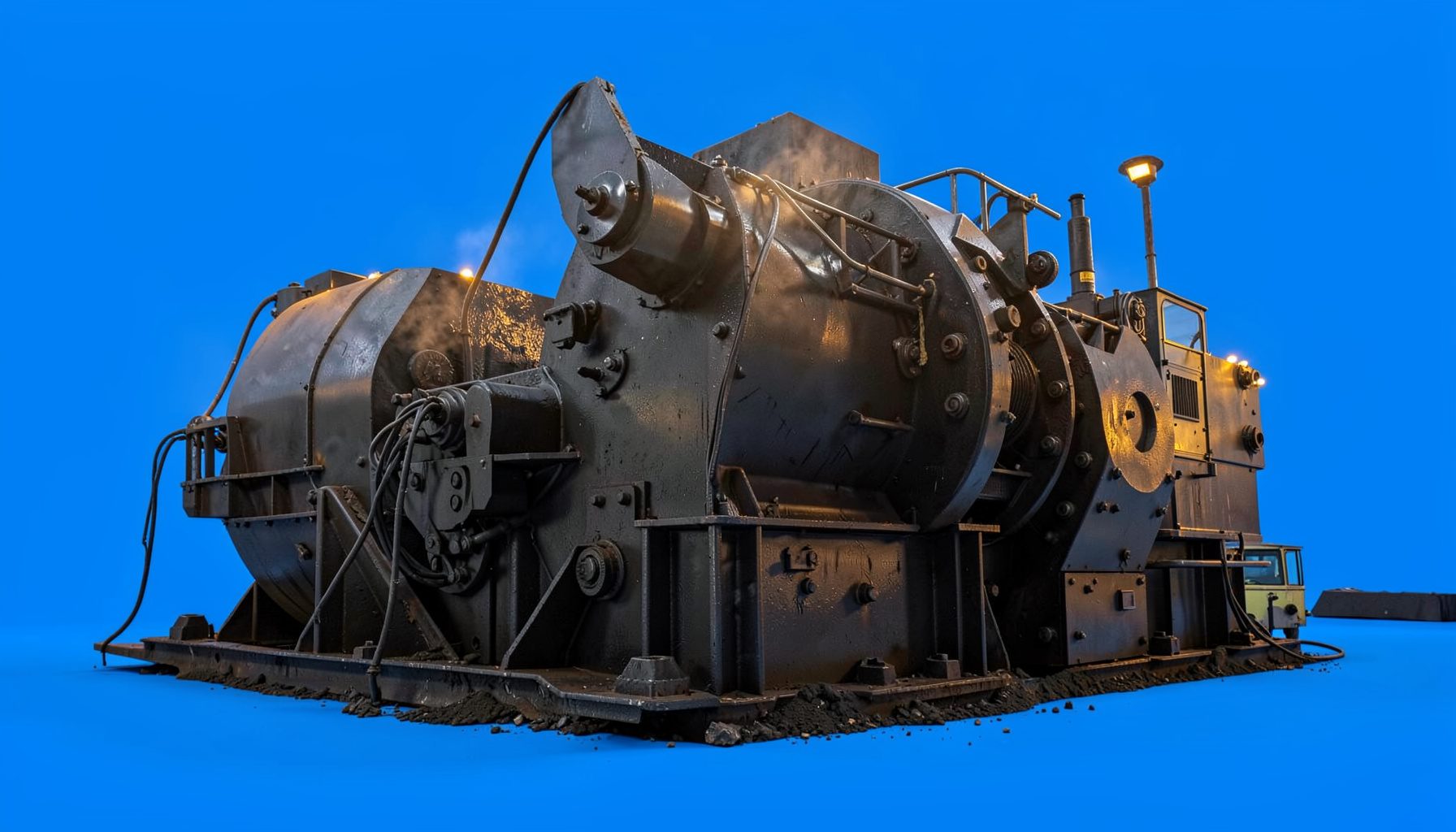
The science behind trapezium mills: how they achieve ultra-fine grinding
Trapezium mills are a type of vertical roller grinding system designed to reduce minerals and industrial materials into a controlled fine powder. Their name comes from the trapezoidal shape of the grinding rollers or roller assemblies, which work against a curved grinding ring. This geometry creates a large effective grinding area while keeping the machine relatively compact.
The basic process combines compression, impact and shearing. Material enters the mill, is carried between the rollers and ring, and is repeatedly ground until an air classifier accepts particles that meet the required size. Coarse particles return to the grinding zone, creating a closed circuit that improves consistency and limits unnecessary energy use.
The phrase ultra-fine grinding needs some care. A conventional trapezium mill commonly produces fine powder for applications such as limestone, dolomite, gypsum, barite, kaolin, coal and cement additives. Special configurations can approach very fine product sizes, while dedicated ultrafine mills are generally preferred when a process needs exceptionally small particles or a narrow distribution below the normal range.
For Australian quarry, construction and mineral-processing operations, the attraction is the balance between capacity, control and practical maintenance. A plant near Perth may process dry mineral feed, while a quarry in New South Wales or a cement-related operation near Brisbane may require different moisture, dust-control and product-specification settings.
| Grinding system | Main grinding action | Typical strength | Common limitation |
|---|---|---|---|
| Trapezium mill | Compression, impact and shear | Efficient fine mineral powder production | Needs controlled feed and airflow |
| Ball mill | Impact and attrition | Robust for many mineral circuits | Higher power use and larger footprint |
| Vertical roller mill | Compression and shear | High throughput with drying capability | More sensitive to feed stability |
| Ultrafine mill | High-intensity impact and classification | Very small particle sizes | Higher complexity and specialised maintenance |
What happens inside the grinding chamber
Feed material usually enters through a central opening above the grinding chamber. A rotating shaft, driven by a motor and transmission, causes the grinding rollers to revolve around the central axis. At the same time, each roller rotates around its own shaft as it contacts the grinding ring. This compound movement spreads the material across the grinding track.
The rollers apply force as particles pass through the narrowing gap between the roller surface and ring. Large particles are broken along natural weaknesses, while smaller fragments are compressed into increasingly fine layers. Shearing occurs when adjacent surfaces move at different speeds, and impact contributes when particles are caught, redirected or forced into the grinding bed.
A spring or hydraulic loading arrangement maintains pressure between the rollers and the ring. This is important because the load must be high enough to grind efficiently but controlled enough to prevent severe vibration. The grinding bed acts as a buffer: a stable layer of material protects the surfaces and helps distribute force across the working zone.
Why the trapezium geometry matters
A trapezium roller profile gives the grinding surface a useful contact shape. Compared with a simple flat contact, the profile encourages material to remain within the active grinding zone for longer. It also helps spread pressure across a wider part of the grinding ring, reducing concentrated loading and improving wear distribution.
The curved ring and roller arrangement create a wedge-shaped compression zone. As the feed moves through this zone, the gap becomes smaller and the applied force becomes more effective. Coarse particles are fractured first, then the resulting fragments are ground through repeated passes. This staged reduction is one reason a trapezium mill can achieve fine product without relying solely on high-speed impact.
Centrifugal force also influences how particles behave. Rotation pushes the feed outward against the grinding track, while airflow carries loosened particles upward. The correct relationship between rotational speed, grinding pressure and air velocity determines whether particles remain in the chamber or leave for classification.
Air classification sets the final size
Grinding alone does not determine the final powder size. A classifier above or beside the grinding chamber separates particles according to their aerodynamic behaviour. Fine particles are light enough to travel with the upward air current, while larger particles have greater settling force and fall back into the grinding zone.
The classifier typically uses rotating blades to create a controlled separation field. Increasing classifier speed generally produces a finer product because stronger centrifugal force rejects more coarse particles. Reducing speed allows a larger proportion of material to pass through, increasing capacity but producing a coarser powder.
This arrangement is known as closed-circuit grinding. Material does not leave the mill simply because it has been ground once; it leaves when it meets the size requirement. That repeated selection improves product uniformity and prevents a large quantity of coarse particles from contaminating the finished powder.
Particle-size measurement is valuable when operators need to verify a target such as 45 microns, 75 microns or another specification. Suitable process instruments can support checks on particle distribution, moisture and other variables that affect classifier performance.
Feed conditions control grinding efficiency
The mill performs best when feed particles arrive at a suitable top size and with a steady rate. Oversized rocks can cause vibration, overload the drive system and accelerate wear on rollers and grinding rings. Good upstream screening and crushing therefore have a direct effect on the performance of the grinding circuit.
A quarry may use a jaw crusher for primary reduction, followed by a cone or impact crusher and screening before material reaches the mill. The relationship between crushing settings, feed gradation and mill capacity should be reviewed as a single process rather than as separate machines. Guidance on crusher wear factors is relevant because unstable or excessively abrasive feed can affect both the crushing stage and the grinding equipment downstream.
Moisture is another major variable. Damp material can form deposits, block transfer points and reduce the classifier’s ability to carry fine particles. Some trapezium mill systems use hot air to dry the feed during grinding, but the heat source and airflow must be matched to the material. Excessive heat can alter sensitive minerals, increase fire risk with combustible powders or create difficult dust-control conditions.
Airflow removes heat and protects the circuit
Airflow has several jobs inside a trapezium mill. It transports qualified fine particles to the classifier and collection system, removes heat created by friction, and helps dry materials with moderate moisture. A fan, ductwork, cyclone and bag filter normally work together to maintain negative pressure through the system.
Negative pressure reduces the chance of dusty air escaping into the plant. This matters in Australian sites where dry weather, strong winds and long haul distances can make airborne dust particularly difficult to control. A properly sealed circuit also improves powder recovery and keeps the working area cleaner.
Air velocity must be balanced carefully. If it is too low, fine particles may remain in the chamber and production can fall. If it is too high, coarse particles can be carried forward before sufficient grinding, increasing recirculation or reducing product quality. Pressure readings, fan speed, filter condition and damper position provide useful operating indicators.
At sites in Western Australia, operators may need to consider the Pilbara’s high ambient temperatures and seasonal conditions. A stable cooling and filtration arrangement helps protect bearings, motors and electrical equipment when the mill is operating for long shifts in a hot, dusty environment.
Wear surfaces and operating stability
The grinding ring and roller surfaces are the primary wear components. Their service life depends on feed hardness, abrasiveness, moisture, grinding pressure, feed size and the stability of the material bed. Quartz-rich rock, abrasive slag and some mineral concentrates can remove material quickly if the mill is operated with excessive pressure or an unsuitable feed.
Wear is rarely uniform. Uneven feed distribution, a damaged classifier, poor levelling or air leakage can make one part of the ring work harder than another. Regular inspection should check roller profiles, grinding tracks, bearings, seals, vibration levels and the condition of the classifier blades.
Replacement planning is easier when wear measurements are recorded against operating hours and tonnes processed. Suppliers of wear-resistant components may offer useful reference points when comparing material grades, hardfacing options and replacement strategies, although the correct choice still depends on the mineral being processed and the mill’s operating conditions.
Stable operation also protects the drive system. Sudden feed surges, tramp metal and low-feed running can all create abnormal loads. A magnetic separator, metal detector and reliable feeder can reduce the risk of damaging internal components.
Matching a trapezium mill to the plant
Mill selection begins with the material rather than the desired machine size. Engineers need information about feed top size, moisture, hardness, abrasiveness, bulk density, required fineness and hourly capacity. Laboratory tests or pilot trials can help establish whether a trapezium mill can achieve the target product with acceptable power consumption.
The rest of the plant must be considered at the same time. A feeder needs to provide a steady flow, conveyors must handle the required tonnage, and the dust collector must match the air volume. If the project involves a remote quarry or changing work locations, a mobile crushing plant can support upstream feed preparation before material is transferred to a fixed grinding circuit.
Australian installations also need practical attention to access, noise, electrical supply and workplace safety. A site near Melbourne may face tighter planning and dust expectations than a remote mining operation, while a regional Queensland plant may need to allow for seasonal rain and material moisture. Safe access platforms, lifting points and clear inspection areas can reduce maintenance time over the life of the equipment.
The most effective ultra-fine grinding arrangement is therefore a complete process system. Correct roller pressure, classifier speed, airflow, feed preparation and wear management must work together. When those variables are controlled, a trapezium mill can produce a consistent fine mineral powder with efficient use of energy and a serviceable design for quarrying, cement, construction and mineral-processing applications.