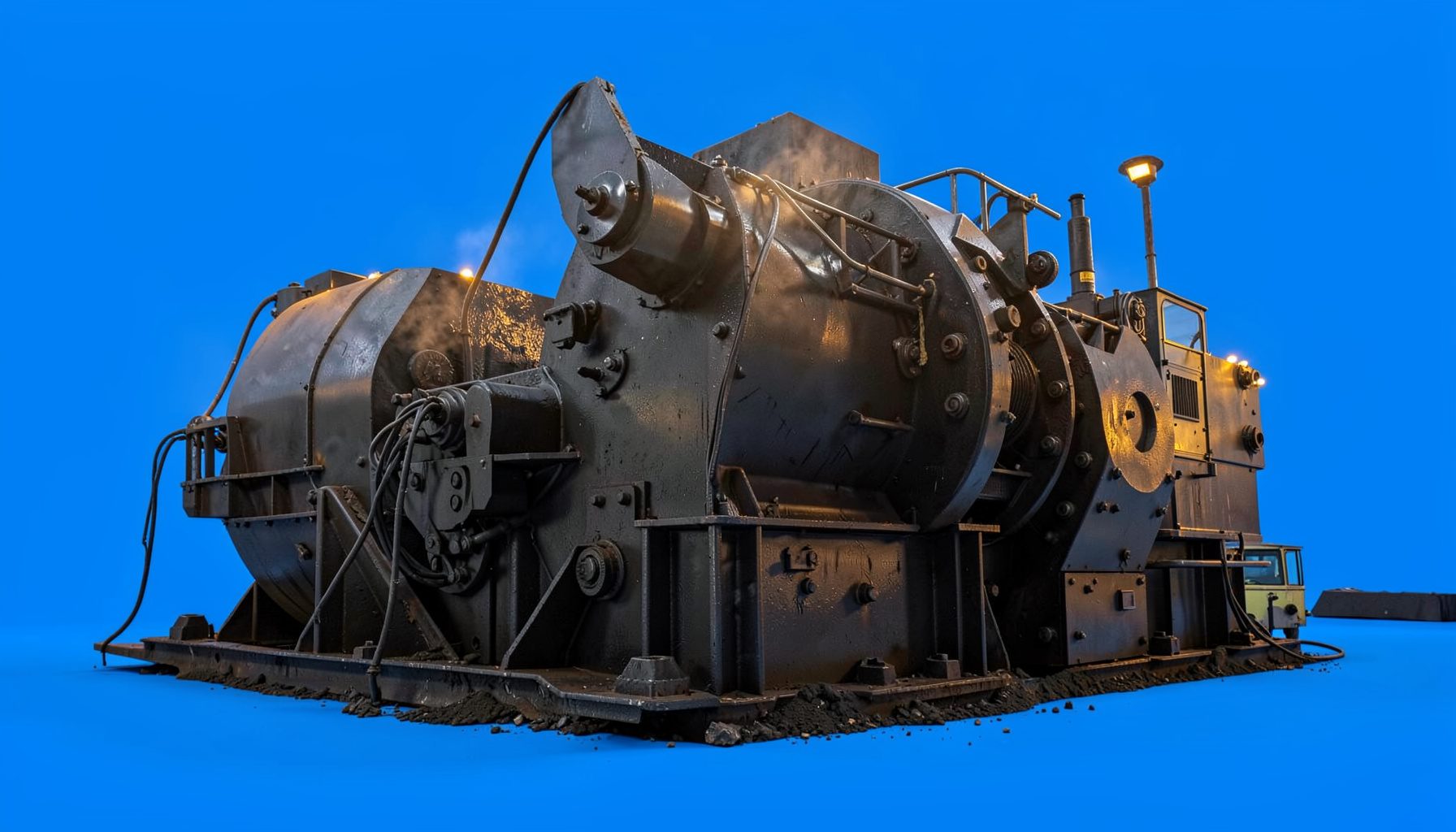
Improving Aggregate Shape with a Vertical Shaft Impact Crusher
In Australian quarrying and construction, the shape of crushed stone shapes everything that follows — from the strength of a slab poured in Parramatta to the skid resistance of a regional highway through the Hunter Valley. Operators chase cubical, well-graded product because angular fragments lock together, take less cement in a mix, and behave predictably under rollers. A vertical shaft impact crusher, often shortened to VSI, is the machine most plants reach for when shape is the priority rather than raw tonnage.
The basic principle has been around for decades, but the latest generation of vertical shaft impactors gives aggregate producers much finer control over cubicity, fines content, and wear. For quarries supplying concrete plants, road bases, asphalt, and manufactured sand, this control translates directly into selling a premium product. The rest of this article walks through how a VSI works, where it fits in a circuit, and what Australian operators need to think about when they specify one.
Why Aggregate Shape Matters Down Under
Australian standards for construction aggregate are demanding. AS 2758 sets tight limits on flakiness, particle shape, and fines for many end uses, and specifiers in Sydney, Brisbane, and Perth routinely reject loads that look fine to the eye but fail a shape test in the lab. A flaky or elongated particle lowers the structural performance of concrete, reduces the stability of road bases, and increases binder demand in asphalt.
The geography of the country adds a second pressure. Quarries feed projects in the Pilbara, the goldfields around Kalgoorlie, and infrastructure corridors that can stretch hundreds of kilometres between supply and demand. Hauling sub-standard product only to have it rejected at the batch plant costs real money, so producers aim for first-pass acceptance. That is why the final crushing stage is treated as a shaping stage, not just a size-reduction stage.
Local contractors also notice shape because it changes how their crews handle the material. Cubical aggregate flows through bins and conveyors without bridging, packs tighter in dump trucks, and compacts more uniformly under a smooth drum roller. On a remote road job where the water cart is a long way behind, predictable compaction matters even more.
Inside a Vertical Shaft Impact Crusher
A VSI uses a high-speed rotor to throw feed against anvils, a rock shelf, or another stream of rock. Energy is transferred through impact rather than compression. That distinction is fundamental: a jaw crusher squeezes rock until it breaks along its weakest plane, which often produces slivers, while a VSI breaks rock by accelerating it into a hard target and forcing it to shatter in several directions at once.
The result is a product made up of particles that have been fractured on several faces. They tend towards a cubical shape, with roughly equal dimensions rather than the flat, plate-like chips that come out of a cone crusher running with a wide setting. Modern VSI designs also let operators choose between rock-on-rock and rock-on-metal crushing, giving another lever for tuning the product.
Feed size, rotor speed, cascade ratio, and tip wear all interact to determine the final gradation and shape. A well-tuned VSI running on competent basalt or granite in a Hunter Valley quarry can deliver a consistent 20 mm product with high cubicity and a controlled percentage of fines, the kind of result that keeps repeat customers coming back.
Cubical Product and What Makes It Different
Cubical aggregate is not a marketing term. It describes particles whose length, width, and thickness sit within a defined ratio, usually 1:1:1 to roughly 1:1:1.5. Standards bodies measure this with a flakiness sieve stack or digital image analysis, and the result feeds straight into mix design. A higher proportion of cubical particles means fewer voids, lower cement content for the same strength, and better rutting resistance under traffic.
In concrete, cubical shape also improves pumpability. Sharp, angular particles roll over each other instead of locking edge-to-edge, keeping the mix flowing through long delivery lines on high-rise pours in Melbourne or along the curves of a freeway overpass. In asphalt, cubical stone interlocks under the paver screed, giving roads that hold their texture under heavy haulage.
Producers therefore talk about shape long before they talk about size. The crushing circuit is laid out so the VSI sits last in line, after a primary jaw and often a secondary cone, taking a feed that is already near the target top size. Its job is to clean up the shape rather than do the heavy lifting on reduction. Anyone comparing different machines for this role can review this crusher comparison.
VSI Compared with Other Crushing Stages
No single crusher does every job well. The table below sets a vertical shaft impact crusher against the two machines it most often replaces or complements in an Australian aggregate plant.
| Feature | Vertical Shaft Impact Crusher | Jaw Crusher | Cone Crusher |
|---|---|---|---|
| Main use | Shaping, manufactured sand, fines control | Primary reduction of blasted rock | Secondary and tertiary reduction |
| Reduction method | High-speed impact | Compression between jaws | Compression between mantle and concave |
| Typical product shape | Cubical, low flakiness | Irregular, some slabs | Angular but can include flaky particles |
| Maximum feed size (typical) | Up to 50–60 mm | Up to 1.5 m | Up to 200–300 mm |
| Best suited for | Final shaping stage, sand production | First stage in hard rock quarries | Mid-stage reduction in hard rock |
| Wear cost profile | Rotor tips, anvils, cascade components | Jaw plates, liners | Mantle, bowl liner |
| Fines generation | Controllable through cascade and speed | Moderate | Can be high depending on setting |
The pattern in most Australian hard-rock plants is now a jaw-cone-VSI combination, with the VSI added once the operator can see the price premium that shaped product commands locally.
Rotor Speed and Chamber Design Choices
Rotor speed sets the kinetic energy that goes into each particle. Faster rotors produce more breakage, finer top size, and a higher proportion of well-shaped grains, but they also accelerate wear on tungsten carbide tips and raise the heat load on bearings. Slower rotors cut wear cost and let more material pass through with less breakage, which suits a feed already close to the desired product size.
Cascade, the amount of material that falls back through the rotor before exiting, is the second big knob. A high cascade setting keeps particles in the crushing zone longer, raising the chance of multiple impacts and improving shape, but it also reduces throughput and pulls power. Many Australian plants run a moderate cascade as the default and fine-tune it by checking the lab shape index weekly.
Chamber geometry matters as well. A rock-on-rock VSI uses a lined crushing chamber and a rock shelf so stones strike stones, suiting abrasive feed such as the iron-rich material from the Pilbara. A rock-on-metal VSI uses anvil rings and matches softer or more variable feed, including the basalt and sandstone mixes common around Toowoomba and the Darling Downs. The right choice depends on what is being fed and what the customer pays for.
Feeding and Operating on Australian Sites
Feed presentation is often the difference between a VSI that performs and one that frustrates. The feed must be even, with a consistent top size and no tramp metal, slimes, or wet clay that can blind the crushing chamber. A vibrating feeder or wobbler ahead of the VSI is now standard practice, especially on sites where the weather swings from dry heat in the outback to sudden tropical downpours along the Queensland coast.
Operators also need to plan around dust. Water spray bars at the feed point and discharge help keep particulate emissions under control, a daily concern in the dry months near Kalgoorlie, Broken Hill, and inland NSW. Across the broader plant, dust suppression feeds back into the efficiency of the screening stage downstream of the VSI, so a little water here pays back through the whole circuit.
Australian sites place a premium on serviceability. Remote operations cannot afford long waits for a replacement rotor or a fresh set of anvils, so machine design that allows tip changes in a few hours with a small crew is a real selling point. Mobile VSI configurations mounted on tracked chassis are increasingly common for short-term contracts, such as supplying shaped aggregate for a wind farm access road or a regional airport upgrade. Moving the plant closer to the work reduces haulage cost and shortens the lead time for the client.
Integrating VSI into a Complete Plant
The best results come when the VSI is treated as part of a complete shaping circuit rather than a standalone box. Screening before and after the VSI lets the operator send already-on-spec material straight to the product stockpile and recirculate oversize back for another pass. This reduces unnecessary wear and keeps the rotor working on rock that still needs reshaping.
In cement and concrete applications, the fines from a VSI can be routed into a manufactured sand circuit, where they combine with cone crusher or rod mill output to produce a clean, well-shaped sand. Producers looking at the broader efficiency picture, including cement and grinding stages, can also review how milling fits into the cement production workflow to see where shaping and grinding each contribute value.
Automation and condition monitoring have changed the way VSI plants are run. Modern units track rotor speed, bearing temperature, motor current, and vibration in real time, flagging a developing wear issue before the product drifts out of shape. For a quarry manager juggling shift crews, export contracts, and a tight maintenance budget, that visibility is often the difference between a planned tip change and an unplanned stoppage during a peak delivery window.