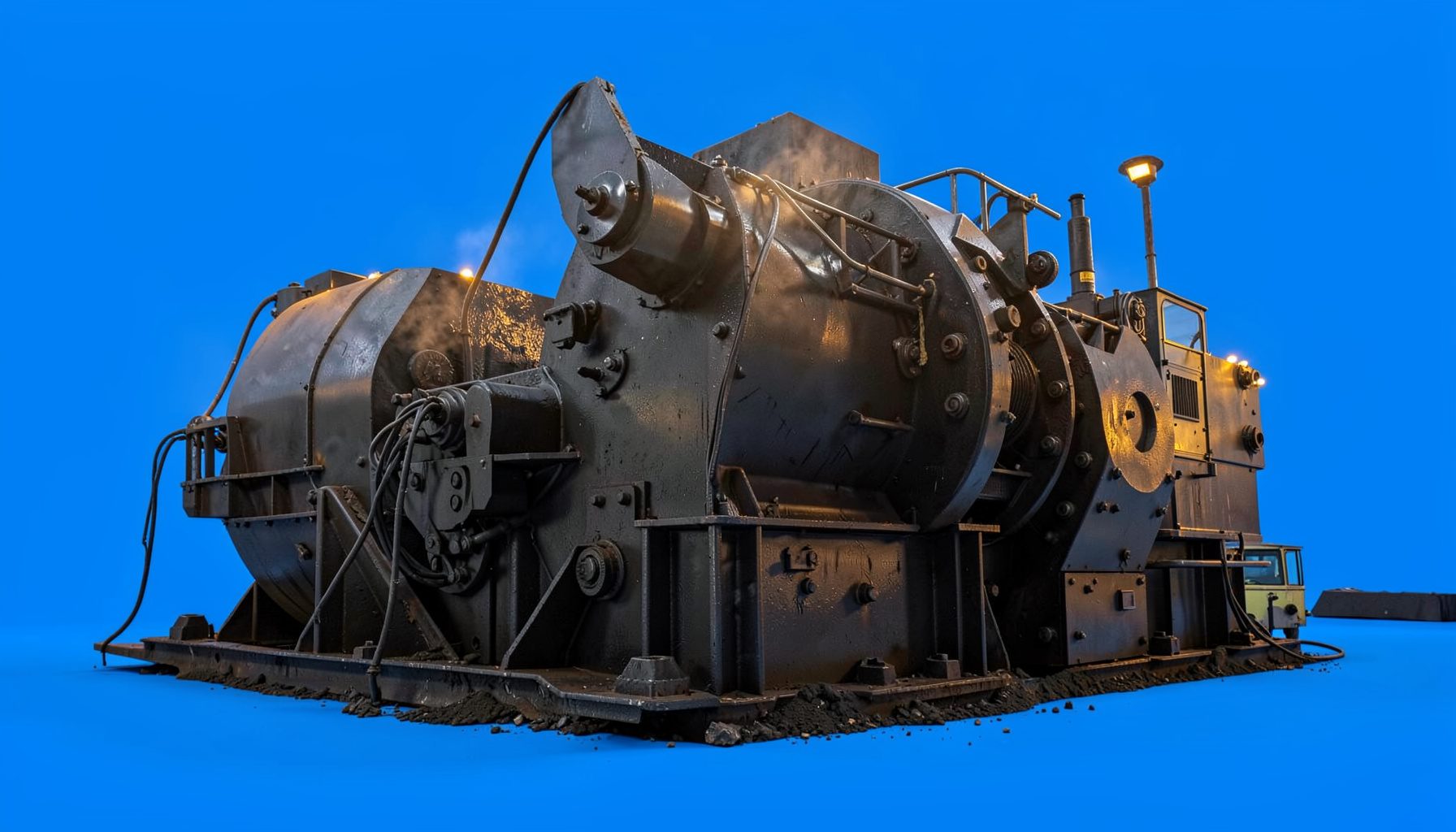
Impact Crusher vs Jaw Crusher Which Suits Your Aggregate Plant Better
When operators in regional Queensland or the Pilbara weigh up impact crusher versus jaw crusher options for a new aggregate plant, the decision usually comes down to the rock itself, the shape of product the market wants, and the distances raw material has to travel before it reaches a crusher. Australian quarries often sit hundreds of kilometres from the concrete batch plants, rail corridors and port facilities they serve, so any choice made on the crushing line has knock-on effects on haulage, fuel and downstream processing. Understanding how a stationary jaw and a horizontal-shaft impactor behave under local conditions helps buyers narrow the field before they talk to suppliers.
Most quarry managers running hard-rock operations near Kalgoorlie, Melbourne's growth corridors or the basalt fields around Hobart already know the basics: a jaw takes big lumps and a cone or impact shapes them. The interesting question is which primary or secondary stage suits a specific feed, and whether an impactor can replace a jaw altogether. The answer depends on abrasiveness, target product size, the proportion of fines a site can sell, and how much the operator wants to spend on wear liners each quarter.
Working Principles Behind Jaw and Impact Crushers
A jaw crusher compresses rock between a fixed and a swinging cheek, breaking it mainly by compression. The feed enters from the top and exits at the bottom through a tapered gap called the closed side setting. Because the action is squeezing rather than striking, jaw crushers handle very abrasive granite, basalt and iron ore with reasonable liner life and produce a flatter, more elongated particle shape.
An impact crusher, by contrast, uses a rotor spinning at high speed to throw feed against fixed aprons or anvils inside the crushing chamber. Reduction happens through a combination of impact, shear and selective attrition. The result is a more cubical particle with a higher proportion of fines, which is why many contractors feeding concrete plants along the Sydney Metro alignment or in Brisbane's residential subdivisions prefer impactors for shaping duties. The trade-off is higher wear on blow bars, aprons and rotor tips when the feed contains silica-rich or highly abrasive material.
For buyers reviewing different machines from a crushing equipment supplier catalogue, it helps to remember that a jaw is essentially a primary stage workhorse, while an impactor is versatile enough to act as a primary crusher in softer rock or as a secondary and tertiary shaper in hard rock. Australian operations that run both a jaw and an impact in series are common, particularly where the deposit contains a mix of weathered and fresh material.
Feed Size and Material Hardness Considerations
Australian quarry faces often produce a wide range of lump sizes from a single blast, and the front-end loader operator can swing between soft decomposed granite and fresh basalt within the same bench. A jaw crusher handles that variability well because it accepts slabby material and tramp metal without complaint, and the toggle plate protects the frame from uncrushable objects. Its capacity for large lump size, often up to 1,000 mm in mobile models, makes it the standard opening act on most greenfield sites.
Impact crushers are less forgiving on oversize. A piece of rock too large for the rotor can stall the crusher and force a stoppage, and steel tramp material can damage blow bars and aprons. For this reason, many Australian operations feeding impactors at the primary stage fit a grizzly or a scalping screen upstream, or pair the impactor with a small jaw that takes the top size. Sites that already run a primary jaw can send crushed product to the impactor at a controlled top size, which improves wear life and stabilises throughput.
Hardness matters as well. The very hard, abrasive ores of the Pilbara and the tough granites of the New England tablelands chew through impactor wear parts quickly. Softer materials such as the sandstone used in parts of the Sydney Basin, weathered schist in central Victoria, or the limestone processed for cement across regional Australia respond much better to impact crushing, with liner intervals stretching from weeks to months.
Product Shape and the Demand for Cubical Aggregate
Australian standards for construction aggregate, set out under AS 2758, place limits on flaky and elongated particles, particularly for concrete and asphalt mixes. Road base used on regional highways in Western Australia and the Northern Territory demands a tightly graded product with a high proportion of cubical fragments, and so does the rail ballast produced for lines heading into the Pilbara. An impact crusher delivers that shape more naturally than a jaw, because each rock-on-rock strike shatters the particle along its weakest planes and leaves chunky fragments rather than slabs.
A jaw crusher, however, still produces a perfectly serviceable product for many applications. Sub-base for country roads, drainage rock, gabion fill, and general fill for projects like Melbourne's suburban infrastructure expansion all accept the more elongated shape. Some quarries even blend jaw-run product with impactor fines to reach a target grading, which is cheaper than running everything through an impactor and burning through wear parts.
Operators chasing premium-shape aggregate for the Sydney Metro Tunnel spoil re-use market, or for high-strength concrete used in city centre towers, often choose impactors for the shaping stages even when their primary reduction is done by a jaw. The combination of a jaw for capacity and an impactor for shape is a common compromise across Australian hard-rock quarries.
Throughput Targets and Wear Part Consumption
Throughput is where jaw crushers shine. A well-sized single-toggle jaw can process 500 to 1,000 tonnes per hour in hard rock, with a steady, predictable discharge curve that feeds conveyors and screens without surges. For high-tonnage operations shipping crushed rock from the Pilbara to port stockpiles, or feeding a concrete plant around the clock during a major infrastructure job, that reliability is hard to beat. Jaw liners typically last several months on hard rock before requiring a turn or replacement.
Impact crushers reach respectable throughputs too, but their capacity is more sensitive to feed gradation, moisture and the abrasiveness index of the rock. In a typical hard-rock Australian quarry, an impactor might produce 200 to 600 tonnes per hour depending on rotor size and gap settings, and blow bar life can drop to a few weeks in highly abrasive ore. Sites that run impactors full-time usually keep a stock of wear parts on site, which adds to working capital.
Many plants that chase the highest tonnage per shift run a jaw-cone configuration rather than a jaw-impact configuration, because cone crushers handle higher throughput at finer closed side settings with more uniform wear. Producers who want to understand that dynamic in detail can read guidance on optimizing cone crusher throughput, since cone and impact duties overlap in the secondary and tertiary stages.
Energy Use, Noise and Site Footprint
Energy efficiency is a growing concern for Australian operators facing rising power tariffs, especially in remote sites that rely on diesel generation. Jaw crushers tend to be more energy-efficient at the primary stage because the breaking action uses stored mechanical energy and the eccentric cycle is well optimised. Impact crushers consume more kilowatt-hours per tonne at similar feed sizes, since the rotor has to be accelerated to working speed and maintained there continuously, although the product is often closer to final size, which can save energy on downstream conveyors and screens.
Noise is another consideration, particularly for quarries operating near residential growth corridors in places like the Mornington Peninsula, the Yarra Valley or the peri-urban fringe of Brisbane. Impact crushers run noticeably louder than jaw units and need more acoustic enclosure or buffer distance. Jaw crushers, while not silent, are usually tolerable at standard setbacks.
Footprint and mobility also differ. A tracked jaw plant can be moved between faces within a quarry in a morning, which suits the smaller mobile crushers used across many regional Australian operations. Tracked impactor plants are equally common, but a fixed jaw installation in a permanent crushing building remains a familiar sight at large hard-rock producers near Kalgoorlie, Newman and Mount Isa, where the plant runs continuously for years between relocations.
Matching the Crusher to Your Quarry Profile
The most useful way to choose between a jaw and an impact crusher is to walk through a checklist of the local site conditions. What is the top size coming out of the blast, and how variable is it across the face? Is the rock hard and abrasive, or softer and more workable? What is the target product, and what proportion must meet cubical-shape requirements? What throughput does the operation need today, and how much room is there for growth?
For a remote Pilbara iron ore fines operation feeding a conveyor to port, the answer is usually a heavy-duty jaw in primary position with cone crushers doing the secondary work, and little need for an impactor. For a basalt quarry outside Melbourne supplying road base to a regional council, an impactor in the secondary or tertiary position is often essential to meet shape specifications. For a sandstone producer near the Sydney Basin supplying drainage and concrete aggregate, either a jaw alone or a jaw-and-impact combination can work, depending on the customer's shape requirements.
The honest approach is to match the rock, the market and the budget rather than chasing a single answer. Australian aggregate producers who take time to test their feed in both machine types, and who talk through liner costs, throughput and product specification with their supplier, end up with a crushing line that runs for years without surprises. That combination of practical testing and clear commercial thinking is what separates a profitable quarry from one that fights its equipment every week.
Comparison at a Glance
| Feature | Jaw Crusher | Impact Crusher |
|---|---|---|
| Reduction method | Compression between jaws | Impact against anvils/aprons |
| Best as | Primary crusher | Secondary or tertiary shaper, primary in soft rock |
| Maximum feed size | Up to ~1,000 mm | Typically up to ~500 mm |
| Product shape | Flaky, elongated | Cubical, well-shaped |
| Fines generation | Low to moderate | High |
| Wear part life | Long on abrasive rock | Shorter on abrasive rock |
| Throughput per unit | High and predictable | Moderate, sensitive to feed |
| Energy per tonne | Lower at primary stage | Higher, but less downstream work |
| Noise level | Moderate | High |
| Tramp metal handling | Forgiving via toggle | Can cause damage |
| Typical Australian use | Hard-rock primaries in Pilbara, Kalgoorlie, NSW granites | Shaping duties for Sydney, Melbourne, Brisbane concrete and asphalt |