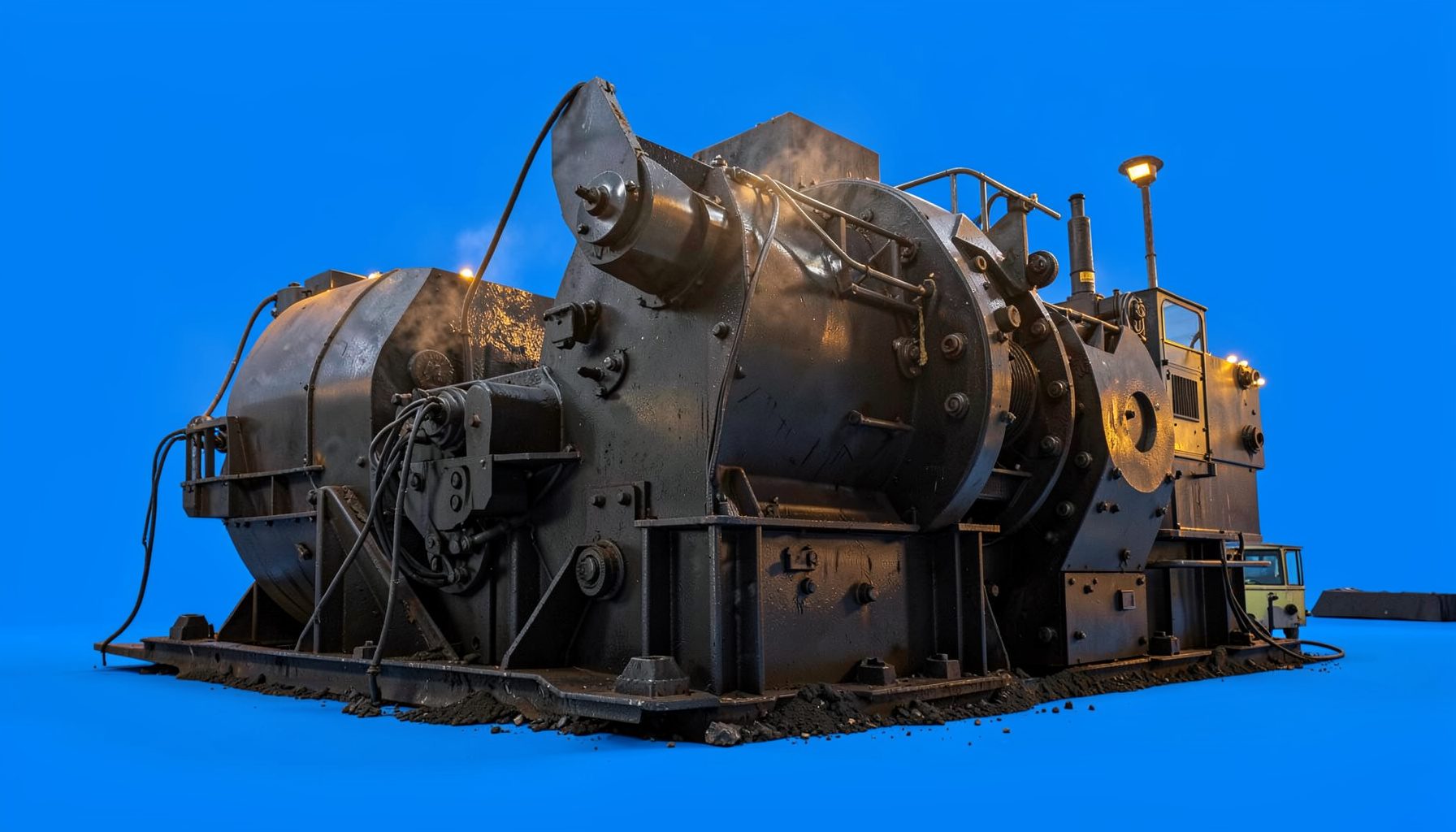
Better airflow control for grinding mill classification
In a grinding circuit, airflow is the moving force that carries fine particles away from the mill and returns coarse material for further size reduction. When that air stream is unstable, even a well-designed mill can produce inconsistent fineness, high power consumption and excessive recirculating load. Classification performance depends on the relationship between air volume, particle size, moisture, rotor speed and system pressure.
This matters across quarrying, cement, mining and aggregate-processing operations. A vertical mill, trapezium mill or air-swept grinding system needs a controlled stream rather than simply the largest possible fan setting. Too little air allows fines to remain in the grinding zone; too much air can overload the separator, carry coarse particles into the product or increase wear in the ducting and dust collector.
Australian operators often work with highly variable feed materials. Limestone from Victoria, iron-bearing minerals from Western Australia and construction materials processed near Sydney or Brisbane may have different moisture, hardness and abrasiveness. Remote sites also face long supply chains, limited maintenance windows and electricity costs that make efficient fan operation commercially important.
The best results come from treating the mill, classifier, fan, cyclone or baghouse and ductwork as one system. Small changes at one point can affect pressure throughout the circuit. A structured approach starts with reliable measurements, then adjusts the air path, separator settings and feed conditions together.
Start with the air circuit
The first task is to establish how air moves through the complete installation. Trace the path from the fresh-air inlet through the grinding chamber, classifier, cyclone, bag filter, induced-draught fan and exhaust point. Mark every damper, inspection door, expansion joint and flexible connection. A drawing that shows only the mill and fan will often conceal the real source of an airflow problem.
Measure static pressure at several fixed locations rather than relying on fan motor current alone. Useful points include the mill inlet, mill outlet, classifier inlet, classifier outlet, cyclone inlet and filter clean-air side. Record air temperature, pressure differential, fan speed, damper position and product fineness at the same time. Readings taken at different operating conditions are difficult to compare.
False air is a common cause of poor classification. Unsealed access doors, worn rotary valves, damaged expansion joints and leaking duct flanges allow uncontrolled air into the circuit. This dilutes the designed air stream and can reduce the pressure available to lift material through the classifier. A smoke test around suspected leaks, followed by gasket replacement and proper door adjustment, can produce a measurable improvement without changing the mill.
Dust collectors need equal attention. A loaded filter increases resistance and reduces the airflow that reaches the classifier. Excessively aggressive pulse cleaning can release dust surges, while damaged bags allow fines to escape and may alter fan loading. In Australia, where dust control is closely linked to site approvals and workplace exposure requirements, maintaining the collector is an operating duty rather than an optional housekeeping measure.
Match fan capacity to classification demand
A centrifugal fan should operate near the useful part of its performance curve. A fan that is too small cannot maintain the required negative pressure when the filter loads or the duct becomes restricted. An oversized fan may consume unnecessary power, create excessive conveying velocity and carry coarse particles beyond the intended separation point.
Fan speed control through a variable-speed drive is generally more flexible than using a damper as the main control device. A damper can restrict volume, but the motor may continue consuming much of the available power. A correctly selected variable-speed drive allows the operator to respond to changes in feed rate, moisture and product specification while reducing energy use during lower-throughput periods.
Air velocity must be considered alongside volume. Very high velocity through a duct can accelerate abrasive particles, producing wear at bends and elbows. It can also increase the load on cyclones and bag filters. Very low velocity allows material to settle, creating a gradual restriction that changes the operating point of the fan. Duct diameter, bend radius and conveying velocity should therefore be checked against the material’s bulk density and particle size.
Negative pressure should be stable, not constantly oscillating. Surging may indicate unstable feed, a sticking rotary airlock, pulsing filter resistance or a control loop that reacts too aggressively. Trend mill differential pressure and fan speed through the plant control system. A steady trend with fewer abrupt corrections is usually a better sign than a high fan speed held indefinitely.
The same principle applies when a grinding circuit is part of a larger installation. Operators evaluating complete processing plants should check whether the proposed mill, classifier, dust collector and fan have been sized as an integrated system rather than selected as unrelated machines.
Tune the classifier and feed conditions together
A dynamic classifier usually responds to two main forces: the upward air stream and the rotating separation mechanism. Increasing rotor speed generally makes the cut finer by rejecting more particles, although the exact response depends on blade design and internal geometry. Increasing air volume can allow larger particles to pass through in some systems because the lifting force becomes stronger. The operating manual and plant test data should be used to confirm the direction for a specific model.
Make one adjustment at a time. Change classifier speed in small increments, allow the circuit to reach a steady state and then sample the product. Next, adjust airflow while holding rotor speed constant. Record the 80% passing size, residue on the selected sieve, circulating load and mill power. This method reveals whether a coarse product is caused by insufficient separation, excessive air carryover or inadequate grinding.
Feed rate has a direct effect on classification. An overloaded mill may show a rising differential pressure and a coarser product even when the fan is running at its normal setting. Reducing feed briefly can confirm whether the classifier is being overwhelmed. If product fineness improves quickly, the long-term answer may be a better feed-control strategy or additional grinding capacity rather than more air.
Moisture changes the behaviour of the entire circuit. Damp material tends to agglomerate, resist dispersion and increase the load on the mill. It may also stick to classifier blades, cyclone walls and filter elements. In a wet coastal region such as Brisbane, material stored overnight can behave differently from dry feed processed during a hot afternoon. A controlled drying-air temperature, covered stockpiles and consistent feed blending can be more effective than repeatedly increasing fan speed.
Water management still has a place in the wider plant, even where the grinding stage is dry. Reusing water in nearby washing or dust-suppression duties can reduce pressure on site supplies; a hotel water-reuse case illustrates the broader value of measuring and recirculating utility flows. The dry mill should not be exposed to uncontrolled moisture, however, because wet feed can destabilise classification and raise the risk of build-up.
Use measurements instead of visual assumptions
A product sample is essential for confirming whether airflow changes have worked. Take samples only after the mill has reached stable operation, and use a consistent sampling location and interval. Laboratory sieve analysis or laser diffraction can show whether the complete particle-size distribution has shifted, rather than focusing only on one target fraction.
Track several indicators together:
- Mill differential pressure and outlet temperature
- Classifier rotor speed and fan speed
- Fan motor current and damper position
- Product residue or particle-size distribution
- Circulating load and elevator or reject flow
- Filter differential pressure and pulse frequency
- Vibration, bearing temperature and visible dust escape
A high mill pressure with coarse product often points to excessive feed, inadequate air volume, wet material or a restriction after the mill. A low pressure with a fine product may look positive, but it can indicate excessive air that is carrying useful coarse particles into the finished product. Product quality, reject rate and energy per tonne provide the necessary context.
Sampling should include the feed and reject streams. If the reject contains a large amount of material that is already within specification, the classifier may be operating too aggressively or the air path may be short-circuiting. If the reject is mostly coarse and the finished product is still too coarse, grinding intensity, feed distribution or mill internals may need attention.
Maintenance inspections should focus on wear patterns. Eroded classifier blades, damaged guide vanes, worn seals and build-up on internal surfaces change the effective geometry of the air stream. A separator that was correctly tuned when new may require a different setting after months of abrasive service. Keep before-and-after performance records whenever liners, blades or fan components are replaced.
Feed preparation also influences the result. A stable feed from the crusher reduces surges into the mill. For recycled concrete, a review of jaw crusher recycling benefits can help explain why consistent upstream sizing supports downstream milling. Oversized particles consume grinding capacity and create pressure swings that no classifier adjustment can fully correct.
Protect efficiency, safety and compliance
Airflow optimisation should never be separated from dust and ignition controls. Fine mineral dust can create respiratory hazards, visibility problems and, with some materials, combustible-dust risks. Use suitable extraction, sealed transfer points and correctly maintained filtration. Check that explosion relief, isolation and suppression arrangements match the material and plant design where required.
Australian sites must follow the applicable state or territory Work Health and Safety framework, along with environmental licence conditions. Requirements differ between jurisdictions, so a quarry in New South Wales may have different reporting or approval obligations from a mine in Western Australia or a processing plant in Queensland. Respirable crystalline silica controls are especially important where silica-bearing rock, concrete or manufactured mineral products are handled.
Plan adjustments around operating realities. A remote Pilbara site may need to hold critical fan bearings, filter bags and seals because delivery times can be long. A metropolitan Victorian quarry may have tighter limits on visible dust, noise and truck movements. In both settings, stable negative pressure helps control emissions, but it must be verified through inspections and documented maintenance rather than assumed from fan speed.
Upstream crushing choices can affect mill airflow as well. Jaw-crusher configuration, closed-side setting and screening efficiency determine the size distribution entering the grinding stage. Understanding the single- and double-toggle comparison can assist with selecting a crusher arrangement that produces a manageable, consistent feed for the mill.
Use the operating record to define normal ranges rather than a single ideal number. The right airflow for a dry limestone product may be unsuitable for damp recycled aggregate or a dense mineral concentrate. A practical control strategy links fan speed and classifier settings to feed rate, moisture, pressure differential and product results.
| Operating symptom | Likely airflow or classification cause | Checks and corrective action |
|---|---|---|
| Product is too coarse and mill pressure is high | Low air volume, wet feed, excessive feed or restricted ducting | Check filter pressure, inspect ducts, verify feed moisture and reduce feed briefly |
| Product is too coarse but pressure is normal | Classifier speed too low, worn internals or poor dispersion | Increase rotor speed in small steps and inspect blades, guides and seals |
| Product is unexpectedly fine with high fan current | Excessive air velocity or classifier overload | Reduce fan speed gradually and check whether coarse particles are being carried over |
| Fan speed rises while airflow falls | Loaded filter, blocked duct or leaking suction-side connection | Inspect filter differential pressure, clean restrictions and seal false-air entry points |
| Product fineness fluctuates during the shift | Feed surges, moisture variation or unstable rotary airlock | Trend feeder rate, moisture, pressure and airlock operation together |
| Dust escapes around the mill or transfer points | Inadequate negative pressure or damaged enclosure | Test for leaks, verify extraction balance and repair seals or duct connections |
A well-balanced grinding circuit uses only the air needed to transport and separate the material at the required fineness. Consistent measurements, sound feed preparation, clean ductwork and gradual classifier adjustments allow operators to improve product quality while reducing fan power, wear and unplanned stoppages.