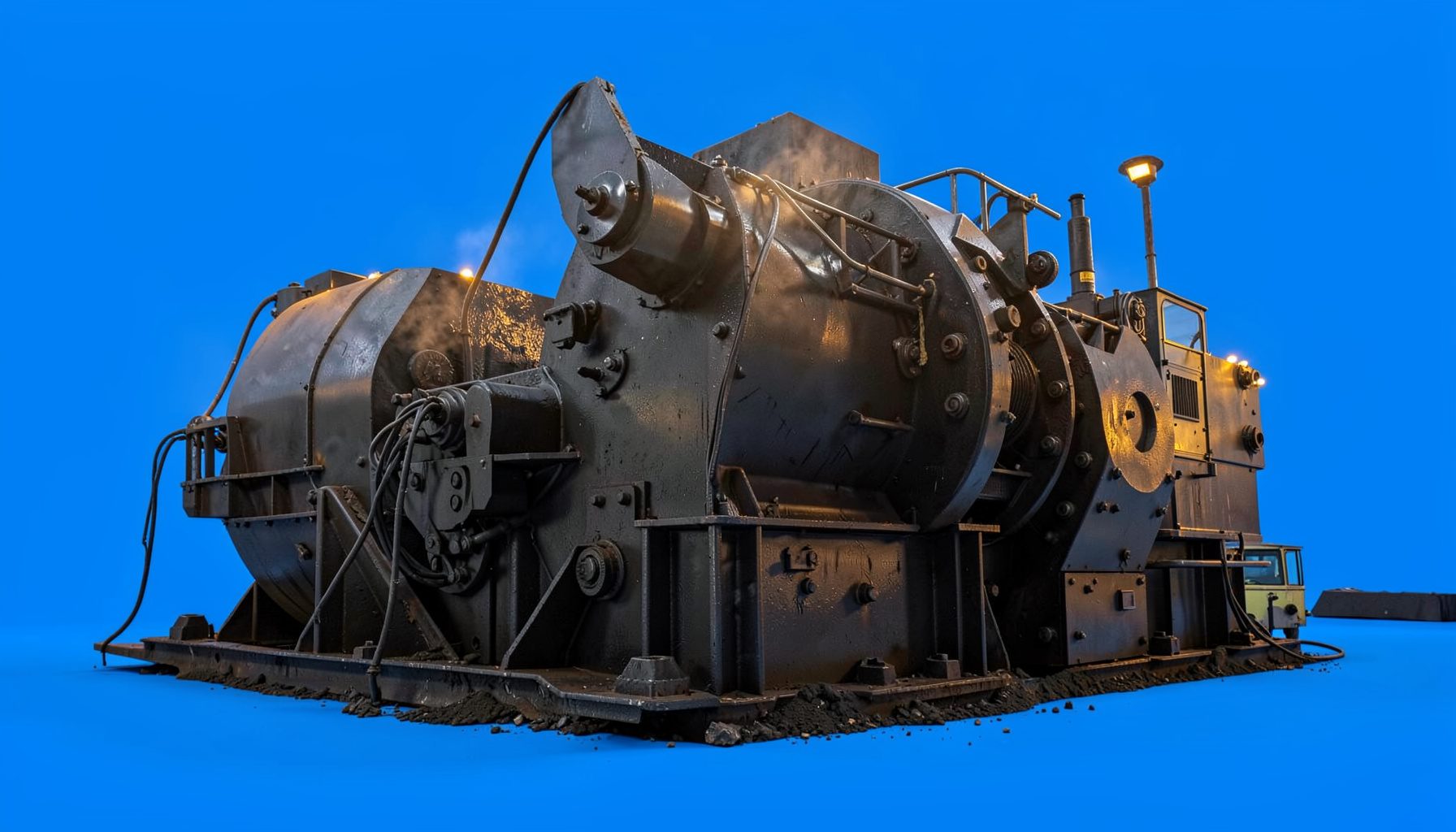
Why Jaw Crushers Suit Concrete Recycling Projects
Concrete is one of the most recoverable materials produced during demolition, road reconstruction and building renovation. When it is processed correctly, old slabs, footings and precast products can become useful recycled concrete aggregate rather than occupying valuable landfill space. A jaw crusher is often the first major machine in that process because it can reduce large, irregular pieces into a manageable feed for screening and secondary crushing.
For Australian contractors, the business case is becoming stronger. Disposal costs, landfill levies, transport distances and demand for lower-cost aggregate all influence project decisions in cities such as Sydney, Melbourne, Brisbane and Perth. A reliable primary crusher can help turn a demolition waste stream into a saleable or reusable product while supporting more efficient site operations.
Shanghai CME Mining and Construction Machinery Co., Ltd. supplies crushing, screening, grinding and mineral-processing equipment for industrial applications. Its range includes jaw crushers, conveyors, vibrating feeders and mobile crushing plants, giving recycling businesses options for designing a complete concrete-processing line rather than relying on a single machine.
Efficient reduction of bulky concrete waste
Demolition concrete is rarely uniform. A feed pile may contain thick reinforced slabs, foundation blocks, kerbs, pipes and sections of pavement. A jaw crusher handles this variation through a compression action: material is caught between a fixed jaw and a moving jaw, then broken as the gap closes. This makes the machine well suited to large feed sizes that would be unsuitable for many impact-based systems.
The result is a more controlled primary reduction stage. Instead of repeatedly handling oversized pieces with an excavator, operators can feed concrete into the crusher and produce a consistent intermediate material. The reduced feed can then pass to a screening plant, cone crusher or impact crusher, depending on the required grading and the hardness of the incoming material.
Jaw crushers also have a straightforward mechanical design. Wear parts such as jaw plates can be inspected and replaced as part of a planned maintenance programme. For demolition contractors, quarry operators and recycling yards, this practical construction can support dependable production during long shifts.
Lower disposal and aggregate costs
Concrete recycling can reduce the volume of material sent to landfill, which may produce immediate savings where disposal charges and levies are significant. In New South Wales, for example, the waste levy affects the economics of construction and demolition disposal in the regulated metropolitan area. Victoria has similar cost pressures through its landfill levy framework. A crusher allows a business to assess whether recovered concrete can be reused on the same project or sold locally.
The savings also extend to transport. Hauling demolition waste away and importing virgin road base or aggregate creates two separate vehicle movements. Processing concrete near the demolition site, transfer station or recycling yard can reduce haulage requirements. This matters around congested areas such as Western Sydney and Melbourne’s expanding outer suburbs, where truck time, fuel and traffic delays can materially affect a project budget.
Not every recycled product will replace virgin stone in every application. However, crushed concrete may be suitable for working platforms, trench backfill, temporary roads, pavement sub-base and general civil construction, subject to specification and testing. Businesses can review recycling solutions when planning how crushing equipment could fit into a broader resource-recovery operation.
Better control over recycled aggregate quality
A jaw crusher provides a stable first stage for producing recycled concrete aggregate. Its discharge setting can be adjusted to influence the size of the crushed material, while downstream screens separate fine particles from larger fractions. This supports the production of distinct stockpiles rather than one mixed pile with unpredictable grading.
Quality control begins before the concrete reaches the machine. Operators should remove timber, plastics, plasterboard, soil and other contaminants during demolition or at the tipping area. Reinforcing steel can create blockages or damage if it is allowed to enter in long, tangled lengths, so concrete should be inspected and oversized steel separated whenever practical.
Laboratory testing is also important when recycled aggregate is intended for a specified engineering use. Particle size distribution, moisture, foreign material content, density and mechanical performance may need to be checked. Facilities can compare suitable material testing equipment when establishing a testing routine for recovered aggregate and pavement products.
Managing reinforcing steel and contamination
Reinforced concrete presents a particular challenge because steel bars and mesh do not crush in the same way as the cementitious material around them. A jaw crusher can break the concrete matrix, but exposed reinforcement may need to be removed using an excavator, shear, magnet or manual sorting process. Careful feed preparation helps protect the crusher and prevents long steel pieces from becoming caught in the discharge conveyor.
Magnetic separation after crushing is commonly used to recover ferrous metal. The recovered steel can be sent to a scrap processor, while the concrete fraction continues through screening. This creates an additional revenue stream and reduces the amount of metal left in the finished aggregate.
Contamination control is especially important on Australian demolition projects where older buildings may contain asbestos-containing materials. State and territory rules require licensed handling, identification and disposal of asbestos in relevant circumstances. Concrete recycling equipment should never be treated as a substitute for hazardous-material surveys, controlled demolition or legal waste classification. A clean feed improves product quality and protects workers as well as machinery.
Flexible operation for urban and remote sites
A fixed jaw crusher can suit a recycling yard with regular feed volumes, electrical infrastructure and established stockpile areas. A mobile jaw crushing plant may be more appropriate for road upgrades, bridge removals and building demolitions where the material is generated away from a permanent facility. It can be positioned closer to the source, reducing double handling and shortening the distance that heavy waste must travel.
Mobility is useful across Australia because projects can be widely separated and transport infrastructure varies considerably. A contractor working around Brisbane may need a different arrangement from one processing demolition waste near Perth or a regional centre. Compact plant can also help a business service smaller projects without committing every load to a large fixed installation. Guidance on mobile jaw crushers illustrates why transportability and adaptable site deployment matter.
Even mobile equipment requires proper ground preparation, access planning and dust management. The machine needs a safe position for the excavator or loader, while conveyors and stockpiles must be arranged to prevent traffic conflicts. In populated areas, operators may also need to address working hours, noise limits, water supply and local council conditions.
Integrating the crusher with a complete process
A jaw crusher is most effective when it is considered as part of a process rather than an isolated machine. A typical concrete recycling line may include a vibrating feeder, primary jaw crusher, magnetic separator, secondary crusher, vibrating screen and conveyors. Each stage should be matched to the expected feed size, required product grading and daily throughput.
Closed-circuit operation can improve control when material must meet a defined top size. Oversize from the screen returns to a crusher for another pass, while correctly sized aggregate moves to the finished stockpile. This approach can reduce the quantity of oversize material and produce a more consistent product. Operators exploring closed-circuit crushing can apply the same principles to recycled concrete processing.
Dust suppression, guarding and emergency-stop systems are essential parts of the installation. Water sprays may be used where supply and site conditions permit, although operators must consider runoff, mud formation and the handling of contaminated water. Enclosures and extraction systems can be useful in enclosed facilities. The design should comply with applicable workplace health and safety requirements and be supported by documented inspection procedures.
Improving productivity and long-term value
The productivity of a jaw crusher depends on more than its rated capacity. Feed consistency, loading method, material moisture, liner condition and crusher settings all affect output. Feeding material evenly helps prevent surges and allows the crushing chamber to work efficiently. An oversized excavator bucket dropped aggressively into the hopper can cause blockages, excessive vibration and unnecessary wear.
Regular maintenance protects availability. Operators should inspect jaw plates, toggle components, bearings, belts, liners, guards and conveyor tracking systems. Lubrication schedules must be followed, and wear measurements should be recorded so replacement parts can be ordered before production is interrupted. Training should cover safe isolation, clearing blockages and recognising abnormal noise or vibration.
For Australian businesses, the long-term value lies in combining durable equipment with a dependable sales or reuse pathway. Recycled concrete aggregate must have a destination, whether that is an internal civil project, a road contractor, a landscaping supplier or a local construction market. Optical sorting and quality monitoring may also assist larger facilities; optical inspection systems can be considered where automated identification or separation supports a more controlled recycling workflow.
A well-planned jaw crushing application can therefore deliver several benefits at once: lower disposal volumes, reduced transport demand, recoverable steel, dependable aggregate sizing and improved use of existing resources. With appropriate feed preparation, safety controls, testing and downstream screening, old concrete can become a valuable input for Australia’s ongoing construction and infrastructure work.