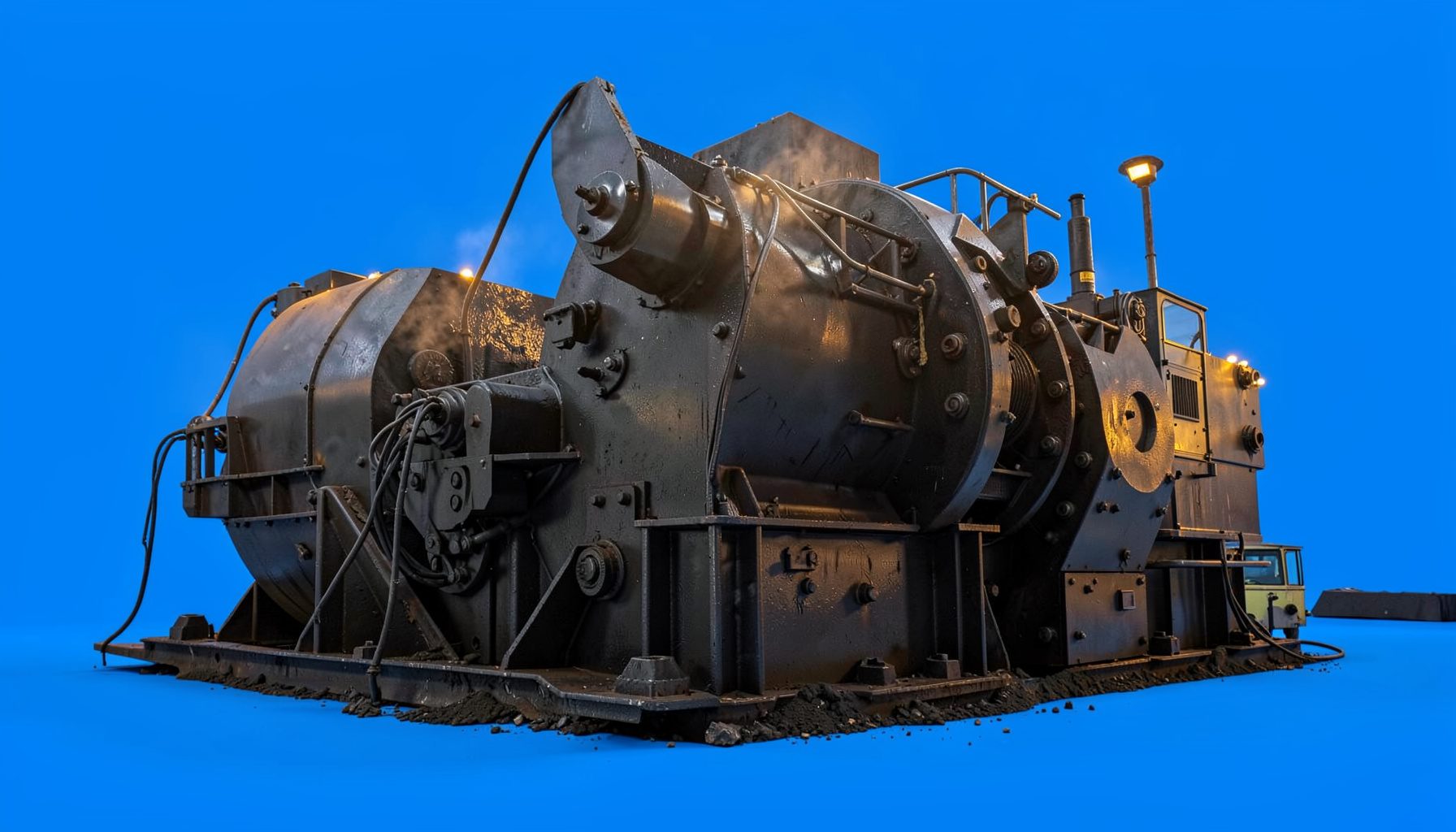
Single-Toggle And Double-Toggle Jaw Crushers Explained
Jaw crushers reduce large rocks by compressing them between a fixed jaw plate and a moving jaw plate. They are widely used as primary crushers in quarrying, mining, recycling, cement production, and aggregate plants. The two main designs, single-toggle and double-toggle jaw crushers, use different mechanical arrangements to create that crushing movement.
The distinction affects capacity, product shape, power demand, wear rates, maintenance, and purchase cost. A single-toggle machine is often selected for a compact, high-throughput plant, while a double-toggle crusher may be preferred where exceptionally hard, abrasive feed and heavy-duty service justify a more robust structure.
For Australian operators, the decision also depends on site access, long haulage distances, fly-in maintenance requirements, and the type of rock found in regions such as the Pilbara, Hunter Valley, Queensland, and Western Australia’s remote goldfields. Understanding the working principle makes it easier to select a jaw crusher that will deliver reliable tonnes rather than simply choosing the largest machine available.
How The Two Jaw Crusher Designs Work
A single-toggle jaw crusher has one toggle plate beneath the moving jaw. An eccentric shaft drives the pitman, causing the moving jaw to swing towards and away from the fixed jaw. The toggle transfers this motion and also acts as a safety component if uncrushable material enters the chamber. The design has fewer major moving parts and is generally lighter for a comparable feed opening.
A double-toggle jaw crusher uses two toggle plates and a pitman that moves in a more complex pattern. The upper toggle helps create the jaw motion, while the lower toggle transmits force to the moving jaw. This arrangement produces a strong, forceful crushing action and supports a heavier frame, making the machine suitable for demanding duty.
| Feature | Single-toggle jaw crusher | Double-toggle jaw crusher |
|---|---|---|
| Mechanical arrangement | One toggle plate and eccentric-driven pitman | Two toggle plates with a more complex linkage |
| Typical strengths | High capacity, compact layout, efficient operation | Heavy-duty crushing and high resistance to shock loads |
| Product tendency | Often more cubical with suitable chamber design | Strong compression, with product influenced by chamber geometry |
| Maintenance | Fewer components and generally simpler access | More components, with greater attention to toggle and bearing condition |
| Common applications | Aggregates, quarrying, recycling, and mobile plants | Hard rock, mining, and severe primary crushing |
| Purchase and operating profile | Usually lower initial cost and easier installation | Often higher capital cost but durable in harsh service |
Neither arrangement is automatically better. The correct choice depends on the feed size, compressive strength, abrasiveness, required capacity, reduction ratio, and the conditions under which the crusher will operate.
Where Each Design Fits Best
Single-toggle crushers are common in aggregate quarries because they can provide substantial capacity from a relatively compact frame. Their efficient movement suits staged plants where blasted rock is reduced before secondary cone or impact crushing. They are also widely used in mobile crushing plants, where transport weight, installation time, and fuel consumption are important considerations.
Double-toggle crushers have a reputation for handling very hard and abrasive material. Their rigid construction can be valuable in primary applications involving large blasted boulders, iron ore, granite, basalt, and other difficult feed. Mines that operate continuously and have access to experienced mechanical crews may accept the greater complexity in exchange for long service life under severe loads.
Equipment selection should consider the complete crushing range rather than one jaw model in isolation. A manufacturer’s wider crusher equipment range can help engineers compare feeders, conveyors, secondary crushers, screens, and washing units as part of a coordinated plant. This approach reduces the risk of creating a bottleneck immediately after the primary jaw.
Capacity, Product Shape And Energy Use
Throughput is influenced by the jaw opening, closed-side setting, eccentric speed, stroke, feed gradation, moisture, and the rock’s fracture characteristics. A single-toggle unit often offers a favourable capacity-to-weight ratio, making it attractive where the plant must process large volumes while keeping the footprint manageable. A properly selected chamber can produce a useful proportion of well-shaped aggregate for road base and concrete applications.
Double-toggle machines can apply significant crushing force and remain stable under heavy shock loading. Their operating speed is often lower, which may reduce some dynamic stresses but can affect the ideal feed rate. Product shape is not determined by toggle design alone: the discharge setting, liner profile, feed arrangement, and whether the jaw is followed by a cone or impact crusher all influence the final result.
Power consumption should be assessed across the whole circuit. An oversized jaw may run below its efficient operating range, while an undersized machine can create blockages, excessive wear, and unstable production. Australian quarry managers often monitor tonnes per hour, kilowatt-hours per tonne, liner life, and downtime together rather than judging performance from rated capacity alone.
Wear Parts And Maintenance Requirements
Jaw plates are the main consumable parts in either design. Their profile must match the feed material and the desired reduction ratio. Manganese steel liners are common, with tooth or corrugated patterns selected for particular rock types. Uneven feeding can cause localised wear, so a properly aligned vibrating feeder is as important as the crusher itself.
A single-toggle crusher usually has fewer wear and linkage components, which can simplify inspections and spare-parts planning. Operators still need to check the eccentric shaft, bearings, toggle seat, tension system, cheek plates, and hydraulic adjustment equipment. Regular measurement of the closed-side setting helps identify liner wear before product size drifts outside specification.
Double-toggle equipment requires careful inspection of both toggle plates, seats, bearings, and connecting components. The additional linkage increases the number of points that must be kept clean, lubricated, and correctly adjusted. At a remote Western Australian mine, a failed bearing or damaged toggle can create a costly delay because replacement parts and specialist technicians may need to travel a long way to site.
Matching A Jaw Crusher To Australian Sites
A hard-rock quarry near Brisbane, Newcastle, or Perth may favour a fixed single-toggle plant when it needs a steady supply of road aggregate and concrete stone. These operations often have established power, access roads, workshops, and conveyors, so a compact machine with straightforward maintenance can provide a practical balance between cost and output. Local contractors may also value common wear parts that can be sourced through Australian dealers.
In the Pilbara and Queensland mining regions, feed can be highly abrasive and production schedules can be demanding. A double-toggle jaw may suit a large primary station where the machine receives substantial run-of-mine material and is protected by a robust apron feeder. By contrast, a mobile single-toggle plant may be more suitable for short-term quarrying, civil construction, or road projects where the unit must be moved between deposits.
Weather and logistics matter as well. The wet season can affect access in northern Australia, while long distances between sites increase the importance of remote monitoring, stocked spares, and easy service access. Operators commonly say “no worries” when a plant is running smoothly, but reliable planning is what makes that possible: feed control, dust suppression, guarding, isolation procedures, and compliance with site safety requirements must be designed from the outset.
Connecting Jaw Crushing With The Full Circuit
A jaw crusher normally performs primary reduction rather than producing the final saleable product. Material may then pass to a cone crusher, impact crusher, vibrating screen, and return conveyor. If the screen sends oversize back for another pass, the plant operates in closed circuit. This arrangement gives tighter control over final gradation and avoids sending excessive fines or oversized rock to later stages; a useful explanation of closed-circuit crushing shows why recirculation matters.
The primary jaw should therefore be selected around the requirements of the secondary and screening stages. A large discharge setting may protect capacity at the jaw but overload the cone, while an excessively tight setting can increase energy use and wear. Gradation tests, bulk density, moisture content, and the target products—such as 20 mm aggregate, manufactured sand, or railway ballast—should guide the circuit design.
Mineral-processing projects may include more than size reduction. In a copper operation, for example, crushed ore can proceed to grinding, classification, flotation, and concentrate handling. The choice of reagents and process conditions is separate from the jaw selection, yet upstream crushing affects liberation and downstream performance. Operators investigating sulphide-ore flowsheets can review methods for pyrite depression when considering how comminution fits into the wider plant.
Fixed, Modular Or Mobile Installation
A fixed jaw crusher is appropriate where the deposit, power supply, and production plan justify permanent civil works. It can be integrated with steel structures, transfer towers, stockpiles, dust-control systems, and long conveyors. Fixed installations usually offer excellent efficiency at high, consistent production rates, although relocating them is expensive and disruptive.
Track-mounted mobile crushers provide greater flexibility for construction projects, contract crushing, and deposits that will be exhausted in stages. They can move closer to the extraction face, reducing haulage distance and the number of support vehicles required. A mobile unit must still be matched with a suitable feeder, conveyor, screen, and stockpile arrangement; mobility does not remove the need for sound process design. Details on track mobile plants illustrate why compact transport and rapid deployment are valuable in changing work areas.
Australian civil contractors may use mobile jaw plants on motorway upgrades, dam works, subdivision projects, and regional road construction. In these settings, a single-toggle crusher is often attractive because the lower transport mass and simpler setup can reduce mobilisation time. A double-toggle machine may be chosen when the mobile plant must repeatedly handle very hard rock, but its weight and maintenance demands need to be included in the project budget.
Making The Final Selection
Start with a representative feed sample and record the largest lump size, compressive strength, abrasiveness, moisture, clay content, and expected tonnes per hour. Confirm the required product sizes and allowable fines before comparing equipment. A crusher that appears inexpensive can become costly if it needs frequent liner changes, causes bottlenecks, or requires a larger-than-expected power system.
Single-toggle jaw crushers generally suit operators seeking efficient capacity, a compact plant, and relatively simple maintenance. Double-toggle jaw crushers are often the stronger choice for severe primary duty, very hard feed, and applications where resistance to heavy shock loading is a priority. Both designs can deliver dependable results when the chamber, feeder, discharge setting, liners, and downstream equipment are properly matched.
The best procurement decision includes lifecycle cost, spare-parts availability, service support, guarding, noise and dust controls, installation requirements, and operator training. Reviewing these factors with the manufacturer before ordering helps ensure that the selected jaw crusher performs consistently across Australian site conditions, from established metropolitan quarries to isolated mine operations.