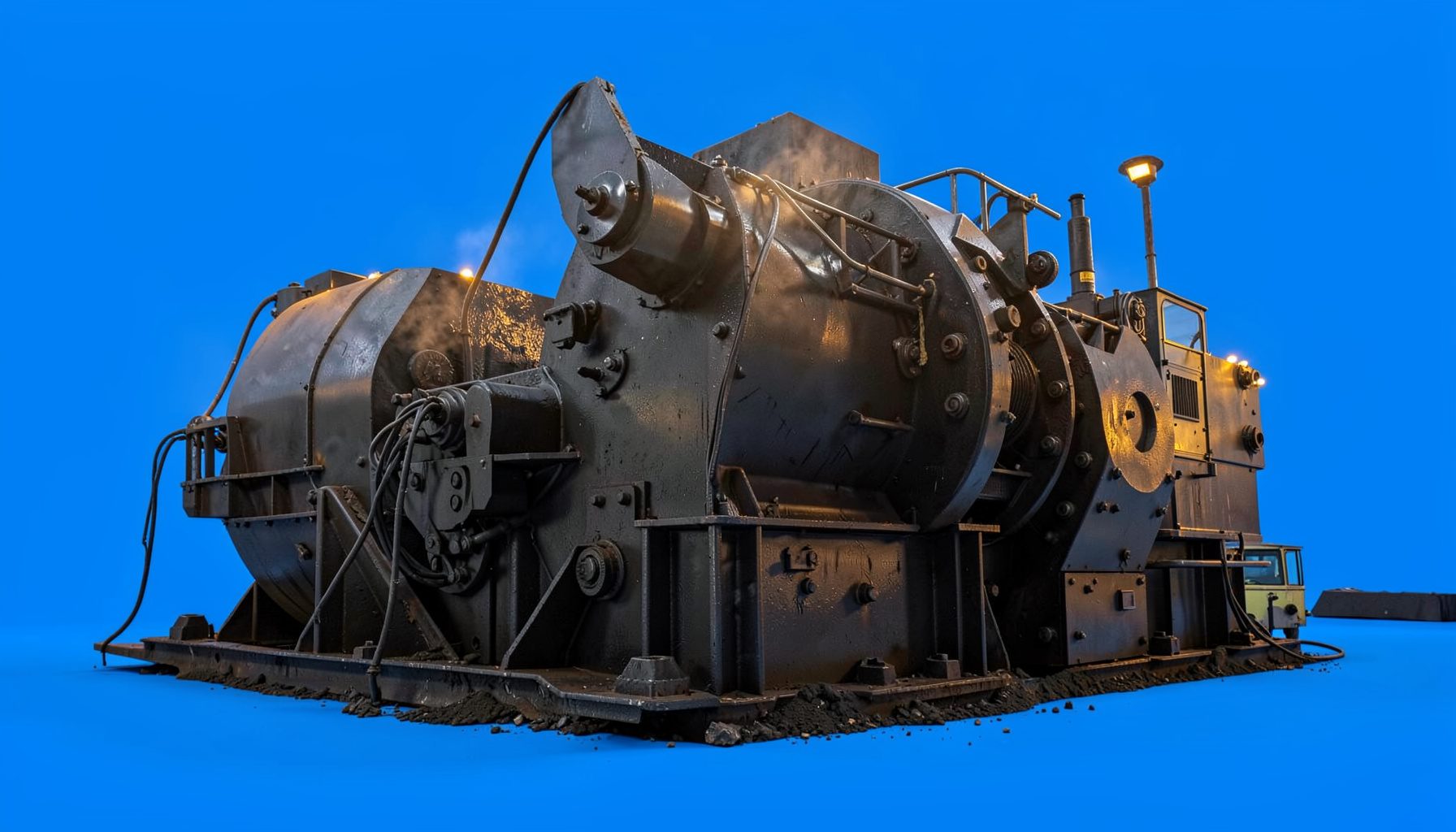
Why your quarry needs a sand-making machine for manufactured sand
Australia's east coast is in the middle of one of the largest infrastructure rollouts in its history. Sydney Metro, WestConnex and Melbourne's level crossing removal program are pouring concrete at a rate that traditional sand supply chains were never designed to handle. From Brisbane's Cross River Rail to Perth's Metronet project, the appetite for consistent, high-quality fine aggregate continues to climb. At the same time, regulators have tightened extraction from rivers and floodplains across New South Wales and Victoria, and the Murray-Darling Basin Plan has all but shut down large-scale river sand harvesting in many inland communities. The result is a structural shortage of natural sand that shows no sign of easing.
For quarry operators, the response is no longer optional. A dedicated sand-making machine, fed with rock that would otherwise become waste or low-grade crusher dust, produces manufactured sand that satisfies the shape, gradation and cleanliness requirements set out in Australian Standard AS 2758. Producers such as Boral, Holcim, Hanson and Adbri have already rewritten their mix designs around manufactured sand, and many regional contractors in Queensland and South Australia now specify it directly. The quarries that will thrive in this market are the ones that treat fines as a primary product rather than a byproduct.
The shift away from natural sand on Australian worksites
For decades, concrete-grade sand on the east coast came almost exclusively from rivers and marine deposits. Extraction from the lower Nepean, the Hawkesbury and various Victorian waterways has been progressively restricted, and several regional councils now refuse new extraction licences outright. Where licences are renewed, environmental flow rules and sediment management plans have pushed unit costs sharply higher. The economics have simply stopped favouring natural fines.
Major contractors have responded by rewriting their technical specifications. Pre-mix plants in Parramatta, Sunshine and Yatala are accepting manufactured sand provided it meets strict cubicity and 75-micron passing limits. Even regional readymix operators, who were historically the most cautious, are now routinely substituting M-sand for a portion of the natural fines in their mixes. The phrase "engineered sand" is appearing in tender documents that, five years ago, would have named a river system.
A quiet driver behind the change is the price. Natural sand in Sydney and Melbourne has at times traded at a premium to equivalent manufactured products, especially during peak construction windows. That inversion of the old price hierarchy is new. It reflects the cost of compliance, transport from dwindling inland pits, and the royalties attached to remaining extraction rights. Quarries sitting on hard rock within 80 kilometres of a capital city are uniquely positioned to capitalise on this shift.
How a sand-making machine reshapes quarried stone
A modern sand-making machine is built around a vertical shaft impact crusher, often called a VSI. Feed material, typically 40-millimetre minus from a secondary cone or jaw crusher, is accelerated in a rotor and either thrown against a cascade of rock-on-rock anvils or against a steel anvil ring. The collision shatters the stone along its crystalline weaknesses while also shaping the fragments into roughly cubical particles, which is the geometry concrete producers want.
The process is more nuanced than a single pass suggests. Operators control rotor speed, cascade feed rate and anvil gap to dial in a target fineness modulus. A percentage of the feed returns to the VSI through a recirculating conveyor, while the rest passes over a multi-deck vibrating screen. The fines that pass the 75-micron screen are typically removed as filler or sold for asphalt, while the coarser, well-shaped particles between roughly 75 microns and 4.75 millimetres become the manufactured sand product. Adjusting screen cuts and recirculation ratios lets a single plant produce anything from a coarse concrete sand to a fine plaster-grade product.
Dust suppression is closely tied to the same process. Many Australian plants enclose the VSI, route the air through wet scrubbers, and recycle the recovered slimes into civil fill or road base. This both protects the surrounding environment, a real concern near residential buffer zones in places like Campbelltown or Pakenham, and improves the recovery rate of saleable product from the same blasted rock.
Manufactured sand compared with natural sand
The two materials behave differently in a concrete mix, and the differences are usually advantages once the mix is redesigned.
| Property | Natural river sand | Manufactured sand |
|---|---|---|
| Particle shape | Rounded, smooth | Angular, cubical |
| Gradation control | Limited by deposit geology | Tight, adjustable at the plant |
| Fines (passing 75 µm) | Often variable and silty | Consistent and non-plastic |
| Water demand | Lower for rounded grains | Slightly higher unless shape is optimised |
| Adhesion to cement paste | Weaker bond | Stronger mechanical interlock |
| Availability near capital cities | Declining and regulated | Unlimited from existing quarry faces |
| Long-run cost trend | Rising with compliance costs | Stable as processing efficiency improves |
The most important line in that table is the angular, cubical shape. Cubical particles lock into the cement matrix and resist bleeding, which produces stronger, more durable concrete at the same water-to-cement ratio. Natural sand's rounded grains flow easily but contribute less to structural performance. Once a mix designer compensates for the slightly higher water demand, the manufactured product delivers equal or higher compressive strength with less variability batch to batch.
Trapezium mills and ultra-fine finishing of manufactured sand
Not every sand product stops at around 4.75 millimetres. Mortar plants, tile adhesive manufacturers, and producers of self-compacting concrete all need a much finer fraction. This is where a trapezium mill, used in line with the VSI, opens a second revenue stream for the same quarry. The principles behind how these mills reach their very fine top sizes are explained clearly in this trapezium mill overview, but the short version is that the rollers press the feed through a curved race while a classifier wheel returns oversize for further reduction.
For a quarry operator in Adelaide or Newcastle, integrating a trapezium mill downstream of the VSI allows the same upstream rock to be split into two distinct products, namely a concrete sand and a 200- to 400-micron finishing sand, without duplicating the primary crushing stage. Payback hinges on whether local demand supports a premium for the finer fraction, and in most capital city markets it does. The same machine can be tuned to produce a coarser product for use as a paver jointing sand by simply relaxing the classifier speed and reducing the air volume.
A trapezium mill also stabilises product quality between shifts. Where a VSI alone might deliver a fineness modulus that drifts with rotor wear and moisture in the feed, the closed-circuit mill holds its cut point tightly. That consistency matters when a concrete plant is pouring a single slab and needs the sand's water demand to stay identical from the first truck to the last.
Complete plant layouts for Australian quarries
A sand-making operation rarely stands alone. It usually sits downstream of existing primary and secondary crushing, with new feeders, conveyors, vibrating screens and water management equipment tied into the existing site. Suppliers offering complete plant configurations typically work with the quarry to map the existing flows, identify bottlenecks, and design the additions to fit the available footprint and power supply.
Several layouts are common in Australia. A fixed plant suits a long-life greenfield or brownfield site near Sydney, Brisbane or Perth, where the quarry intends to commit to a single location for twenty years or more. A semi-mobile plant on skid frames suits regional Queensland and Western Australian iron ore regions, where mining faces migrate and the plant needs to follow production. A fully mobile tracked plant suits smaller operators, contractors servicing short-lived civil projects, and quarries supplying remote road-building crews in the Pilbara or the Kimberley.
Capacity sizing is where most Australian projects are won or lost. Under-sizing creates bottlenecks that punish every downstream shift, while over-sizing ties up capital and inflates wear costs. A practical approach is to size the VSI on the average daily tonnage required to satisfy contracted offtake, then add a secondary screen surge pile that can absorb peaks when a contractor calls for an extra thousand tonnes on short notice.
Selecting equipment that lasts in Australian conditions
Quarries are unforgiving environments. UV exposure along the Queensland coast, salt-laden air within fifty kilometres of the shoreline, and fine abrasive dust in the arid interior all attack steel, rubber and electrical components. The selection logic that goes into coastal alloy mesh choices, matching the right alloy to a hostile environment rather than defaulting to mild steel, applies just as directly to the wear parts, screen media, conveyor belts and fasteners in a sand-making plant.
Three practical decisions tend to determine how long a plant runs without major downtime. First, the screen media: polyurethane and rubber modular panels outlast woven wire in most manufactured sand circuits, particularly when handling damp feed or feed with a high proportion of mica or schist. Second, the rotor wear parts: choosing a manufacturer that supplies a range of alloys, including high-chrome and martensitic options, lets the operator tune wear life to the feed. A basalt quarry near Melbourne will consume parts at a very different rate than a granite face near Mount Isa. Third, dust management: dry plants without scrubbers are increasingly unacceptable in residential catchments, and many councils now require evidence of continuous monitoring rather than a one-off commissioning certificate.
Service depth matters. The difference between a sand-making machine that runs for a decade and one that frustrates its owner is rarely the nameplate brand. It is the speed with which wear parts can be reached, the depth of local technical support, and the willingness of the supplier to assist with process tuning as the feed changes over the life of the quarry. Operators who weigh capital cost alone often discover, after the first major shutdown, that service and parts availability were the more important variables all along.