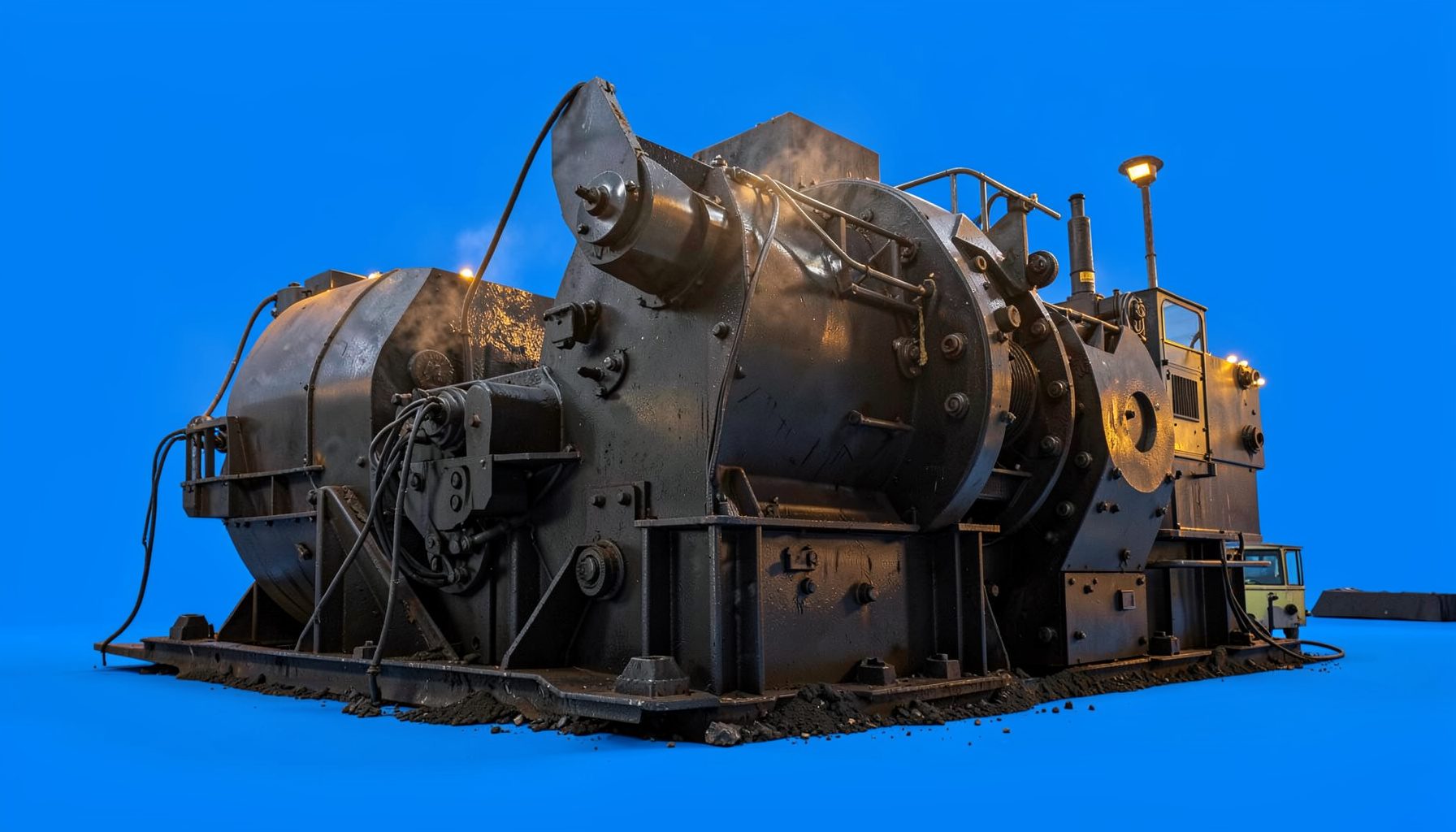
Why a Vertical Roller Mill Makes Sense for Coal Grinding
Coal preparation and pulverised-fuel systems place demanding requirements on grinding equipment. The mill must produce a consistent particle size, handle moisture, remove unwanted material, and operate reliably for long periods. Energy use also matters because grinding can represent a significant share of a plant’s operating cost.
A vertical roller mill (VRM) is worth considering when a coal operation needs efficient drying, controlled classification, and a compact layout in one machine. For Australian users, including power stations, cement plants, mineral processors, and industrial boiler operators, the choice should reflect coal properties, site conditions, maintenance capability, and the required throughput.
| Consideration | Vertical Roller Mill | Ball Mill |
|---|---|---|
| Grinding principle | Compression between rollers and a rotating table | Impact and abrasion from steel balls |
| Drying capability | Hot gas can dry feed inside the mill | Usually needs separate drying arrangements |
| Energy demand | Often lower for fine coal grinding | Generally higher at comparable output |
| Footprint | Compact vertical arrangement | Larger building and auxiliary area |
| Product control | Integrated classifier provides close control | Classification may require additional equipment |
| Maintenance focus | Rollers, table liners, classifier, hydraulics | Liners, diaphragms, bearings, and grinding media |
Efficient Grinding With Lower Power Demand
A VRM grinds coal by applying pressure between rollers and a rotating grinding table. This compression-based action uses energy more directly than the repeated impact of balls inside a conventional horizontal mill. The result can be lower specific power consumption, particularly when the mill is correctly sized and operated within its intended load range.
Energy savings are important in Australia, where electricity prices, network charges, and remote-site generation costs can strongly affect plant economics. A facility near the Hunter Valley may have different power conditions from a remote operation in Western Australia, yet both benefit from reducing unnecessary auxiliary demand. Lower energy use also reduces the heat released into the building and can support a more manageable overall plant balance.
The actual result depends on coal hardness, moisture, feed size, required fineness, and the quality of the separator. A good design review should assess the complete grinding circuit rather than relying on a headline motor rating. Fans, conveyors, feeders, dust collectors, classifiers, and hot-gas equipment all contribute to total consumption.
Drying Wet Coal Inside The Grinding Circuit
Coal can arrive with significant surface moisture after rain, washing, stockpile storage, or transport. Wet feed tends to reduce mill capacity, encourage build-up, and make stable pulverised-coal production more difficult. A vertical roller mill can use heated air or flue gas to dry the material as it is ground, allowing drying and pulverising to take place in the same process zone.
This integrated approach can simplify the layout and reduce the need for a separate coal dryer. Hot gas carries lighter, correctly sized particles towards the classifier while moisture is removed from the circulating material. Gas temperature and flow must be controlled carefully, since excessive heat can create safety risks, while insufficient heat can lead to poor throughput and unstable operation.
Australian sites may need to account for seasonal conditions, from humid coastal weather around Newcastle and Gladstone to very dry, dusty conditions in the Pilbara. Feed moisture can change across the year, so automatic control of gas volume, mill differential pressure, and outlet temperature is valuable. Sampling and process instrumentation, such as coal flow monitoring, can help operators identify changes before they become production problems.
Better Control Of Particle Size
Pulverised coal must meet a defined fineness target to burn consistently and support reliable combustion. Particles that are too coarse may burn slowly or pass through the furnace incompletely. Excessively fine material can increase grinding energy and may complicate dust and fire management. A VRM’s integrated dynamic classifier helps separate acceptable particles from material that needs further grinding.
The classifier can be adjusted to influence fineness, while mill pressure, feed rate, gas flow, and separator speed provide additional operating controls. This makes the system responsive when coal quality changes. A cement plant using coal or petcoke as kiln fuel, for example, may need a different product specification from an industrial boiler or a power-generation unit.
Stable feed presentation is essential. Vibrating feeders and conveyors should deliver material at a controlled rate and avoid surges that overload the grinding table. A plant considering wider fuel flexibility should test the expected coal blend, ash content, volatile matter, and grindability rather than assuming that one operating recipe will suit every source.
Compact Layout For Existing Australian Plants
Space can be a serious constraint when a grinding system is added to an operating facility. A vertical roller mill places the grinding table, rollers, classifier, and major process connections in a tall, compact arrangement. Compared with a large ball mill circuit, this can reduce floor area and limit the length of material-transfer routes.
The smaller footprint may be useful during a brownfield upgrade at a cement works near Melbourne, a regional power facility in New South Wales, or a mineral-processing site in Queensland. Shorter conveying paths can reduce transfer points, structural steel, and opportunities for dust leakage. The final arrangement still needs suitable access platforms, lifting provisions, fire protection, and inspection space.
A VRM also works well as part of a wider plant supplied with feeders, belt conveyors, dust collection, and control systems. Shanghai CME Mining and Construction Machinery Co., Ltd. manufactures and supplies equipment for crushing, grinding, screening, and mineral-processing applications, making it possible to consider the mill alongside supporting plant items rather than as an isolated machine.
Safety And Process Stability
Coal grinding requires careful attention to combustible dust, hot surfaces, sparks, and oxygen management. A VRM system should include suitable explosion relief, inerting or fire-suppression arrangements where required, temperature monitoring, pressure protection, and a clear emergency shutdown strategy. The design must comply with the applicable Australian regulations, site standards, and risk-assessment requirements.
Stable operation reduces safety exposure as well as maintenance disruption. Excessive vibration can indicate uneven feed, foreign material, worn grinding components, or an unsuitable operating pressure. Mill differential pressure can reveal changes in gas flow or internal circulation. Continuous monitoring allows the control system to respond before a minor deviation develops into a trip or an internal fire event.
Housekeeping is equally important. Coal dust should not be allowed to accumulate on beams, cable trays, motors, or access platforms. Maintenance crews working in hot, remote, or dusty regions need equipment suited to the site’s conditions. Practical workshop power tools can support routine mechanical tasks, although all maintenance work must follow the plant’s isolation, inspection, and hazardous-area procedures.
Maintenance, Wear And Lifecycle Value
The principal wear areas in a vertical roller mill include grinding rollers, table liners, scraper components, classifier parts, seals, and hydraulic assemblies. Wear rates depend on coal abrasiveness, ash chemistry, foreign contamination, grinding pressure, and operating hours. Hard, high-ash feed may require more durable wear materials and closer inspection intervals.
Maintenance access should be considered before purchase. The mill house needs room for lifting, liner replacement, roller inspection, and safe removal of components. Condition monitoring for vibration, bearing temperature, hydraulic pressure, and oil quality can support planned maintenance instead of unexpected shutdowns. This is especially valuable at remote Australian operations, where replacement parts and specialist technicians may need to travel long distances.
A VRM can provide strong lifecycle value when the plant maintains correct feed conditions and keeps the classifier properly adjusted. However, it is not a universal answer for every coal application. A ball mill, hammer mill, or another pulverising arrangement may be better where the feed is unusually hard, the required product is coarse, or the project already has compatible infrastructure.
Matching The Mill To The Full Plant
Choosing a vertical roller mill for coal grinding should begin with a detailed process study. Important inputs include maximum and average capacity, coal moisture, hardness, ash content, volatile matter, feed size, target fineness, available hot gas, operating hours, and local emissions requirements. Testing representative samples is preferable to designing around a generic coal specification.
The mill should also be evaluated alongside upstream and downstream equipment. A dependable crushing stage can protect the grinding table from oversize pieces, while an effective separator and dust collector support product quality and clean operation. Lessons from broader size-reduction circuits, such as guidance on cone crusher throughput, show why balanced feed preparation matters to final plant performance.
Alternative grinding technologies deserve a fair comparison. For non-combustible minerals, a trapezium mill guide may be relevant, but coal introduces additional drying, fire, and explosion considerations. The correct decision therefore depends on the complete duty rather than the name of the mill alone.
For many Australian applications, the VRM offers a practical combination of low power demand, integrated drying, compact construction, adjustable product fineness, and continuous operation. When supported by appropriate safety systems, reliable feeding, planned maintenance, and a design based on actual coal tests, it can become a dependable part of a modern fuel-preparation circuit.