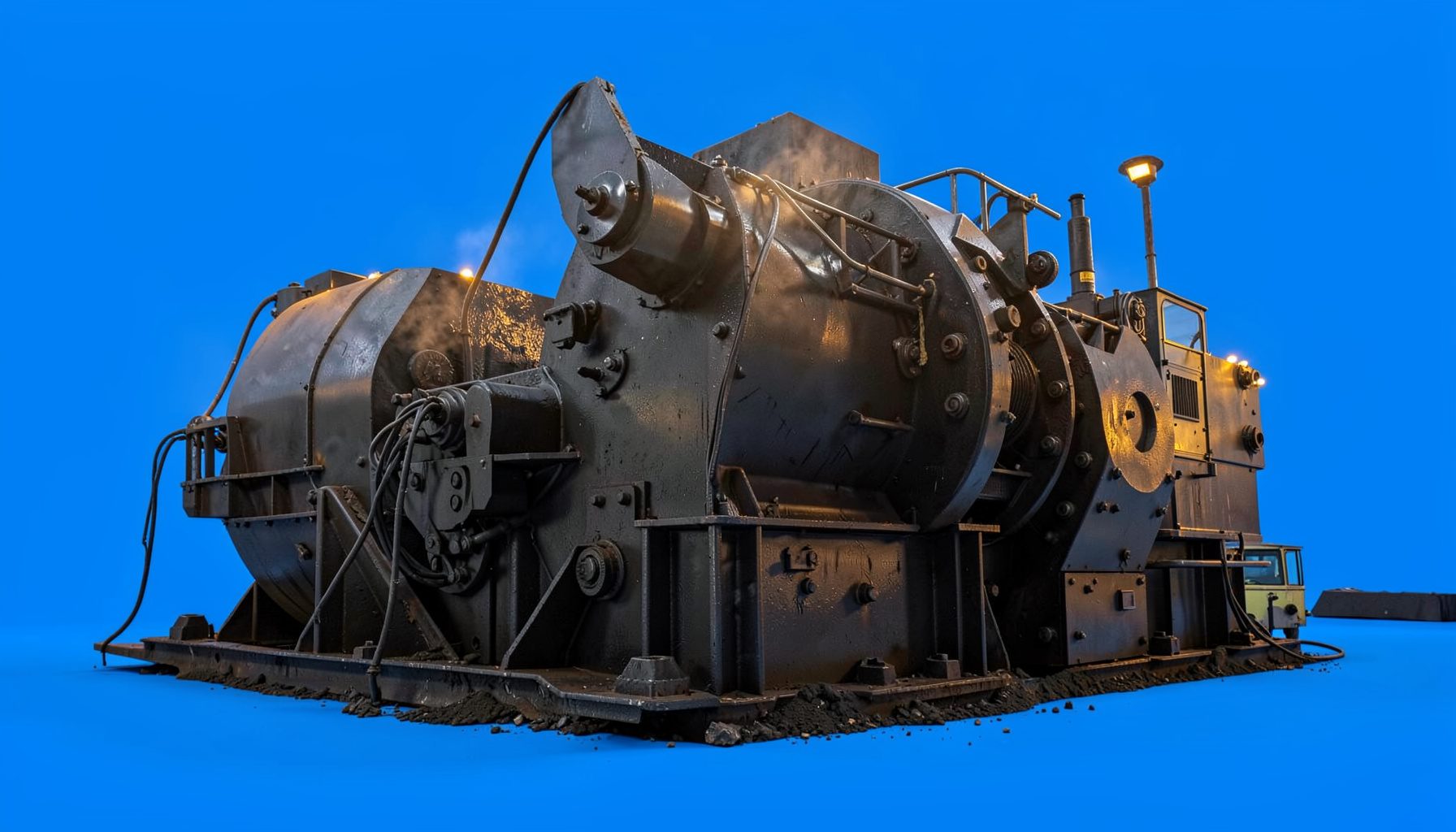
Why trapezium mills lead in non-inflammable mineral grinding
Across the Pilbara, the Hunter Valley and the rolling limestone belts of the eastern states, Australian operators are handling a wide variety of non-inflammable minerals every single day. From iron ore fines that head out through Port Hedland to cement raw mix produced for inner-city builds in Sydney and Melbourne, the materials passing through local processing plants share a common quality: they do not combust during grinding. That property shapes equipment selection in ways that overseas buyers sometimes overlook, and it is one of the main reasons trapezium mills have stayed in favour with Australian quarry managers and contract processors for years.
The country produces some of the largest tonnages of non-combustible rock in the global trade, much of it from open pits and bulk earthworks sites run by major miners and mid-tier operators alike. Around Kalgoorlie, Broken Hill and the Tanami, gold-bearing ore is crushed and milled in huge volumes, while cement plants near Adelaide, Geelong and Gladstone rely on consistent limestone grinding to keep their kilns fed. None of these materials carry an ignition risk, so plant managers can prioritise throughput, fineness and running cost over flameproofing, and trapezium mills slot into the workflow cleanly.
Trapezium mills, sometimes labelled MTW series or medium-speed mills depending on the manufacturer, are a class of roller-style grinding equipment descended from Raymond mill designs but with several European refinements. They use a conical grinding roller and an internal classifier to produce a controlled particle size, with feed typically entering below ten centimetres and discharge ranging from around thirty to four hundred mesh depending on configuration. For non-inflammable feed stocks such as limestone, calcite, dolomite, talc, barite, gypsum and similar industrial minerals, the mill offers a balance of capacity and fineness that suits Australian production volumes.
The sections ahead walk through the operating principle of these mills, the safety logic behind running them on non-combustible materials, the way they perform in harsh Australian site conditions, how they compare with other grinding options, how they integrate with upstream and downstream equipment, and what the long-term operating economics look like for a typical plant.
Operating principle and design heritage
A trapezium mill works by pressing material between a set of conical rollers and a bull ring that rotates beneath them. Feed is delivered by a vibrating feeder into the centre of the mill, where centrifugal force carries it outwards and into the grinding zone. Larger particles are caught and crushed against the ring while smaller particles ride upwards with the air stream into an integral classifier, which returns oversize to the grinding zone and discharges finished product through a cyclone and bag filter.
The conical roller shape is what gives the machine its name, with the roller profile matched to the bull ring to create a grinding geometry that handles a broader feed size range than a traditional Raymond mill. Because the rollers do not spin but rather roll against the ring, bearing loads are spread more evenly and the unit tolerates brief tramp metal events with far less drama than high-speed impact mills. For Australian sites where the occasional bolt or piece of wire mesh finds its way onto the feed belt, that tolerance matters.
Modern trapezium mills also feature hydraulic systems that lift the rollers during start-up and shut-down, which protects the grinding surfaces and simplifies maintenance. Variable speed drives on the fans and classifiers let operators dial in fineness without changing media, and dust collection is built into the air circuit so the unit complies with local environmental controls without requiring a separate baghouse retrofit. Sites servicing industrial grinding equipment for non-metallic mineral processing often cite this kind of integrated arrangement as the main reason they keep returning to mainstream trapezium designs.
Built-in safety with non-inflammable feed
Non-inflammable minerals are defined, in practical processing terms, as materials that will not ignite, combust or support a flame at the temperatures reached inside a grinding mill. Limestone, dolomite, marble, barite, feldspar, talc, kaolin, gypsum and most industrial fillers fall into this group, along with metal ores such as iron ore, copper concentrate, bauxite and lead-zinc material after primary concentration. By contrast, coal, certain sulphide ores prone to oxidation, and any feed with residual solvents require mills designed for inert gas blanketing or other protective measures.
Trapezium mills are not flameproof units and they are not designed for combustible feed. They are, however, ideally suited to materials that fall outside that combustible category. The internal air temperature stays well below ignition points, there are no high-speed impacts that could spark, and the closed grinding circuit contains dust effectively. For Australian cement and lime producers around Gladstone, Port Kembla and Kwinana, as well as fillers producers in regional Victoria and Queensland, that alignment between machine and material is exactly what they need.
There is also a regulatory angle worth noting. Under Australian standards governing fixed plant installations, mills handling non-combustible dusts face fewer containment requirements than equivalent mills running on combustible feed. That translates into simpler electrical zoning, lighter structural enclosures and a more straightforward path through the approval process with state regulators. Plant managers who have spent time chasing a hard yakka approval for a combustible-feed installation will recognise the value of skipping that layer of paperwork.
Performance under Australian site conditions
Australian conditions test equipment in ways that milder climates do not. Sites in the Pilbara face ambient temperatures that climb past forty-five degrees in summer, while operations in the Hunter Valley cope with humidity, summer storms and the occasional dust storm rolling in off the inland. Trapezium mills handle both extremes because their grinding zone is enclosed, the bearings are force-lubricated, and the classifier sits inside a temperature-stable housing. Heat rejection is straightforward, and cold-start performance is generally reliable down to about five degrees without auxiliary heating.
The other harsh element is dust. Many Australian quarries run dry, and dry crushing produces an enormous fines load that has to be managed at every transfer point downstream of the primary jaw. A trapezium mill integrated with a well-sealed conveying circuit can handle this fines load without becoming the dust source it would otherwise be. The cyclone and baghouse combination built into most modern units keeps the mill under slight negative pressure, which in turn keeps dust inside the circuit rather than venting it onto the workshop floor. Getting conveyor transfer points right matters in this context because the seal between the mill and the conveyor is what keeps the fines load contained.
Vibration is another Australian reality, particularly at sites built on reactive clay or near heavy haul truck routes. The trapezium mill sits on a relatively small footprint for its capacity and is typically anchored to a reinforced slab, so it tolerates the low-frequency rumble of a busy quarry far better than a tall, narrow tower mill does. For a contractor running a mobile spread across the back of beyond, that robustness is the difference between a profitable shift and an unplanned shutdown.
Comparison with competing mill types
The most common alternative to a trapezium mill in Australian mineral processing is the ball mill, followed at a distance by high-pressure grinding rolls, vertical roller mills and Raymond-style pendulum mills. Each has its place, and a thoughtful plant design sometimes combines them.
| Feature | Trapezium mill (MTW) | Ball mill | Vertical roller mill |
|---|---|---|---|
| Typical feed size | Up to 50 mm | Up to 25 mm | Up to 80 mm |
| Product fineness | 30 to 400 mesh | 45 to 400 mesh | 80 to 400 mesh |
| Energy efficiency | Moderate to high | Moderate | High |
| Footprint | Compact for capacity | Large | Large |
| Built-in classifier | Yes | No (separate cyclone) | Yes |
| Capital cost for 10–20 t/h | Moderate | High | High |
| Suitability for non-inflammable feed | Excellent | Excellent | Good |
| Maintenance access | Good, hydraulic roller lift | Moderate | Moderate |
For plants producing between roughly five and twenty tonnes per hour, which covers the bulk of Australian cement grinding, lime plants, fillers operations and smaller aggregate processors, the trapezium mill tends to win on capital cost per tonne of finished product while matching the fineness range of a ball mill. Larger throughputs above thirty tonnes per hour generally favour vertical roller mills or horizontal ball mills, but those tend to be the province of the major integrated cement players rather than the regional operators that dominate the rest of the market.
Sitting alongside crushing and conveyor infrastructure
A grinding mill does not run in a vacuum, and the choice of upstream and downstream equipment shapes real-world performance. In most Australian layouts, ore or rock is reduced in a primary jaw, then a secondary cone or impact crusher, and only then delivered into the mill feed bin via conveyor. The link between the secondary crusher and the mill is often the weak point in the whole circuit, because that conveyor typically carries the highest tonnage at the smallest top size and is exposed to the most weather.
Picking the right mobile or relocatable crusher ahead of the mill has knock-on effects for the grinding circuit that go beyond simple throughput. For readers weighing mobile crushing plant choices, that same logic applies when feeding a trapezium mill: a well-sized mobile or skid-mounted secondary keeps the mill fed at a stable rate without forcing the operator to oversize the mill itself.
Downstream of the mill, the conveyor network takes over, and here dust and degradation become the chief concerns. Designing transfer points to minimise material degradation covers the practical choices that keep fines from breaking down further or escaping into the plant environment. For trapezium mill operators handling limestone, talc or other soft industrial fillers, getting those transfer points right is the difference between a saleable product and one that has to be re-blended or rejected before dispatch from the local rail siding.
Maintenance, wear parts and long-term economics
Trapezium mills are designed for predictable wear patterns. The rollers and the bull ring are the parts that see the most action, and they are manufactured as replaceable units that can be swapped out within a planned shutdown. The classifier wheel, fan impeller and baghouse filters are the other routine service items, and access for replacement is built into the unit layout. A well-run mill typically accumulates between two thousand and four thousand operating hours between roller rebuilds, depending on the abrasiveness of the feed and the target fineness.
Spare parts logistics matter in Australia, particularly for sites a long way from Perth, Brisbane or the eastern capitals. Plants that standardise on a mill design widely supported by regional agents tend to keep smaller parts inventories because the supply chain is shorter. That is one of the reasons mid-tier operators around Mount Isa, Cobar and the New England tablelands have stuck with mainstream trapezium mill designs for years rather than chasing newer or more exotic technologies.
The economic picture rounds out the case. Operating cost per tonne for a trapezium mill on non-inflammable feed is typically driven by grinding media and roller wear, classifier maintenance, electrical consumption and baghouse filter replacements. With all of these factored in, the unit cost usually lands in a competitive range against ball mills and vertical roller mills at throughputs up to about twenty tonnes per hour. For the regional quarries and fillers operations that dominate much of the Australian landscape, that cost balance, combined with the simpler fuel profile, the compact footprint and the predictable spares supply, is what keeps trapezium mills at the front of the shortlist whenever a grinding circuit is being scoped.