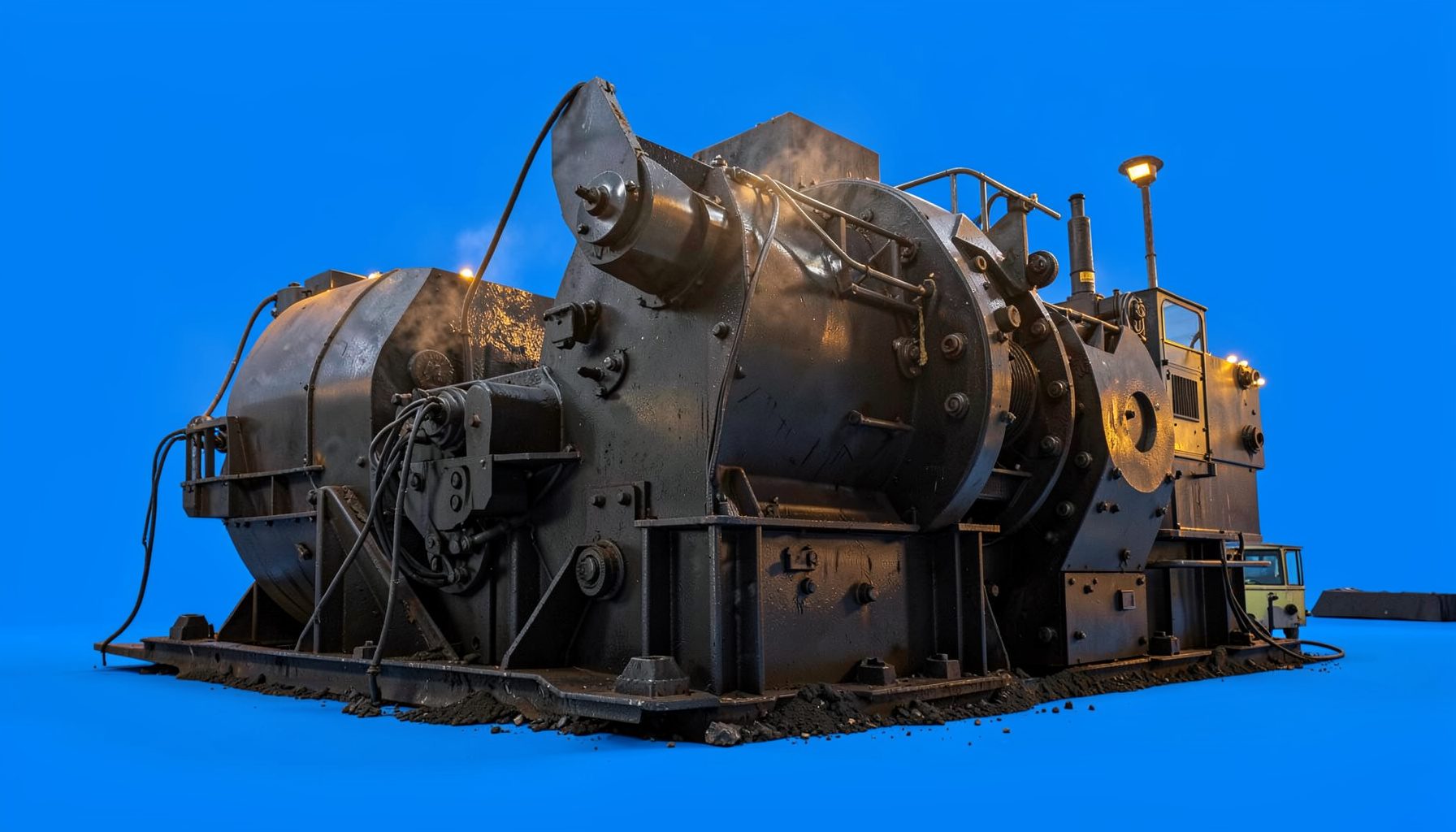
Compression crushing for tough Australian ore bodies
Compression crushing is often the better route when an ore is hard, tough or abrasive. Jaw and cone crushers apply controlled compressive forces: a jaw crusher works between a fixed and moving jaw, while a cone crusher drives an eccentric mantle against a concave bowl. These machines generally create a more compact product from hard feed and distribute wear across replaceable components. An impact crusher works differently, using fast-moving blows to break material. That approach can be excellent for limestone and softer, brittle rock, but hard quartz-bearing ore can make it an expensive choice.
This distinction is important across Australia. Pilbara iron ore in Western Australia is frequently hard and highly abrasive; Mount Isa operations in Queensland process complex lead-zinc-copper ores; and Kalgoorlie gold circuits require controlled reduction and reliable recovery of valuable particles. Construction quarries around Melbourne and Brisbane also compete for machinery that can produce specified aggregate while meeting dust, noise and safety conditions. For imported equipment, customs clearance, correct tariff classification and compliance with applicable Australian standards belong in the purchase decision from the start.
How compression and impact crushing differ
The practical distinctions come down to the loading path, the wear exposed and the product shape sought. Compression tends to generate a cubic, tightly graded product when the circuit is correctly sized. Impact is valuable where the objective is rapid reduction, high reduction ratio or particle shaping, especially in softer rock. The choice should follow an ore-specific test programme rather than a blanket preference for one crusher type.
| Factor | Jaw crusher | Cone crusher | Impact crusher |
|---|---|---|---|
| Main force | Compression between fixed and moving jaws | Compression between a gyrating mantle and concave bowl | High-speed impact and particle-on-particle breakage |
| Typical duty | Coarse primary crushing | Secondary or tertiary reduction | Rapid reduction and shaping of softer feed |
| Hard, abrasive feed | Strong, replaceable wear parts | Controlled reduction with adjustable cavity | Can experience rapid wear on rotor and anvils |
| Product tendency | Coarse, relatively angular output | Compact, controlled and often well graded | May produce more fines or flatter particles |
| Main operating concern | Feed size and jaw setting | Lube, pressure and cavity selection | Blow-bar wear, feed consistency and power draw |
A jaw crusher is normally the primary machine because its large inlet accepts run-of-mine feed and its simple reciprocating action tolerates long campaigns. A cone crusher is normally used after coarse crushing for finer reduction, with several cavity, feed and liner options available. In a hard-ore circuit, the jaw can protect the cone and screens from oversized pieces while the cone supplies a tighter size distribution.
Impact crushing still has a place. It can be effective for brittle materials and can give a useful shape correction when the feed is not severely abrasive. The weakness appears when hard, quartz-rich particles repeatedly strike the rotor and anvils: wear parts consume more budget, power demand can rise, and product consistency becomes harder to hold. A well-selected compression circuit usually gives an Australian hard-rock plant fewer consumable surprises.
Why ore hardness and abrasion matter
Hardness describes resistance to breakage, but abrasion describes what happens to the crusher. Uniaxial compressive strength and Bond work index help indicate energy demand, while abrasion indices and hardness testing indicate wear risk. A feed may be hard yet only moderately abrasive, or moderately hard yet destructive because it contains quartz or coarse, sharp grains. Engineers should test representative run-of-mine and size-fraction samples from each mining area rather than rely on a generic rock name.
The loading path changes the consequences. Compression loading tends to promote interparticle breakage, so smaller particles can act as the contact surfaces that continue the reduction process. Impact loading depends more heavily on a limited number of striking elements and can generate a larger proportion of fines or flatter particles in some applications. That does not make impact unsuitable for every ore; it makes test work essential when the feed contains hard mineral bands.
A general crushing equipment overview can help map these choices across primary, secondary and finishing duties. During pilot or plant trials, compare tonnes processed, power draw, retained product, liner consumption and gradation—not just the maximum feed size printed on a specification. In a remote operation, a slightly higher purchase price can be justified if a stable curve and longer component life reduce production stoppages.
Matching jaw and cone machines to Australian duties
Jaw and cone crushers are complementary rather than interchangeable. The jaw handles the heavy first reduction and the cone delivers controlled fine crushing. Impact crushers can still appear in a circuit as a shaping or finishing stage when the remaining feed is sufficiently soft. Shanghai CME Mining and Construction Machinery Co., Ltd. supplies these three families, along with screens, feeders, conveyors and mobile plants, allowing a supplier to configure a complete reduction route instead of selling an isolated machine.
Feed presentation is one of the easiest variables to get wrong. A surge bin or vibrating feeder should deliver a steady, distributed stream at a controlled rate; a conveyor must keep the loading point centred and avoid dead zones. This feeder and conveyor guidance explains the practical distinction. For compression crushing, a pulsating feed can leave the chamber partly empty, overload the liners or produce inconsistent products. Choking the cone to force a higher reduction ratio can create an even harsher duty.
Those controls translate directly to Australian site economics. A Pilbara iron ore circuit may run high-throughput, long campaigns and stockpile feed with variable moisture, so feed steadiness and durable liners are central. A Mount Isa polymetallic installation may need tighter size control before flotation, while a Kalgoorlie circuit can prioritise valuable fines recovery over maximum tonnage. Mobile crushing plants can suit quarry and construction work near Melbourne, but tracked units still need local service, wear-part logistics and compliant dust suppression.
Controlling the crushing circuit
Set the closed side setting for the product the plant needs, then verify the full size curve rather than judging by one sample. Jaw gaps and cone crushing cavities should be adjusted for the actual feed distribution, moisture and required capacity. Screening must remove correctly sized material promptly, while the machine runs below its choking point. A closed circuit can improve product consistency, but an undersized screen turns the crusher into an expensive recirculating vessel.
Operating stability protects both output and component life. Cone crushers require correct hydraulic pressure, oil temperature and lubrication; jaw bearings and drive systems need dependable alignment and tension. Automated feed, oil and temperature monitoring can identify drift before a cavity becomes overloaded. Dust suppression protects workers, bearings and seals, yet excessive water can carry fines into the wash plant or upset downstream flotation. Site controls should satisfy relevant environmental and occupational requirements.
Process-water quality is relevant in washing and mineral-processing circuits. Readings expressed in nephelometric turbidity units and formazin nephelometric units are not interchangeable without the defined conversion, so a short turbidity unit conversion reference is useful when comparing supplier reports or instrument data. Clear definitions help prevent an apparently small change in slurry condition from being treated as a genuine process change.
Equipment selection and lifecycle economics
Purchase price is only the first line in the operating budget. Compare motor power, liner and wear-part replacement, maintenance labour, oil consumption, downtime and the value of product that meets specification. Include transport from Shanghai, insurance, customs brokerage, Australian electrical compliance and commissioning support. A machine that is cheap to buy but difficult to support can cost more across a 12-month campaign than a slightly dearer unit with predictable parts availability.
Supplier clarity matters before a deposit is paid. Technical drawings, cavity selections, motors, warranties, spare-part lists and local support arrangements should match the project conditions. Reviewing a supplier’s published company information can be a basic due-diligence step, followed by direct checks of factory capability and references. Australian buyers should also model shipping through ports such as Fremantle, Port Hedland or Newcastle, road haulage to site and customs release dates as dependencies in the schedule.
Shanghai CME Mining and Construction Machinery Co., Ltd. markets crushing, grinding, screening, washing and mineral-processing equipment internationally, alongside jaw and cone crushers, impact machines, sand-making equipment, vertical mills, trapezium mills, vibrating feeders, conveyors and mobile crushing plants. Its product information and contact details for the Shanghai headquarters can support preliminary configuration, while independent test data should determine the final selection. For hard Australian ores, jaw and cone compression normally gives a stronger balance of consistent size control, manageable wear and lifecycle value than impact crushing.