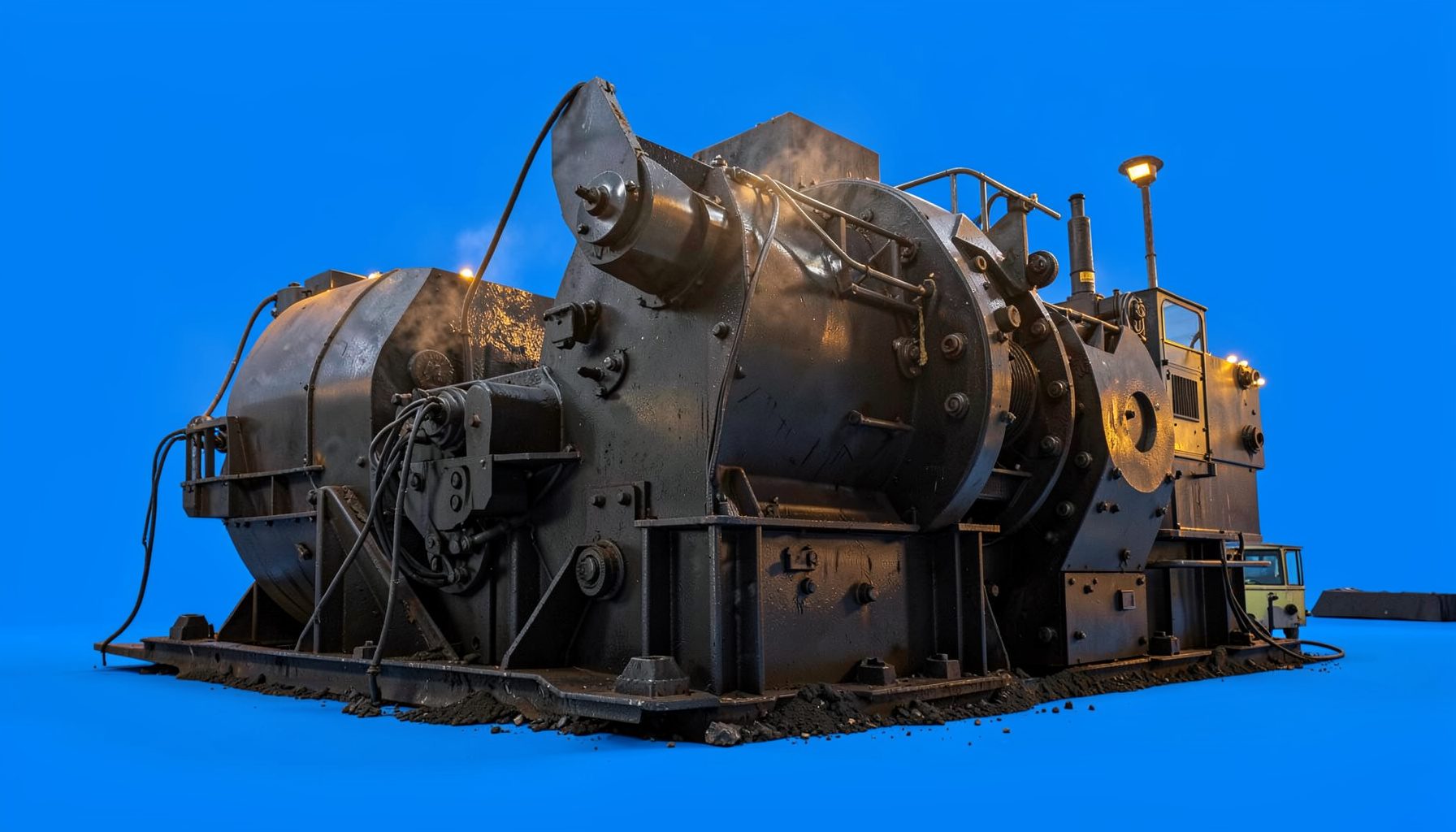
Feeder or conveyor: choosing the right crusher metering method
In a Pilbara iron ore operation or a basalt quarry outside Melbourne, the equipment sitting just ahead of the cone crusher often decides whether the whole plant runs smoothly or spends half the shift choking on surges. A loader operator dumping into a hopper, a vibrating feeder, or a long overland belt conveyor each brings material to the crusher, but only some of them actually meter it. The distinction matters because a crusher fed inconsistently suffers from ring bounce, poor product shape, higher liner wear, and tripped motors.
Metering means controlling the mass flow rate into the crusher with enough precision to keep the chamber full but not overloaded. Transport just means moving material from A to B, often at whatever rate the upstream loader or truck delivers it. Australian producers handling everything from Dolerite in Hobart to gold ore in Kalgoorlie regularly have to make this feeder-versus-conveyor decision when designing a new circuit or retrofitting an existing one. Understanding the functional difference, and matching it to local site conditions, is the starting point for any sensible equipment choice.
Defining the metering function at the crusher feed point
Crushers are volumetric machines that perform best when fed at a steady rate that matches their throw and CSS setting. A jaw crusher in a primary station may tolerate the irregular bucket loads from a 90-tonne haul truck for a short period, but if that same irregular feed is sustained, the manganese liners crack prematurely and the product gradation drifts out of specification. A cone crusher in a secondary or tertiary position is even more sensitive, because CSS fluctuations translate directly into changes in the percentage of -10 mm material in the stockpile.
Metering equipment therefore has to do more than move rock. It needs to smooth out surges, hold a set tonnage within roughly ±5 per cent, and respond predictably to a variable speed signal from the crusher's automation system. This is where a feeder and a conveyor diverge sharply. A feeder is designed from the outset to be a controlled discharge device, whereas a conveyor is fundamentally a horizontal or inclined transport device that only becomes a meter when extra control hardware is layered onto it.
How a vibrating feeder handles the job
A vibrating feeder, whether of the electromagnetic type used for finer feed or the twin-mass brute favoured for run-of-mine, uses a controllable stroke to pull material from a hopper and lay it onto the crusher belt or directly into the crushing chamber. Because the stroke length or frequency can be adjusted on the fly, the unit can react in milliseconds to a crusher level sensor calling for more or less feed. In practice, this is the configuration seen at most hard-rock quarries around Brisbane and Perth, where a 1.2 m wide pan feeder sits under a static hopper and meters primary crusher feed.
The strengths of the vibrating feeder in this role are its simplicity, its tolerance of impact from large rocks, and the fact that it can be installed with very little headroom. It also passes wet, sticky material better than a belt conveyor would, which is useful in the Hunter Valley where coal and mud are routinely loaded together. Weaknesses include higher wear on the deck or liners in highly abrasive service, and a limit on the practical length over which it can convey material, which is why vibrating feeders are almost always short machines sitting immediately under a hopper.
When a belt conveyor is asked to meter
A belt conveyor is the workhorse of bulk material transport across Australia, running hundreds of metres between a mobile jaw in the pit and a secondary crushing station at a fixed plant. A conveyor can be made to act as a meter by adding a variable frequency drive, a belt scale, and a closed-loop control tie-in to the crusher's level probe. The belt's speed becomes the control variable, and a PLC modulates it to hold the set tonnage.
This arrangement is common where the conveyor has to cover a long distance anyway, such as in the in-pit crushing systems used at copper-gold operations in South Australia. It avoids duplicating equipment: one belt does both jobs. The catch is that belt conveyors are less forgiving of surge loads. A truck dumping a full bucket onto the belt causes instantaneous overfeed, and the belt cannot respond as quickly as a vibrating feeder. Tracking, spillage, and dust management under the AS 4324 series of Australian Standards also add compliance work that a feeder does not require in the same way. The interaction with downstream grinding circuit design must also be considered, because any feed instability created here will propagate into the milling stage.
Comparing the two options side by side
The comparison below summarises the practical differences for operations typical in Australian conditions.
| Feature | Vibrating feeder | Belt conveyor with VFD |
|---|---|---|
| Primary purpose | Controlled discharge and short transport | Long-distance transport, metering as a secondary function |
| Metering accuracy | ±3–5 per cent with simple speed control | ±5–10 per cent depending on belt scale quality and tuning |
| Capital cost (per unit) | Moderate | Moderate to high once drive, scale, and automation are added |
| Operating cost | Higher pan or deck wear, lower energy per tonne at short centres | Lower wear parts, higher energy for long centres, more spillage cleanup |
| Surge handling | Excellent, accepts direct truck or loader dumps | Poor, requires surge bin or feeder ahead of the belt |
| Best suited to | Primary crusher feed under a hopper, sticky or wet material | Long haul from face to plant, dry and consistent material |
| Typical Australian use | Quarries in the Sydney basin, basalt operations in Melbourne | In-pit crushing at large metal mines, port-loading circuits |
The figures shown are general guidance rather than firm quotes, and actual performance depends on the specific manufacturer and the duty cycle. For a high-tonnage, abrasive granite operation in the Pilbara, capital and operating numbers will sit at the higher end of the range, while a smaller basalt or limestone operation around Ballarat or Geelong may achieve the same results with lighter-duty equipment. The comparison is therefore a starting point for discussion with equipment suppliers, not a substitute for site-specific engineering.
Australian conditions that often decide the choice
Local realities narrow the technical comparison considerably. Water is scarce across much of the interior, and operations in the Pilbara or near Broken Hill must plan around strict site water licences, which means any equipment that minimises wash-down is preferred. Vibrating feeders under a dust-suppression hood tend to keep fines contained better than a long, open belt, which suits Western Australian Department of Mines, Industry Regulation and Safety inspections on dust.
Distance is another decisive factor. A sand quarry in the Adelaide Hills moving material 200 m from face to a wash plant will run a belt conveyor every time, because adding a feeder just to meter would be redundant. A hard-rock aggregate producer in regional Queensland, on the other hand, often has the primary jaw close to the loader face and a small hopper between them, so a feeder makes more sense. Site labour and FIFO rosters also matter: a vibrating feeder has fewer wearing parts that an on-site fitter can swap out in a single shift, whereas a belt conveyor in a remote location requires a larger maintenance inventory and more planned shutdown time.
Control, safety, and the role of automation
Both feeders and conveyors can be tied into a crusher's automation package, but the integration is different. A vibrating feeder accepts a simple 4–20 mA signal from the crusher's motor power or cavity level sensor and responds within a fraction of a second. A belt conveyor used as a meter needs the same input plus a belt scale signal, a PID loop, and careful tuning to avoid hunting. For operators working to AS 4024.1 on machine safety, the guarding and emergency-stop requirements are comparable, though conveyors often demand additional pull-cord runs along their length.
Modern circuits increasingly feed data from these devices into a plant-wide control system that also handles downstream grinding. When working towards a target of 80 per cent passing 75 microns, the upstream feed consistency is critical, because the grinding mill cannot compensate for surges delivered from the crushing stage. Operators looking for broader reference material on industrial safety and equipment standards can consult industrial safety resources for additional documentation. Automation also enables remote monitoring from Perth or Brisbane head offices of Pilbara or Hunter Valley sites, which fits the operating model of most Australian majors.
Making the practical call for your plant
The most reliable way to choose is to start from the crusher's requirements and work backwards. If the crushing chamber is choke-fed and the plant runs on a variable speed drive tied to a level probe, a vibrating feeder ahead of the unit is the simplest and most responsive solution. If the crusher is fed by a conveyor that has to run regardless of the crusher's state, and the layout means the conveyor is the only practical path from the loader to the plant, then adding the variable speed drive, belt scale, and control loop is the logical choice, even though it adds complexity and cost.
Budget, in Australian dollars, also plays a role. A heavy-duty vibrating feeder for a 1,000 tph primary station is a significant capital item, but so is a 60 m inclined conveyor with full guarding and automation. Many mid-sized operators find that a combination of the two is the most cost-effective: a long overland belt to deliver material to a surge bin, and a vibrating feeder under that bin to meter the final flow into the crusher. Spare parts availability through Australian distributors and the proximity of service agents in cities like Sydney and Adelaide should be checked before any decision is made, because the cheapest machine is rarely the cheapest to run over a ten-year horizon.
Finally, it helps to remember that operators in regional and remote sites use their downtime in various ways, including accessing online services such as no download casino platforms when site connectivity allows, which is why reliable network coverage has become an underrated part of any plant upgrade plan. The core equipment decision, however, remains rooted in matching the metering device to the crusher's appetite, the material's characteristics, and the constraints of the Australian regulatory and operating environment.