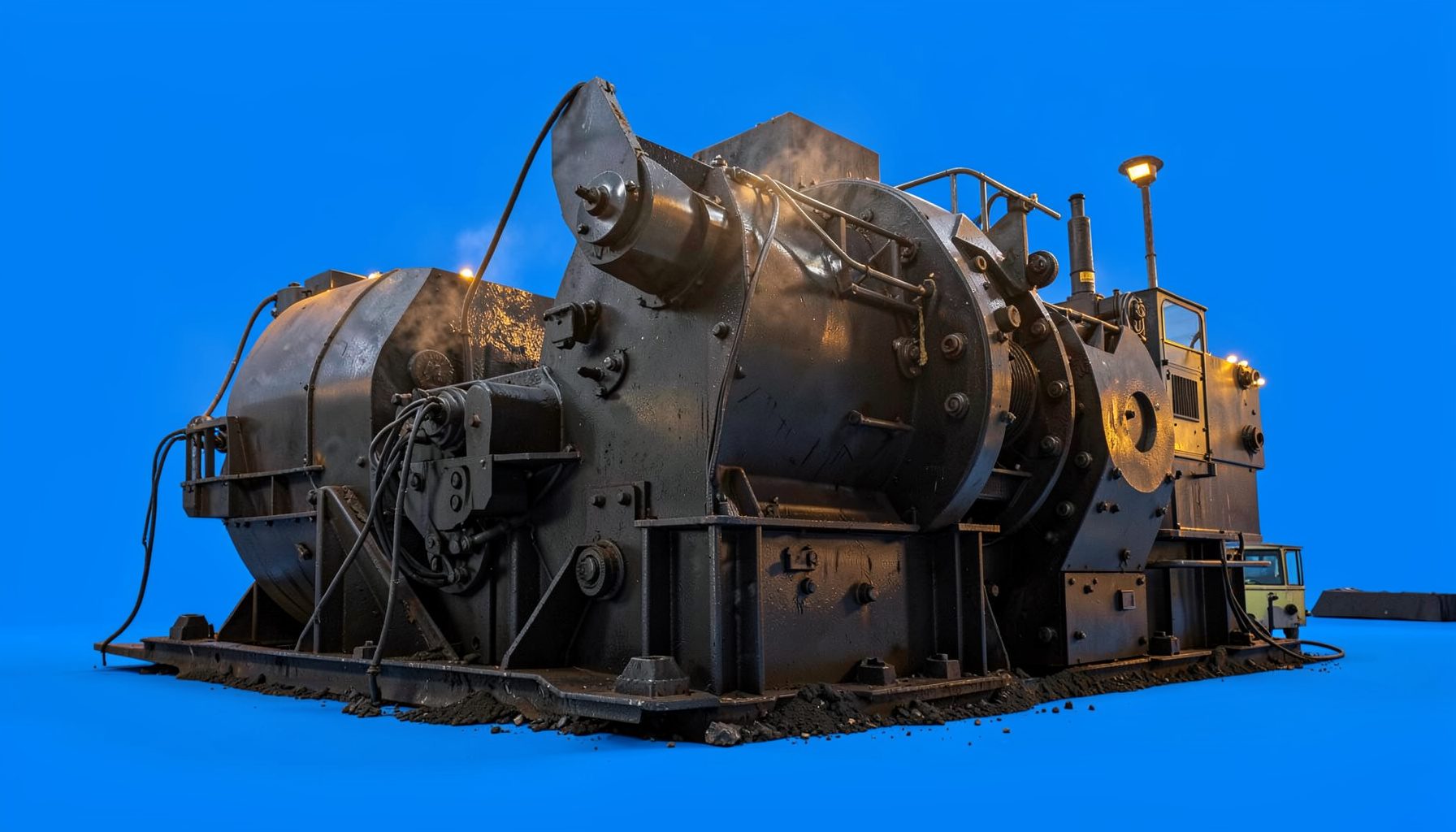
How a surge pile keeps grinding mill feed steady
A surge pile is the stockpile positioned between crushing and grinding. Its role in maintaining steady feed to the grinding mill is to absorb peaks in crusher output and provide a controlled reserve when crushing slows. The aim is not to become a final storage area, but to separate upstream production from the mill’s preferred feed rate.
For an Australian quarry or mine, that separation matters because run-of-mill feed, crusher settings, screen performance and material moisture rarely change together. A steady feed to the grinding mill means more than a constant tonnes-per-hour reading: particle size, size distribution and water content also need to remain within a workable range.
Shanghai CME Mining and Construction Machinery Co., Ltd. supplies the crushing, screening, feeding, conveying and grinding equipment used to build this kind of controlled circuit. The surge pile is only one component, but it connects the upstream plant to the mill and can determine whether downstream equipment runs smoothly or repeatedly reacts to feed surges.
Why crushing and grinding rates diverge
Crushers are commonly governed by their own operating limits: feed opening, chamber level, liner wear, belt loading and the need to keep screens clear. A grinding mill has a different constraint, based on its grinding capacity, feed size, product fineness and circulating load. The two rates will not match perfectly throughout a shift.
Several routine changes create a mismatch. A worn screen can let oversized rock pass, a bypass gate can send unscreened material down the conveyor, and a loader can add or remove feed while a truck queue builds at the crusher. Variable ore hardness and moisture can also change how quickly the crushing circuit settles after a feed change.
At crushing and sorting stages, an inspection system changes the accepted fraction rather than simply moving every tonne forward. Any changes in accepted fractions from optical sorting systems should therefore be included when engineers estimate how quickly the mill inventory can change. The point is to anticipate variation, not blame the mill for an unstable feed.
What the surge pile actually buffers
The pile absorbs short peaks in crusher output. If the crusher can sustain 250 t/h while the mill is designed for 200 t/h, the excess can accumulate instead of overwhelming the mill feeder. During a crusher stop, the reserve can keep the mill supplied for a chosen period. Engineers size this buffer using expected rate differences, operating duration and the feed characteristics that affect mill power.
It also decouples operating decisions. A crusher can be stopped for a brief belt repair, screen change or chamber adjustment without immediately stopping grinding. Conversely, the mill can be held while its product circuit is cleared. This flexibility is valuable on remote sites where a breakdown can involve a long wait for a mechanic, fuel or a replacement component.
The buffer does not correct poor screening or an incorrect crusher setting. It postpones the consequence. A pile that regularly receives oversized stone, damp fines or mixed feed will store the same problem, then release it in batches. Good record keeping therefore needs to connect stockpile conditions with crusher performance, screen deck condition and the mill’s measured response.
Designing storage and controlled reclaim
Available land, mobile-plant movements and future expansion determine whether a pile, a hopper or a combination is practical. A useful design sets out the maximum working stock, the minimum reserve needed during a downstream interruption, reclaim capacity and the route by which trucks and loaders move around the stockpile without disturbing the draw-down face.
Storage choice determines how readily the buffer can be reclaimed and how much space it requires.
| Arrangement | Feed behaviour | Main operating advantage | Main limitation |
|---|---|---|---|
| Surge pile with loader reclaim | Material is drawn from the working face; consistency depends on disciplined reclaim and stockpile control | Large capacity, simple civil works and easy expansion | Loader availability, traffic conflicts and variability at the reclaim face |
| Surge bin with controlled draw | A gate or feeder meters material from a smaller inventory | Compact metering and close coupling to the mill | Limited storage and sensitivity to material flowability |
| Live surge hopper or continuous reclaim | Material is metered continuously from a feed hopper | Very steady delivery and good automation access | Higher capital cost and greater dependence on extraction equipment |
A surge pile gives a plant room to breathe, but a heap does not meter itself. A loader bucket, reclaim conveyor, vibrating feeder or controlled opening must withdraw material at the rate the mill can use. Engineers should define the reclaim method early, because an unmeasured loader cycle can reintroduce the very feed variability the pile was intended to remove.
The draw-down face should be kept organised, with oversized rocks and tramp material removed before they reach the reclaim conveyor. Stockpile height, angle of repose, drainage and dust control also affect segregation and handling. In heavy rain, wet fines can bridge a hopper or stick to equipment; in dry weather, dust can obscure the reclaim point.
Feed consistency and mill performance
A grinding mill responds to feed mass, particle size and hardness together. Coarse or dense material can raise grinding work and power draw, while a sudden slug of fines can alter the material bed inside the mill. Surge piles help by keeping the feed layer comparatively uniform, provided the crusher and screens deliver a consistent size distribution.
Vertical mills and roller presses also depend on product classification. Engineers coordinating a vertical mill and its classifier should establish vertical mill classifier speed with the grind target and cut size, then verify the result through measured product size. A stable incoming feed gives that balance a better chance of holding, rather than requiring constant correction.
Feed moisture can change the power needed for grinding and the behaviour of the slurry circuit. If the plant uses water addition, a controlled flow is needed alongside the solids feed. The surge pile is not a substitute for that control, but it can reduce short-term swings in the material reaching the wet grinding system. Operators should record feed rate, extracted power, product gradation and alarms as one operating picture.
Protecting equipment and controlling the circuit
The simplest buffer logic is manageable: fill the pile while the mill draws at its normal rate, stop the crusher when the stockpile reaches its working limit, and restart when the level falls to the reclaim setpoint. Belt scales, stockpile level sensors and variable-speed feeders allow the control room to follow tonnes per hour and inventory. Interlocks should prevent a pile overflow from loading a belt beyond its safe capacity.
Protection also belongs at the crusher. Keeping a suitable draw from the chamber helps maintain a stable product, while an empty or overloaded chamber can produce poor gradation and uneven stress on liners. Automatic lubrication, bearing temperature checks and a controlled start sequence are essential. In alpine Tasmania or the Southern Tablelands of New South Wales, cold-weather cone crusher lubrication practices deserve a pre-start review, particularly after the equipment has stood overnight.
Safe access around the stockpile matters just as much as feed control. Operators need stable platforms at inspection points, clear routes around moving trucks and a separation between pedestrians and mobile plant. When checking expanded mesh strength for access platforms near the stockpile and crusher discharge, engineers should verify load rating, span, support spacing and corrosion resistance rather than rely on appearance.
Australian site conditions and operating practice
Australian conditions should shape the buffer design rather than be added after installation. A Pilbara iron-ore operation may face extreme heat, long travel distances and a high demand for continuous production. A limestone quarry near Newcastle has a different feed and market pattern, while aggregate suppliers around Melbourne, Sydney and Brisbane often handle a broader mix of specifications and smaller order batches.
Road haulage adds another layer. Trucks waiting for the crusher can change the rate at which run-of-mill material reaches the stockpile, and wet or dusty conditions can affect loader traction and reclaim consistency. Site traffic plans often include a crusher feed hold, a one-way route and a clear exclusion zone around the draw-down face. These details are frequently settled in a toolbox talk, where the crew sorts out what each operator will do when levels change.
FIFO rosters, remote maintenance support and imported parts lead times mean that a short upstream stoppage can have a large cost. Spares planning should cover belts, idlers, feeder liners, crusher wear parts and sensors, not just major drives. The buffer must also have enough usable material to bridge a realistic delay; excessive theoretical capacity does not help if the reclaim route is blocked or the required part is unavailable.
Engineering support for crushing and grinding systems
A surge pile works best when it is matched to a complete crushing and grinding circuit. Shanghai CME’s equipment range includes jaw, cone and impact crushers, sand-making machines, vertical mills, trapezium mills, vibrating feeders, conveyors and mobile crushing plants. That range allows the feed path to be reviewed as a system, from primary receiving through screening, controlled reclaim and final grinding.
For Australian buyers, imported equipment brings questions about guarding, dust control, electrical requirements, operator training and the supply of replacement parts. The Shanghai-based company sells internationally and can support equipment selection, technical enquiries and shipment coordination. Local contractors and engineers remain responsible for adapting the installed system to the site, applicable standards and operating conditions.
The most reliable buffer is not necessarily the biggest one. It is the arrangement that controls real differences in crusher output, supplies the mill at its working rate and preserves feed quality during interruptions. When storage, reclaim and instrumentation are designed together, the grinding section can spend less energy correcting variability and more time producing a consistent product.