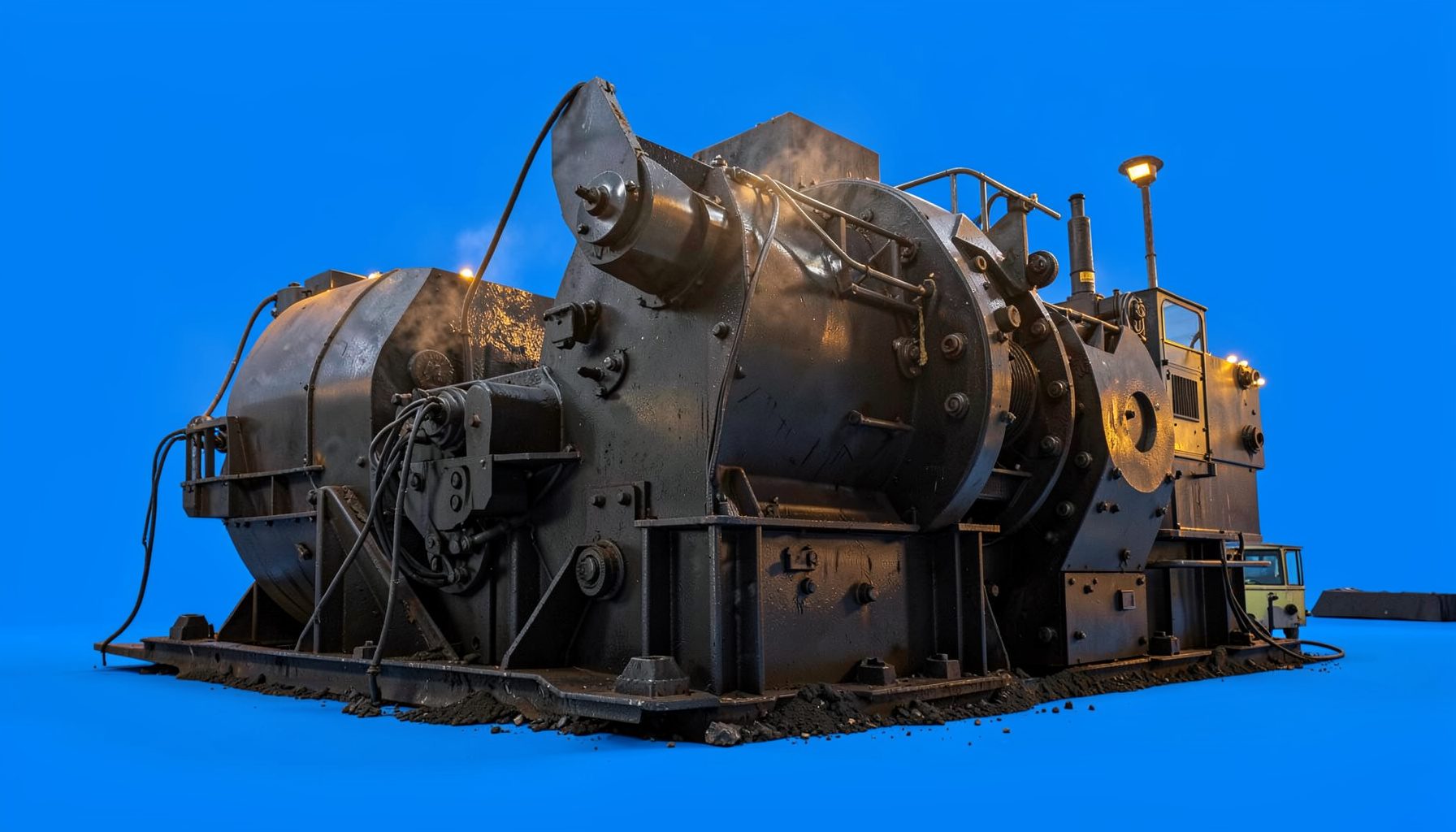
Key Parameters for Selecting a Crusher Motor and Drive System
Selecting a crusher motor and drive system requires more than matching a motor’s kilowatt rating to the crusher nameplate. The motor must accelerate the rotor, jaw, or cone, withstand repeated load changes, and deliver reliable torque through the drive, coupling, gearbox, and electrical network. A suitable selection also accounts for the feed material, operating schedule, ambient conditions, and maintenance resources available at the site.
Australian quarries and mines often operate in demanding conditions, from dusty aggregate sites near Sydney and Brisbane to remote iron-ore operations in Western Australia. Long cable runs, limited grid capacity, high summer temperatures, strict work health and safety obligations, and costly downtime all influence the final specification. The same principles apply to stationary and mobile crushing plants supplied for construction, cement, quarrying, and mineral-processing applications.
Understanding Crusher Duty And Load Demand
Begin with the crusher’s actual duty rather than its advertised capacity. A jaw crusher typically sees high starting resistance and cyclic torque as the eccentric shaft moves through each crushing stroke. A cone crusher may operate with a more continuous load, while an impact crusher can create sharp torque peaks when tramp metal or unusually hard feed enters the chamber. A sand-making machine may require stable high-speed operation and tighter control of rotor speed.
The duty calculation should include feed size, material hardness, bulk density, moisture, reduction ratio, operating hours, and the expected percentage of recirculating load. A plant processing abrasive basalt near Melbourne will impose different demands from a limestone operation outside Perth. Identify both the average absorbed power and the maximum transient load, because a motor selected only for average demand may overheat or trip during blockages and surges.
| Crusher application | Main load characteristic | Drive selection priority | Useful control approach |
|---|---|---|---|
| Jaw crusher | High starting torque and cyclic load | Motor torque, flywheel inertia, starting current | Soft starter or variable-speed drive |
| Cone crusher | Steady load with overload events | Power margin, torque protection, hydraulic coordination | Variable-speed drive or controlled starter |
| Impact crusher | High shock and peak torque | Rotor acceleration, coupling strength, overload response | VSD with fast protection |
| VSI or sand-making machine | High-speed continuous operation | Speed stability, balance, cooling | Variable-speed drive |
| Mobile crushing plant | Variable feed and restricted power supply | Compactness, generator compatibility, cable protection | VSD or soft starter |
A crusher may be rated for a certain throughput, yet the installed motor size depends on the full circuit. Feeders, conveyors, screens, pumps, and dust-control equipment can alter the material flow and cause the crusher to run empty, surge, or choke. Review the complete process line before finalising the crusher drive, especially where a vibrating feeder and screening plant regulate the load.
Matching Motor Power And Torque
Motor power is calculated from torque and rotational speed, so both values matter. A high-speed impact crusher may reach the required kilowatts with a comparatively modest shaft torque, while a slow-speed jaw crusher needs substantial torque at the eccentric shaft. Gearboxes, belts, and pulleys change speed and torque, but they also introduce losses and additional failure points.
Check the motor’s starting torque, pull-out torque, service factor, efficiency, and thermal class. A motor with adequate running power can still fail to accelerate a heavily loaded crusher if its starting torque is too low. The calculation should consider flywheel inertia, rotor inertia, coupling characteristics, and the time allowed for acceleration. Direct-on-line starting can produce a large current surge, which may cause voltage dips or nuisance trips at a constrained quarry supply.
Select a motor with enough reserve for normal variation without creating excessive oversizing. An unnecessarily large motor may operate far below its efficient load range, increase capital cost, and require a larger switchboard, cable, generator, and transformer. A practical design commonly includes a controlled engineering margin based on measured process data, manufacturer curves, and the site’s expected feed conditions rather than an arbitrary percentage.
Choosing The Drive Architecture
The drive system can use a direct-on-line starter, star-delta starter, soft starter, variable-speed drive, hydraulic drive, or a combination of these components. Direct-on-line starting is simple and economical where the electrical network is strong and the crusher starts unloaded. It is less attractive for large motors, remote sites, and equipment with high inertia.
A soft starter limits inrush current and provides a controlled ramp-up, reducing mechanical shock in shafts, belts, and couplings. It does not provide full operating speed control, so it may be unsuitable where crusher capacity, product grading, or liner wear depends on speed adjustment. A variable-frequency drive offers speed control, current limiting, fault logging, and process integration. It can help regulate a cone or VSI crusher, but the selection must account for harmonic distortion, motor cooling at reduced speed, enclosure rating, and the drive’s overload capability.
For Australian sites, confirm compatibility with the available supply before choosing the architecture. A plant near Adelaide may have a robust utility connection, whereas a remote Pilbara operation may use diesel generators or a hybrid power system. Generator impedance, available short-circuit current, voltage regulation, and load-sharing controls can determine whether a soft starter or VSD is practical. Specialist drive system references can support early research, but final sizing should rely on crusher load data and the equipment manufacturer’s engineering documentation.
Accounting For Site Conditions
Temperature, dust, altitude, humidity, and installation position directly affect motor performance. A motor installed in an enclosed plant room may require forced ventilation, while a motor mounted beside a mobile crusher may be exposed to vibration, water spray, and airborne fines. At an open-cut operation in Western Australia, solar heat and red dust can raise enclosure and bearing temperatures well above workshop conditions.
Specify the correct ingress protection rating and cooling arrangement. IP55 is common for industrial motors, but the final selection depends on wash-down practice, dust concentration, and the location of cable glands. Crusher motors should have suitable bearings, seals, anti-condensation heaters where required, and a lubrication plan compatible with the maintenance interval. VSD applications may require insulated bearings or shaft grounding to reduce electrical bearing currents.
Altitude can reduce cooling effectiveness because thinner air removes less heat. Long cable runs can also create voltage drop and reflected-wave stress when a VSD is installed far from the motor. These details are relevant to remote Queensland and Northern Territory sites, where equipment may be separated by substantial distances and replacement parts may take days to arrive. Environmental derating should be included before choosing the nominal motor rating.
Sizing Electrical And Mechanical Interfaces
The motor is one part of a larger power train. Confirm the supply voltage, frequency, phase arrangement, full-load current, protection settings, cable size, switchboard rating, transformer capacity, and emergency-stop circuit. Australian industrial installations commonly use 400 V three-phase power, but large mining projects may use higher-voltage distribution with local transformers. The design must comply with applicable Australian and New Zealand electrical standards, site rules, and inspection requirements.
Mechanical interfaces deserve equal attention. Check shaft diameter, keyway, mounting arrangement, centre height, belt alignment, coupling rating, gearbox ratio, and the maximum permissible radial and axial loads. A motor that fits electrically may still be unsuitable if the pulley overhang, coupling bore, or baseplate stiffness is wrong. Crusher foundations must resist starting torque and cyclic vibration without transmitting damaging loads to adjacent conveyors and screens.
Protection should cover overload, short circuit, phase loss, earth fault, locked rotor, under-voltage, over-temperature, and excessive vibration. Current transformers and protection relays must be coordinated with the motor and starter. Where the crusher is part of a mobile plant, cable routing needs protection from abrasion and crushing, while plugs and connectors must suit field conditions. This is especially important for contractors moving equipment between New South Wales quarry sites and regional projects.
Checking Compliance And Serviceability
A reliable selection includes the site’s maintenance model. Ask whether technicians can test insulation resistance, align couplings, analyse vibration, change bearings, and troubleshoot a VSD without waiting for specialist support. A lower-cost drive may become expensive if its control software, power modules, or cooling fans are difficult to obtain in Australia. Keep critical spares such as cooling fans, fuses, keypad modules, encoder components, and compatible bearings where supply chains are long.
Work health and safety requirements also shape the installation. Guarding must prevent access to rotating shafts, belts, couplings, and flywheels. Isolation points should support lockout and tagout procedures, and stored mechanical energy must be safely released before maintenance. Quarry and mining operators may also need to satisfy state-based WHS legislation, electrical inspection rules, dust-control requirements, and documented risk assessments.
Instrumentation improves both safety and selection accuracy. Monitor motor current, winding temperature, bearing temperature, vibration, crusher pressure, speed, and belt slip. Optical or machine-vision systems may assist with feed monitoring, and optical monitoring methods can be considered where a site needs additional visibility of material flow or equipment condition. The monitoring package should produce useful alarms rather than flooding operators with data that cannot be acted upon.
Using Energy Data For Final Selection
Energy consumption provides a valuable check on motor and drive sizing. Record kilowatt demand, power factor, starts per hour, running hours, and load profile across representative feed conditions. A motor that spends most of its time lightly loaded may need a different control strategy from one operating continuously near its rated output. Efficient motors, correctly sized drives, and stable feeder control can reduce electricity costs without sacrificing throughput.
Variable-speed control can improve circuit stability by matching crusher speed to feed characteristics and product requirements. However, reducing speed does not automatically guarantee energy savings: the crusher may spend longer in operation, auxiliary equipment may continue running, and poor control settings can increase recirculation. Evaluate the whole circuit, including feeders, conveyors, screens, pumps, and fans. Guidance on grinding circuit energy savings is also relevant when a crushing stage feeds a downstream mineral-processing circuit.
The final specification should document the crusher model, duty point, motor rating, torque curve, starting method, drive overload rating, environmental derating, protection settings, and commissioning tests. Verify acceleration with the actual flywheel or rotor inertia, then test operation under controlled feed conditions. This process gives operators a drive system that can handle Australian site realities while preserving motor life, product consistency, and plant availability.