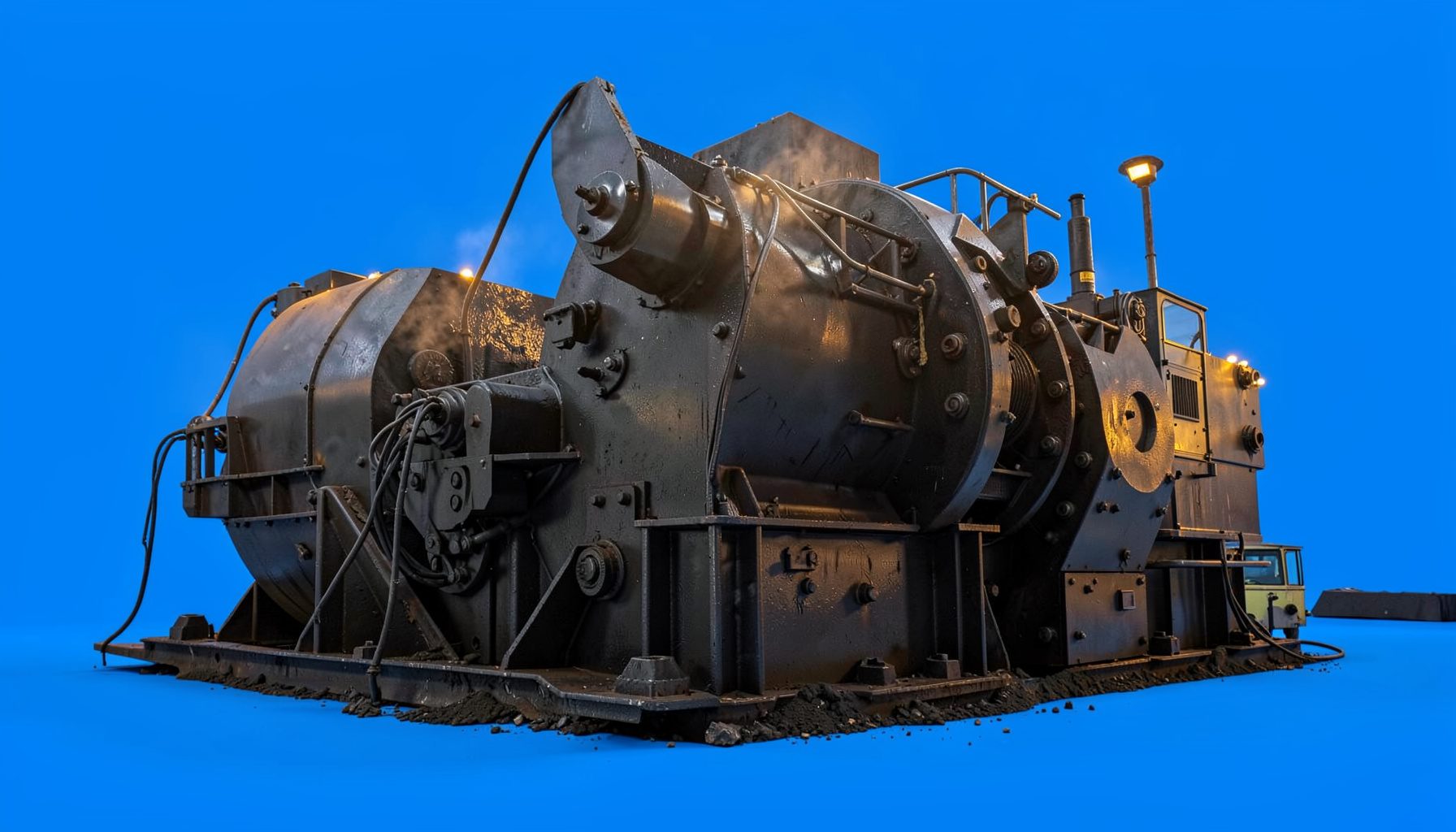
Key metrics for predictive maintenance in crushing plants
A crushing plant rarely fails without warning. Bearings heat up, liners wear unevenly, belts drift, screens lose efficiency and hydraulic systems begin to work harder before a major breakdown stops production. Predictive maintenance turns those early signals into practical maintenance decisions, helping operators repair equipment during planned downtime rather than during a costly emergency. Learn more about Solutions.
For Australian quarry and mining operations, this approach is especially valuable. Long distances, limited workshop access, high utilisation and harsh weather can make an unplanned outage expensive. A useful monitoring programme combines mechanical readings with production data, inspection records and operator observations, creating a clear picture of plant health over time.
Vibration reveals developing mechanical faults
Vibration is one of the most useful condition-monitoring measurements for jaw crushers, cone crushers, impact crushers, screens and conveyor drives. Accelerometers can identify changes in bearing condition, shaft balance, coupling alignment and structural looseness. The important signal is usually a change from the machine’s normal baseline rather than a single universally acceptable reading.
Operators should track overall vibration velocity, acceleration and, where suitable, frequency-spectrum results. A gradual rise at bearing-related frequencies may indicate fatigue or lubrication problems. A strong reading at running speed can point to imbalance, while harmonics may suggest misalignment or looseness. On vibrating screens, abnormal vibration can also arise from damaged exciters, loose bolts or unequal spring performance.
Sensor placement must be repeatable. Readings taken from the same bearing housings, motor casings and support points make trends easier to trust. Dust, mud and wash-down water can damage poorly protected sensors, so mounting, cable routing and inspection frequency matter. On mobile crushing plants working around remote Western Australian pits, wireless sensors can reduce manual inspection rounds, provided the communications system is reliable.
A vibration alarm should trigger a defined response. For example, a warning may require an inspection within the next shift, while a critical trend may require a controlled shutdown and bearing check. This avoids treating every alarm as an emergency and gives the maintenance team enough time to arrange parts and lifting equipment.
Temperature and lubrication show hidden wear
Bearing temperature is a straightforward metric with strong diagnostic value. A rising temperature may result from insufficient grease, over-greasing, contamination, excessive load, poor alignment or a failing bearing. Compare the measurement with the same point on similar equipment and with the machine’s historical operating range. Ambient temperature also matters, especially during hot summer shifts in the Pilbara or inland New South Wales.
Oil temperature and pressure are equally important for cone crushers, gearboxes, hydraulic power packs and vertical mills. Low pressure can indicate a blocked filter, worn pump or internal leakage. High oil temperature may reflect restricted cooling, an overloaded circuit or degraded lubricant. Monitoring these values alongside feed rate and power draw helps distinguish a process problem from a mechanical one.
Oil analysis adds information that sensors cannot provide continuously. Laboratory testing can identify viscosity change, water ingress, oxidation and metal particles from gears or bearings. Sampling needs to follow a consistent method: take oil from the same port, at a similar operating temperature and at regular intervals. A clean sample collected incorrectly can produce misleading results.
Grease consumption should also be recorded. A crusher bearing that requires increasingly frequent lubrication may have seal damage, contamination or developing wear. Automatic lubrication systems need checks on line pressure, reservoir level, injector operation and delivery to each point. This is particularly useful on large Australian sites where equipment may operate around the clock and a missed lubrication round can go unnoticed.
Load, power and throughput connect condition to production
Motor current, electrical power and hydraulic pressure reveal how hard the plant is working. A sudden increase in power at the same feed rate can indicate worn liners, a blocked chamber, poor lubrication or material entering outside the intended size range. A gradual change may be normal as wear alters the crushing profile, so trend data should be interpreted with operating context.
Throughput is the amount of material processed over a defined period, usually measured in tonnes per hour. It should be reviewed with feed size, moisture, product size and machine settings. Falling throughput with rising power draw is a strong reason to inspect the crusher, screen, feeder and discharge path. In a Queensland hard-rock quarry, wet feed after a storm may reduce screening performance without indicating a mechanical fault, so rainfall and material moisture belong in the same record.
The closed-side setting, or CSS, must be monitored on cone and jaw crushers where applicable. A changing CSS can alter product grading, circulating load and energy consumption. Hydraulic pressure, adjustment movement and liner profile provide supporting evidence. Operators should record liner thickness or estimated wear at planned intervals instead of waiting until product quality shifts.
| Metric | Equipment commonly monitored | Early warning pattern | Typical maintenance response |
|---|---|---|---|
| Vibration velocity and spectrum | Crushers, screens, motors, conveyors | Rising amplitude or new frequency peaks | Inspect bearings, couplings, bolts and alignment |
| Bearing and oil temperature | Crushers, gearboxes, mills, drives | Gradual increase at a stable load | Check lubrication, cooling, seals and bearing condition |
| Motor current or power | Feeders, crushers, screens, conveyors | Higher demand for the same production rate | Check blockage, wear, overload and mechanical resistance |
| Hydraulic pressure | Cone crushers, mobile plants, adjustment systems | Pressure instability or sustained deviation | Inspect pumps, valves, hoses, filters and leaks |
| Throughput and CSS | Jaw and cone crushing circuits | Lower tonnes per hour or changing product size | Review feed, liner wear, setting and chamber condition |
| Belt speed and tracking | Conveyors and stackers | Slip, drift, spillage or speed variation | Align pulleys, inspect idlers and tension the belt |
| Screen efficiency and water quality | Screens, scrubbers and washing circuits | Blinding, carry-over or unstable separation | Adjust spray bars, clean panels and check water circuit |
Conveyors and screens need their own indicators
Conveyors often receive less attention than crushers, yet a failed belt, seized idler or damaged pulley can stop the entire circuit. Monitor belt speed, motor current, bearing temperature, take-up position, belt drift and emergency-stop status. Belt slip is especially important on inclined conveyors because it can generate heat and damage the belt cover.
Visual inspections remain valuable. Spillage under a transfer point may show that a chute is blocked or that a belt is mistracking. Repeated carry-back can indicate worn cleaners, poor tension or a damaged belt surface. Acoustic monitoring can help locate a failing idler, but it should support, rather than replace, regular walk-around checks.
Screen performance can be measured through feed rate, vibration amplitude, motor current, screen angle and product contamination. Rising carry-over in the oversize fraction may mean blocked or worn media, incorrect stroke or excessive moisture. Springs, exciter bearings, side plates and structural welds should be reviewed when vibration trends change.
Water addition complicates condition monitoring in wet-processing circuits. Turbidity, flow and pump pressure help track washing performance and detect blocked sprays or pump wear. Sensor readings may fluctuate when wind or wave-induced movement affects the water surface, so operators can apply practical methods for reducing sensor noise before setting alarms. This is relevant to coastal Australian operations and mobile washing equipment exposed to variable weather.
Environmental and process data improve diagnosis
Dust concentration, ambient temperature, rainfall, humidity and material moisture can explain changes that might otherwise be blamed on machinery. Fine dust around a South Australian quarry can shorten filter life and contaminate grease, while humidity and salt air near coastal Queensland may accelerate corrosion. Recording these conditions gives maintenance teams a more accurate operating baseline.
Water pressure and flow deserve attention in scrubbers, classifiers and sand-making circuits. A falling flow rate can reduce washing quality and increase pump load. A blocked spray bar may appear as poor product cleanliness, while a worn pump may create unstable pressure and excessive vibration. Monitoring both the process result and the equipment response helps identify the actual source.
Remote sites also need communications and power-quality monitoring. Voltage imbalance, low power factor and repeated generator changes can stress motors and drives. Where network coverage is limited, a local data logger can preserve readings until the system reconnects. Alarms should still be visible to the shift team through a local panel, rather than depending entirely on a distant control room.
The best maintenance systems combine automatic readings with operator notes. A comment such as “wet clay entered after overnight rain” can explain a short-lived current spike. A note about unusual noise, a loose guard or a changed feed source may be the first sign of a developing issue. Clear handovers between day, night and fly-in fly-out crews prevent these observations from disappearing at shift change.
Turn measurements into useful maintenance decisions
Data becomes valuable when it leads to a consistent action. Each critical asset should have a baseline, warning limit, critical limit, measurement frequency and assigned response. Limits can be based on manufacturer guidance, Australian site experience and the plant’s own historical trends. A new machine should be monitored closely during commissioning because its normal readings may differ from an older unit.
A simple health index can combine vibration, temperature, oil condition, power and production performance. It should not hide individual readings, but it can help supervisors prioritise work across a large fleet. A crusher with moderate vibration and normal temperature may remain in service, while a second unit with a fast temperature rise and declining throughput may need immediate inspection.
Maintenance planning should connect the monitoring system to a CMMS or equivalent work-order process. When a trend crosses a warning level, the system can create an inspection task, reserve a bearing or filter and place the item on the next shutdown list. Critical alarms should include isolation procedures and escalation contacts so the response is safe and consistent.
Capital decisions can also benefit from condition data. When an older crusher repeatedly shows high power consumption, unreliable adjustment pressure and accelerating liner wear, replacing it may be more economical than another repair cycle. Teams comparing equipment options can review practical guidance on buying a used or new crusher, then test that decision against their own maintenance records and production targets.
A predictive programme should include spares, skills and inspection access. Bearings, seals, belts and sensors may have long delivery times when a quarry is several hours from a major service centre. Australian operators commonly keep critical spares on site for this reason, while planned shutdowns are coordinated around blasting schedules, customer demand and available contractors.
Training completes the system. Operators need to know how to take consistent readings, recognise unsafe conditions and record useful comments. Fitters and reliability engineers need the skills to interpret trends without replacing parts unnecessarily. With disciplined measurement, a crushing plant can move from reactive repairs to planned interventions that protect availability, product quality and operating cost.