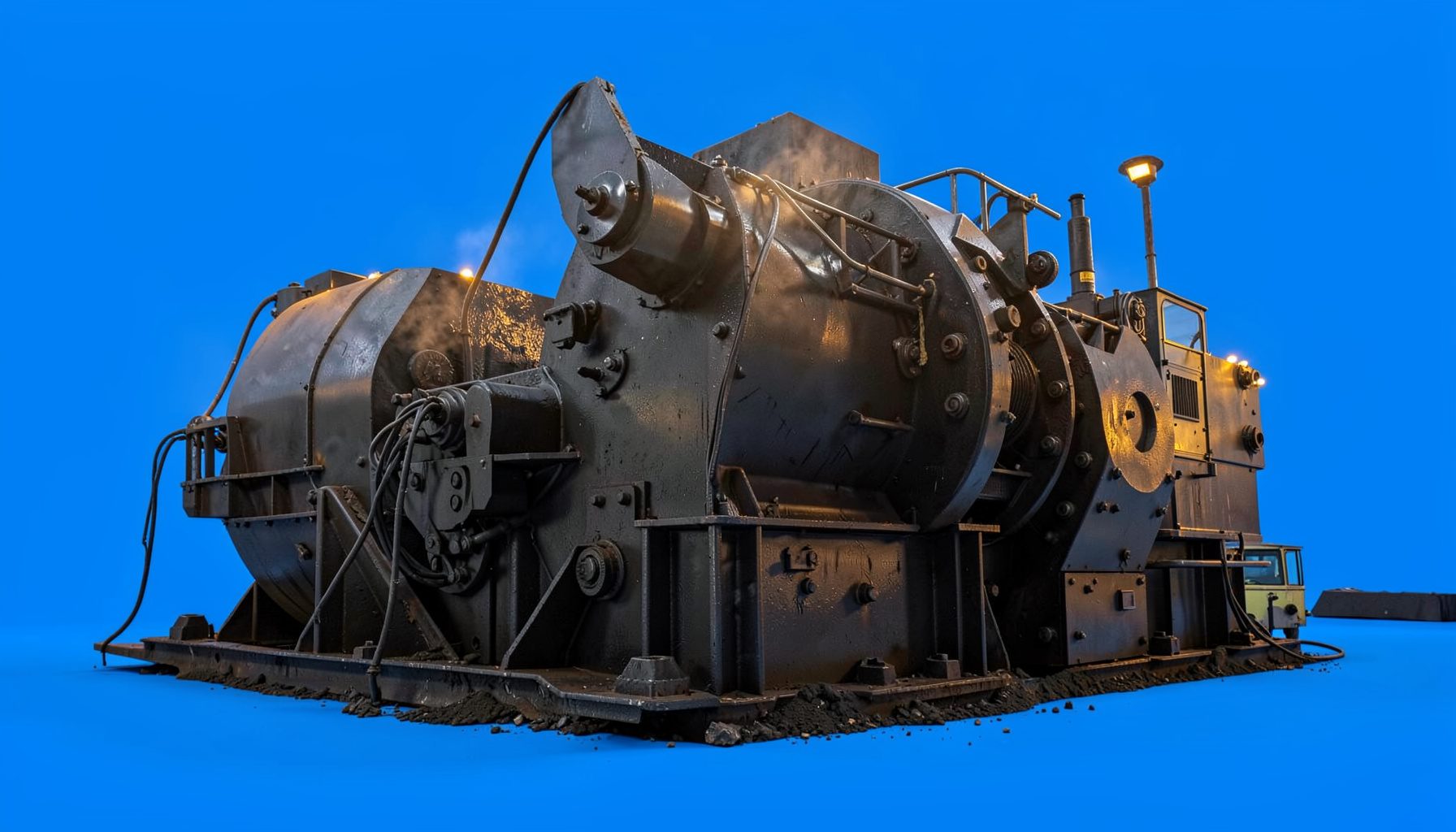
Improving plant safety with correct crusher guarding and lockout procedures
From the iron-rich Pilbara to the coal seams of the Bowen Basin and the gold fields around Kalgoorlie, Australian quarry and mine operators work in some of the harshest conditions on the planet. Crushing equipment runs long shifts under punishing heat and dust, maintained by FIFO crews on tight rosters. When a guard is missing or bypassed, the consequences arrive fast: crushed hands, entanglement, or worse. Lockout-tagout, paired with correctly engineered guarding, remains the most reliable way to keep people safe during operation, cleaning, and maintenance.
The economics reinforce the human case. A serious incident in a fixed plant can shut down a circuit for weeks, trigger a WorkSafe investigation, and raise insurance premiums across an entire operation. Australian regulators have shown they are willing to prosecute directors personally when safe systems of work are absent. Investing a few hours in proper guarding design and disciplined isolation pays back many times over in avoided downtime, avoided fines, and a workforce that trusts the equipment they use every day.
This article looks at how to lift the standard of crusher safety on Australian sites. It covers the hazards that emerge when guarding or lockout is treated as optional, the regulatory framework operators must satisfy, the practical steps for fitting and maintaining guards, and the routines that make energy isolation second nature rather than a paperwork exercise.
Why crusher guarding and lockout matter in Australian operations
Crushing equipment is unforgiving. A jaw or cone working at full draw pulls in anything within reach, and the inertia stored in a rotating rotor or a charged conveyor means a machine can keep doing damage for several seconds after power is cut. Guards exist to keep hands, tools, and loose clothing out of the danger zone, while lockout-tagout ensures the machine stays still while someone is inside it. Without both, every intervention becomes a calculated risk rather than a controlled task.
Australian conditions amplify the stakes. Remote pits in the Northern Territory or Tasmania's west coast mean the nearest trauma centre is hours away by air, so prevention must be the first line of defence. Heat stress and fatigue on twelve-hour swing shifts slow reaction times, making a hand reaching into a nip point far more likely to be caught. That combination is why the regulator expects every fixed and mobile plant to be guarded to a recognised standard.
There is also a workforce reality. Many operations draw labour from labour-hire providers and contractors who rotate between sites, so a worker may not know the quirks of a particular crusher until they are halfway through a wear-plate change. Standardised guarding layouts and a universal lockout process give that worker a fighting chance of going home in one piece, even on their first shift on a new machine.
Common hazards when guards and LOTO are missing
The first hazard is the obvious one: contact with moving parts. Open feed hoppers, exposed drive belts, and unguarded tail pulleys all create crush and shear points. A common pattern involves a crew member leaning into a crusher to clear a bridged rock while a colleague, unaware, restarts the unit. The missing guard and the missing lockout combine to create a fatality that could have been prevented by either measure alone.
Energy isolation failures are the second category. Hydraulic accumulators on modern cone crushers can hold significant pressure long after the power is off, and electric motors can back-feed from a running conveyor if isolation points are not correctly identified. A tag on the wrong isolator, or no tag at all, leaves stored energy ready to release the moment a fitting is cracked open. Crews familiar with mobile plants know that a track-mounted mobile crushing plant in particular demands careful sequencing of mechanical, hydraulic, and electrical isolation before any work begins.
The third hazard is the slow erosion of safe practice. A guard that is repeatedly removed for access and never refastened, a padlock that lives on a hook rather than a hasp, a procedure that everyone shortcuts during a production push: each of these normalises risk. Over time, the site culture treats safety as something that gets in the way of the job, and that is when serious injuries tend to cluster.
Australian standards and legal obligations
The legal foundation sits with the model Work Health and Safety Act, which has been adopted in most states and territories, and the corresponding Work Health and Safety Regulations. These impose a primary duty on the person conducting a business or undertaking to ensure, so far as is reasonably practicable, the health and safety of workers. Plant that is not properly guarded, or where energy cannot be effectively isolated, breaches that duty.
Specific machinery standards fill in the technical detail. AS 4024 covers the safety of machinery and AS/NZS 4240 covers earth-moving and mobile plant, while guidance from Safe Work Australia and state bodies such as WorkSafe WA sets out what an inspector expects to see during a routine visit. Material specifications for guards exposed to chemical process water or acidic dust are covered in related technical literature, such as the principles used to specify alloy mesh for corrosive chemical filtration. Inspectors in New South Wales have publicly noted that crusher guarding and isolation are among the most common non-compliances they find, which is a fair warning to operators who think a quick visual check will pass.
Penalties for breaches have grown considerably. Individuals can face six-figure fines and imprisonment for gross negligence, while companies can be levied millions of dollars. Beyond the financial cost, a prohibition notice can stop a production line instantly, and the reputational damage with customers, insurers, and the local community can linger long after the case is closed.
Practical steps for correct crusher guarding
Good guarding starts at the design stage, not after installation. Fixed perimeter guards around drive components should be sized so the openings cannot admit a finger or hand, with gaps no greater than the safety distance for the nearest hazard. Mesh panels need to be robust enough to withstand a stray rock or a dropped spanner, and the same logic of matching material to environment applies across the crushing circuit.
Interlocks are the next layer. A guard that cannot open while running, and a machine that cannot start while a guard is open, removes the temptation to bypass safety. Mechanical interlocks are more reliable than purely electrical ones on a dusty site, as they are less vulnerable to moisture and rodents. Where maintenance needs frequent access, a trapped-key system can sequence isolation and guard release so the operator cannot reach the hazard until energy is locked out. Operators sourcing new or rebuilt plant should confirm these features with the manufacturer; Shanghai CME builds guarding and isolation provisions into its jaw, cone, and impact lines for this reason.
Finally, think about maintenance access. A guard that is painful to refit will end up leaning against a wall. Use quick-release fasteners with hand-friendly knobs, provide clear hinge stops, and design the layout so a fitter does not need a third hand to refit a panel. The best guarding disappears into the workflow, while poor guarding creates the very shortcuts that lead to injuries.
Building a reliable lockout-tagout routine on site
A lockout procedure is only as good as the weakest isolator on the machine. Start by mapping every energy source on the crusher: mains power, drive motors, hydraulic pumps, stored pressure in accumulators, and any gravity-fed feed from an upstream conveyor. Each one needs a clearly labelled isolation point that can be physically locked in the safe position. A padlock on a breaker is meaningless if the breaker can still be closed by hand.
The sequence matters. Notify the control room and upstream operators, isolate each energy source in order, apply personal locks and tags, then verify zero energy by attempting a normal start. For a jaw or cone, that means a controlled try at the local control station with the lock applied, confirming nothing moves. Bleed down stored hydraulic pressure at the designated points, and allow capacitors on variable-speed drives the manufacturer's discharge time. The same disciplined approach applies across the wider circuit, and a useful parallel is the comparison of vertical and trapezium mills for mineral grinding.
Group lockout is essential on a crusher that has multiple trades working on it at once. A lock box or hasp that accepts every worker's individual lock ensures no one restarts the machine while a colleague is still inside. Tags should identify the worker, date, and reason, and be removed only by the person who applied them. Padlocks and tags need to be inspected regularly, replaced when damaged, and accounted for in the site register so a missing lock triggers an immediate stand-down rather than a guess.
Training, audits and a culture of safe maintenance
Procedures written in a Sydney or Perth head office rarely survive first contact with a dusty pit. Training must be done on the actual machine, in the actual conditions, with the actual lockout points. Toolbox talks at shift start are a chance to walk through a planned task, point out specific guards to be removed, and confirm the isolation sequence. New starters, including labour-hire workers, should not work on a crusher unsupervised until they have demonstrated the full lockout process.
Heat is a particular concern in Australian operations. Workers racing to finish a job before the temperature peaks are more likely to skip a step, so supervisors should plan heavy maintenance for cooler parts of the day and provide shaded rest areas. Fatigue management and hydration policies tie directly into lockout compliance, because a tired fitter is the one who forgets to test for zero energy before opening a guard.
Audits close the loop. A monthly walk-around by a competent person, using a checklist that covers every guard, every isolator, and every padlock, will catch the slow degradation before it becomes an incident. Findings should be logged in plain language, assigned to a named owner, and reviewed at the next toolbox talk so the crew sees the loop being closed. Independent audits every couple of years, or after any near-miss, bring a fresh pair of eyes to entrenched habits.
Safety culture is ultimately a leadership question. When supervisors refit a guard they've just removed, carry a personal lock on every task, and stop a job to verify isolation, the rest of the crew follows. Sites that have moved beyond a paper-based safety system to a genuine shared discipline consistently record lower lost-time injury rates, and they tend to attract the experienced operators who can choose where they work. Community groups also lift the baseline, and initiatives like Hawaiian Pride show how shared standards translate into safer workplaces for everyone on site.
| Guard type | Best application | Key benefit | Main limitation |
|---|---|---|---|
| Fixed perimeter guard | Drive belts, pulleys, flywheels | Low cost, high durability | No routine access without tools |
| Interlocked guard | Hopper, crusher chamber access | Prevents running while open | Requires regular interlock testing |
| Adjustable guard | Varying feed sizes, maintenance panels | Flexible for different tasks | Can be set incorrectly by operator |
| Two-hand control guard | Clearing blockages, manual loading | Forces both hands on controls | Slower cycle, operator fatigue |