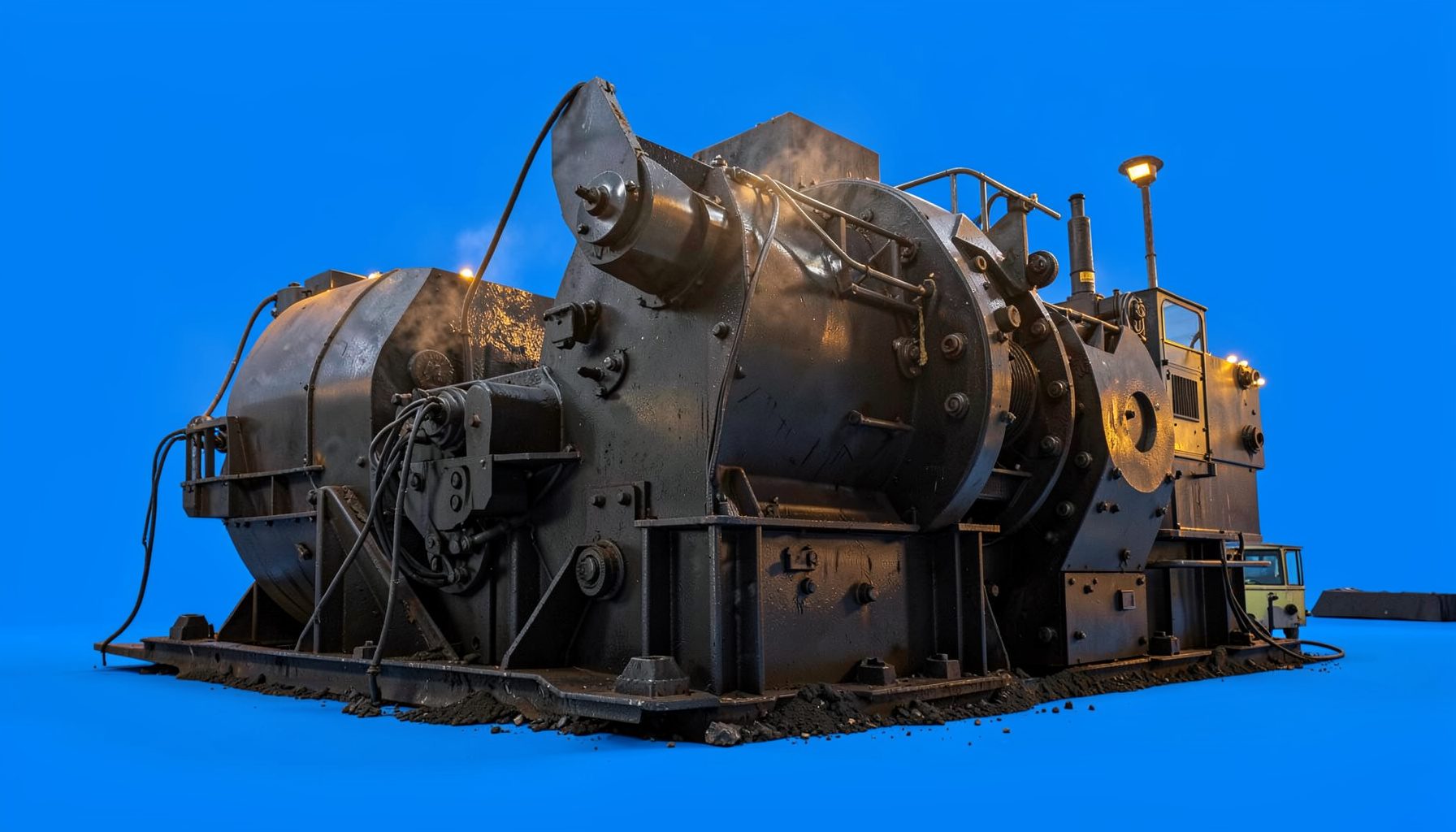
Balancing production and power consumption in a grinding circuit
Australia's mining operators run some of the hardest working comminution fleets on the planet. From the iron ore trains threading through the Pilbara to the gold plants clustered around Kalgoorlie, every additional kilowatt drawn by a mill is a kilowatt that does not show up on the concentrate weighbridge. With electricity prices on the National Electricity Market regularly nudging into triple digits per megawatt hour and the country's safeguard mechanism tightening emissions baselines year on year, grinding circuits are no longer judged on tonnes alone. The art is to keep the rocks breaking while the meters spin more slowly.
The tension between throughput and specific energy consumption is as old as SAG milling itself, but the tools available to operators have matured. Modern variable speed drives, on-stream XRF analysers, and mill charge sensors now let a control room in Perth oversee a Pinion shake from a centrifuge in Kalgoorlie with millimetre precision. The challenge is to turn those tools into a daily operating philosophy rather than letting them sit as underused dashboards. Done well, balance frees up capital for fleet expansion or, increasingly, for the hybrid solar and wind farms that are reshaping the Western Australian mining grid.
This article walks through the practical levers that shift a grinding circuit from brute force to measured performance. It draws on the realities of Australian operations: FIFO workforces, remote control rooms, the National Reconstruction Fund, and the regulator's growing appetite for energy intensity reporting. The aim is to sharpen the wheel without reinventing it.
Understanding the energy baseline of your circuit
Before any optimisation can be sequenced, the operator needs a credible map of where each kilowatt hour disappears. A SAG mill and its closed-circuit ball mill are rarely the same animal: SAG mills tend to be the larger energy consumer in hard rock operations because they handle both impact and attrition, while ball mills dominate the bill in base metal concentrators processing softer ore. Australian gold plants around the Eastern Goldfields and copper operations near Prominent Hill have published energy splits showing ball milling consuming up to seventy percent of total circuit power, depending on grind size targets.
A practical starting point is the Bond Work Index, recalculated annually from fresh ore samples, paired with detailed logging of motor power draw under stable operating conditions. Many sites in the Hunter Valley and Bowen Basin coal preparation plants use portable power analysers to capture a fortnight of data before committing to a control philosophy change. That baseline should also include auxiliary loads: slurry pumps, cyclone feed pumps, and the overhead crane duty cycle, which can quietly consume another five percent of plant power.
Once the numbers are in front of a multidisciplinary team, the conversation shifts from opinion to evidence. The maintenance planner can see whether liner wear is forcing the mill to overdraw, the metallurgist can match grind targets to liberation data, and the electrical engineer can quantify the cost of poor capacitor rating on the site's switchroom. Without this baseline, any optimisation is just hope dressed in spreadsheets.
Sizing mills for throughput, not just installed power
The instinct in capital project design is to specify the largest motor that fits the footprint and call it a day. Australian iron ore projects from the 1990s onwards often installed 20 MW twin-pinion mills because the consultants of the era believed bigger meant better. The lived experience of two decades later is more nuanced. Throughput is governed by the interaction between ore competency, mill geometry, and charge volume, and the optimum is rarely at the nameplate maximum.
A more useful sizing approach considers the trade-off curve between specific energy consumption and production rate. That curve has a knee, and operating to the right of it delivers more tonnes at the cost of disproportionately more power. Finding the knee requires staged trials: increasing mill speed in two percent increments, monitoring power factor and bearing temperature, then stepping feed rate up against product size. Sites that have disciplined this process, such as some of the newer lithium concentrators in the Pilbara and the Greenbushes operation, report specific energy reductions of ten to fifteen percent simply by avoiding the high end of the motor curve.
The upstream crushing stage sets the table for the mill. Finer feed from a well-tuned secondary cone crusher reduces the work the mill must do, which is why most greenfield projects now include an extra cone or HPGR stage. That investment pays back through lower media consumption, fewer stoppages for liner changes, and a flatter energy curve during the long FIFO swing that defines life at most remote sites.
Media selection and steel consumption economics
Steel consumption is the invisible second invoice that arrives in the wear-and-tear budget. For a large Australian SAG mill, grinding media can represent fifteen to twenty percent of operating cost excluding labour, and the number is climbing as forged steel prices track the iron ore market from which they are made. The cheapest ball per kilogram is rarely the cheapest ball per tonne of ore processed, because hardness, shape, and breakage rate all feed into specific energy consumption.
Operators in the Bowen Basin have learned to test multiple media suppliers in parallel trials, using marked lots and precise accounting. A common finding is that a ten percent premium per kilogram delivers a seven percent reduction in specific energy because the harder balls maintain their shape and grind more efficiently per collision. In copper-gold operations near Roxby Downs, the shift to high-chrome media reduced mill stoppages for ball addition, freeing roughly one operating shift per week that previously went to manual charging.
The classification step matters just as much. An inefficient cyclone cluster sends coarse particles back to the mill, where they absorb energy without contributing to product size. Cyclone rebuilds, pressure drop audits, and the occasional move to finer aperture screen panels can quietly reset the circuit. The weave patterns used in industrial screen media have matured to the point where precision apertures, such as those developed for stainless steel mesh applications in food-grade settings, now inform how heavy-duty mining screens are specified. Choosing the right aperture and open area keeps the classification sharp and the mill productive.
Process water and slurry density optimisation
Water is the silent partner in any grinding circuit, and nowhere is it more precious than in the Australian outback. With the Murray-Darling Basin plan placing tighter restrictions on extraction and many inland mines operating under recycled water licences, the cost and availability of process water have become a constraint as binding as any capital budget. Operating a mill at the wrong slurry density wastes both water and power.
A mill running too dilute wastes energy on pumping and reduces the energy transfer from balls to ore. A mill running too thick risks overgrinding, media coating, and even mill stoppage from roping. The optimum, usually between sixty-five and seventy-five percent solids by mass for a ball mill, depends on ore type and grind target. Sites that install reliable density gauges on cyclone feed and use them as the primary control variable, rather than a trim, consistently report lower specific energy.
The relationship between water quality and grinding efficiency is often overlooked. Bore water drawn from the Great Artesian Basin, used widely in South Australian and Queensland operations, can change the rheology of the slurry in ways that are not always visible in the plant lab. Trialling with different water sources, or installing small thickeners to recycle cleaner decant, has paid off in both energy savings and reduced tailings dam deposition, an outcome that aligns neatly with the rehabilitation obligations under state mining Acts.
Automation and real-time monitoring
The control room of an Australian mine in 2024 looks more like an air traffic control tower than the analogue instrument panels of the past. Most concentrators now operate with some form of expert system that adjusts feed rate, mill speed, and pump speed every minute based on upstream sensors. The question is whether the system is being used to its potential or simply logging data into a historian that no one visits.
The highest performing sites treat their grinding circuit as a living, model-driven organism. Soft sensors estimate mill load from motor power and bearing pressure, then feed a model predictive controller that anticipates the effect of an ore change before it shows up in the product size. A change in feed hardness that would have taken two shifts to diagnose by eye is now corrected in twenty minutes, with the circuit running closer to its optimum the whole time. The Pilbara iron ore operations have led this shift because their ore bodies grade from soft Marra Mamba to harder Brockman, and the control system must respond to that variability daily.
The human element matters. FIFO crews who arrive for a swing rotation need to trust the system and understand why it does what it does. Operators who can read the difference between a noisy power signal and a noisy particle size signal are the ones who extract value from automation. Training and standard work are as much a part of the optimisation as the technology itself.
Recovery strategies: from waste heat to variable speed drives
Even the best-tuned grinding circuit spills energy. Motor heat, friction losses, and slurry heating all carry kilowatt hours out of the building. Capturing even a fraction of that waste is becoming a routine part of the energy transition story in Australian mining. Several gold plants near Kalgoorlie now pipe mill cooling water through heat pumps and use the recovered energy to heat camp accommodation during cold desert winters.
Variable speed drives on mill motors are arguably the single largest available lever for power reduction. A drive that can back the mill speed off during soft ore periods saves power in proportion to the cube of the speed reduction, which compounds quickly. Early adopters in the zinc operations near Mount Isa retrofitted VSDs to their ball mills a decade ago and continue to publish specific energy reductions in the twelve to eighteen percent range. The capital cost has come down as the technology has matured and as Australia's Large-scale Renewable Energy Target continues to underwrite grid investment.
Hybrid power systems, where solar and wind generation feed directly into the mill motor via a private microgrid, are the frontier. The Agnew gold project in Western Australia runs a hybrid wind-solar-battery facility that supplies a meaningful slice of its processing load. The economics work because the alternative, expanding diesel generation or paying for grid connection, would have been more expensive than the renewable installation. For grinding circuits, which can ramp output up or down within a defined envelope, the variability of renewables is less of a problem than it is for a refinery or a smelter.
Aligning grinding strategy with mine planning and permitting
The final piece of the balance puzzle is seldom found on the plant floor at all. It lives in the long-term mine plan and the conditions attached to the operating licence. Australian regulators, particularly in New South Wales and Western Australia, increasingly require energy intensity reporting as part of annual environmental reports. Forward planning should treat the grinding circuit as a flexible asset that can shift between high throughput and lower throughput modes, depending on the ore blend scheduled from the pit.
Mine planning that assumes a fixed grind size for ten years misses the point. Modern ore sorting, bulk ore sensing, and grade engineering allow operators to send softer, lower-grade material to a different circuit configuration. Blending strategies that match ore competency to mill speed, rather than chasing tonnes at any cost, reduce specific energy across the life of the pit. The skill is to make those decisions on the page before the ore arrives at the grizzly.
Any operator weighing a fresh circuit design or a major retrofit can contact the engineering team for a second opinion on media selection, drive sizing, or process water strategy. The conversation that starts in a control room often ends with a quieter motor and a fuller weighbridge, which is the only scoreboard that matters at the end of the swing.