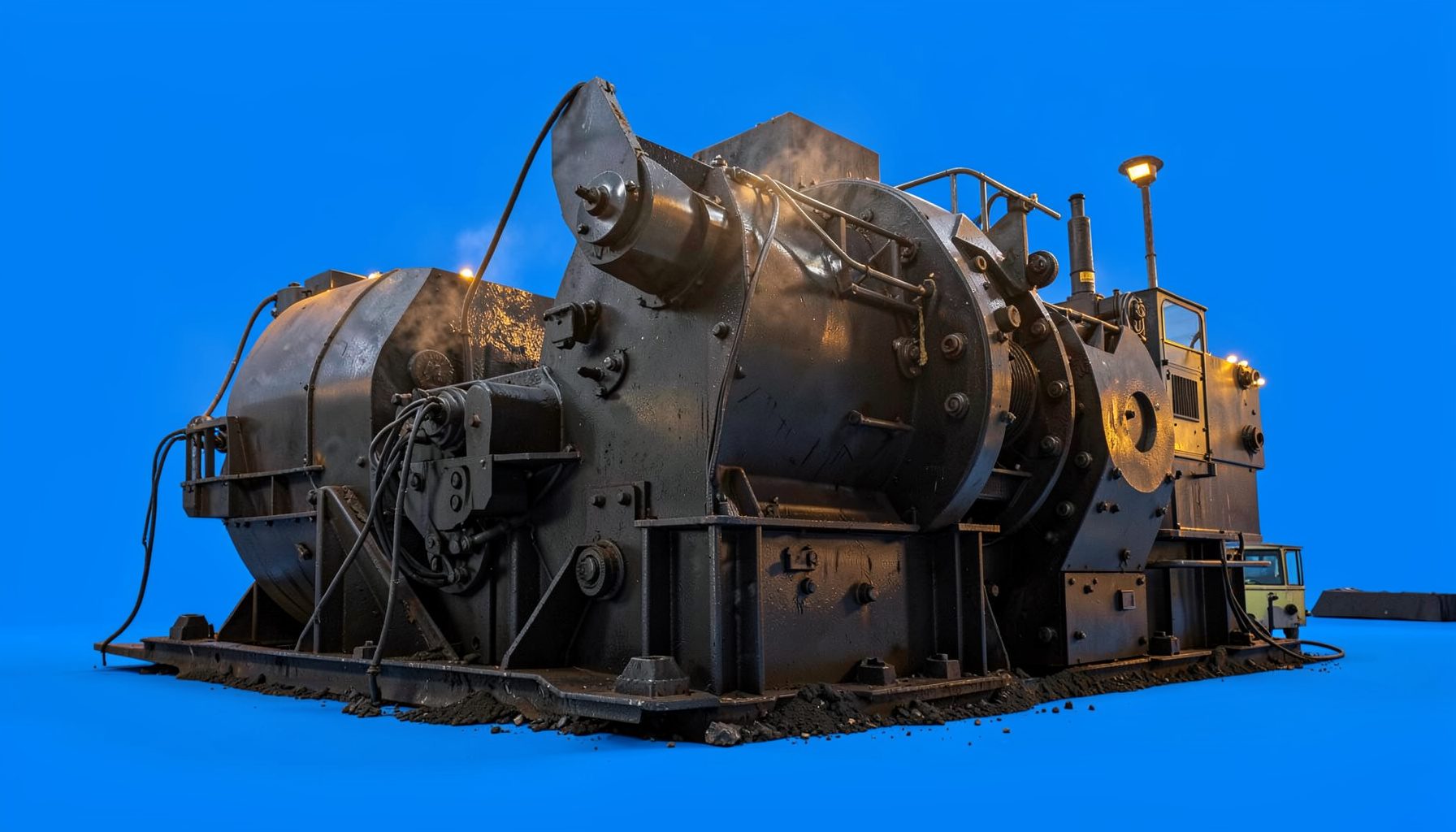
Excessive vibration in crushers: causes and fixes
Excessive vibration in crushers usually develops from a change in balance, alignment, loading, or structural support. It may begin as a faint rumble at one operating load, then become a sharp metallic beat that travels through the crusher house, foundations, and connected conveyor. If ignored, the fault can damage bearings, shafts, liners, couplings, fasteners, and nearby equipment while creating risks for personnel working around the plant. Diagnosis matters for operators of Shanghai CME jaw, cone, impact, and sand-making equipment because replacing a component without finding the underlying cause rarely restores stable performance.
Australian operating conditions make this especially important. Crushing and aggregate plants around Melbourne, Sydney, Perth, and Brisbane commonly combine high production targets with long-distance truck movements, variable weather, and tight maintenance windows. Remote operations can add long resupply times and limited access to specialist technicians. A useful investigation therefore links machine condition with site conditions rather than treating vibration as an isolated workshop problem.
Recognising vibration patterns and risks
Start by separating normal operating vibration from abnormal movement. Jaw crushers reciprocate and create a characteristic working stroke, while cone, impact, and sand-making units generate strong rotating and impact forces. Record vibration amplitude, frequency, direction, machine speed, feed rate, and product size at the crusher inlet and discharge. Compare like-for-like conditions rather than relying on a universal limit.
| Symptom | Likely causes | Checks before repair | Appropriate response |
|---|---|---|---|
| Beat at shaft speed | Imbalance or missing wear parts | Inspect rotor, pulley, and flywheel | Restore approved balance |
| Rising whine or harshness | Bearing, coupling, or gear wear | Check temperature, oil, runout, and play | Isolate and repair the defect |
| Whole-machine movement | Loose anchors, settlement, or cracked grout | Check bolts, grout, level, and soil | Repair support and tighten to specification |
| Surging with uneven output | Feeder drift, bridging, or unstable loading | Inspect feeder and compare motor load | Stabilise feed and chamber loading |
| Change after maintenance | Incorrect liner, balance, or loose fastener | Check records, fasteners, and parts | Restore correct assembly and balance |
Direction adds useful detail. Axial movement at a rotating crusher’s main shaft can indicate coupling or alignment trouble, while radial movement is often linked to imbalance or bearing distress. A low-frequency pulse that coincides with feeder surges points toward feed instability rather than a defective crusher. Compare readings with the operating log and inspect adjacent conveyors because a shared drive or support can transmit movement into the crusher.
Any abnormal vibration that threatens people or structure requires immediate control. Stop the crusher if the amplitude rises suddenly, metal fragments are visible, or the foundation is moving. Isolate all stored energy before inspection and do not clear a moving chamber by hand. Keep personnel outside the exclusion zone and have competent personnel assess the machine before production restarts.
Mechanical faults in rotating and crushing parts
Rotating imbalance is a common source of severe vibration in cone, impact, and sand-making crushers. Dirt and product build-up on a rotor or pulley, worn internal parts, missing balance weights, and a distorted flywheel all alter the force pattern. Jaw crusher flywheels and eccentric shafts need similar checks even though reciprocation is their normal working motion. Inspect rotating components only after full isolation and record runout and part condition before choosing a balancing method.
Bearing, shaft, coupling, and gear faults often change vibration as load rises. Pitted rollers, brinelled races, excessive clearances, a cracked shaft, worn coupling elements, or incorrect backlash produce characteristic tones and heat. Compare vibration spectra with bearing temperatures, lubricant debris, coupling temperature, and shaft play. Replacement parts must meet OEM clearances and tolerances; regreasing a damaged bearing or tightening a coupling without alignment will not remove the underlying fault.
Foundation, structure, and alignment problems
Foundation and frame problems can make a healthy crusher feel unstable. Cracked grout, loose hold-down bolts, settlement, soft ground, and inadequate stiffness allow dynamic forces to move the whole machine. Vibration that appears at a specific speed may also indicate resonance between the crusher structure and its supports. Check anchor condition, grout cracks, level, and settlement around the base, and compare the operating speed with the nearby structural response.
Soft foot, frame distortion, and attached equipment can create alignment faults that imitate internal damage. Check crusher feet, motor feet, screen supports, feeder frames, and conveyor connections for distortion or movement. A mobile crushing plant also needs its transport lock system, tyres or tracks, and support configuration checked. Correct the underlying support first; fit isolation components or structural changes only to an engineered design suitable for the crusher’s mass and force cycle.
Feed conditions and process instability
Feed and process instability often produces cyclic vibration rather than a steady mechanical tone. A drifting feeder belt, bridged surge bin, uneven screen deck, oversized lumps, excessive recirculating load, or a partly blocked chamber can load the crusher in waves. Verify feeder alignment and tracking, chamber fill, closed-side setting, product gradation, and motor current. Correcting feed uniformity is often faster and safer than altering a sound crusher to compensate for an unstable supply.
Worn liners and incorrect assembly change force distribution. Check jaw cheek plates, cone liners, impact blow bars, rotor wear parts, and sand-making rotor feed for uneven wear, missing pieces, and loose fasteners. Restore approved parts and settings because an incorrect closed-side setting, discharge profile, or lining combination can create a cyclic load even with sound bearings. Where a crusher feeds vertical or trapezium mills at an Australian cement operation, stable crushing also protects the downstream circuit; the relationship between mill loading, wear, and energy use is explained in grinding mill efficiency.
Drive, hydraulic, and electrical contributors
Drive-system faults can be transmitted into the crusher structure. Misaligned sheaves, worn or mismatched belts, uneven pulley lagging, loose motor feet, and failing drive bearings create speed-related vibration, while belt tracking faults generate a slower sweep. Check belt tension and tracking, sheave alignment, fastener torque, bearing condition, and motor mounting against the OEM arrangement. Variable-speed drives also require the motor, fan, and gearbox to be assessed together rather than assuming every changing tone comes from the crusher.
Hydraulic and electrical faults need specialist attention in cone crushers and electronically controlled plants. Pressure leakage, a failed accumulator, unstable pump output, or incorrect relief settings can cause load pulsation; motor imbalance, cooling defects, and electrical harmonics can add frequency components. Although API 520 applies to pressure-vessel relief systems rather than a crusher’s complete hydraulic circuit, the principles in pressure-relief device guidance can help teams verify set pressures and protection assumptions. The crusher OEM schematic and machinery safety rules remain the controlling requirements.
Australian site requirements and operating realities
Workplace safety obligations in Australia operate through the relevant state or territory Work Health and Safety laws, with Safe Work Australia model codes informing regulator guidance. NSW SafeWork, WorkSafe Victoria, WorkSafe Queensland, and WA Resources each apply their own requirements, so a national checklist must be adapted to the site. Crushing-plant isolation, zero-energy verification, exclusion zones, competent inspection, and maintenance controls are essential. Applicable standards such as the AS 2550 series should also be considered where adopted and current.
Local site realities shape both the fault and the repair response. Urban quarries near Melbourne and Sydney have limited shutdown windows and strict controls for noise, dust, and traffic near homes and businesses. Remote Pilbara and other FIFO sites may wait days for parts or a balancing specialist, making condition monitoring and critical spares especially valuable. Road trains, mobile crushing plants, hot summers, heavy rain, and windblown dust add loading and maintenance demands that should be considered when vibration appears after a change in season, route, or feedstock.
A controlled repair and prevention process
A controlled response starts with stopping and isolating the crusher, preserving the alarm and vibration history, and recording the last stable load. Inspect accessible causes first, including foundation bolts, feeder tracking, cavity obstruction, loose guards, belt condition, and visible damage. If vibration remains severe or the cause is internal, isolate every energy source and use competent personnel for stripping and inspection. Guessing at a replacement part or repeatedly running the machine delays the diagnosis and increases secondary damage.
After repair, confirm that the original fault has been removed. Restore approved balance, alignment, clearances, fastener torque, and guarding, then run the crusher unloaded and at increasing loads while comparing vibration, current, temperature, and product gradation with the baseline. A useful preventive program records these readings by operating condition and schedules lubrication, inspection, and alignment checks according to operating hours and service severity rather than a generic calendar interval alone.
When a repeat fault exceeds internal diagnostic capability, send the model, serial number, operating data, and vibration records with a concise contact enquiry. That gives a specialist enough evidence to distinguish an operating-load problem from mechanical imbalance or structural resonance. Keeping the final baseline with maintenance records creates a clear reference for future comparisons and prevents a temporary adjustment from being mistaken for a permanent repair.