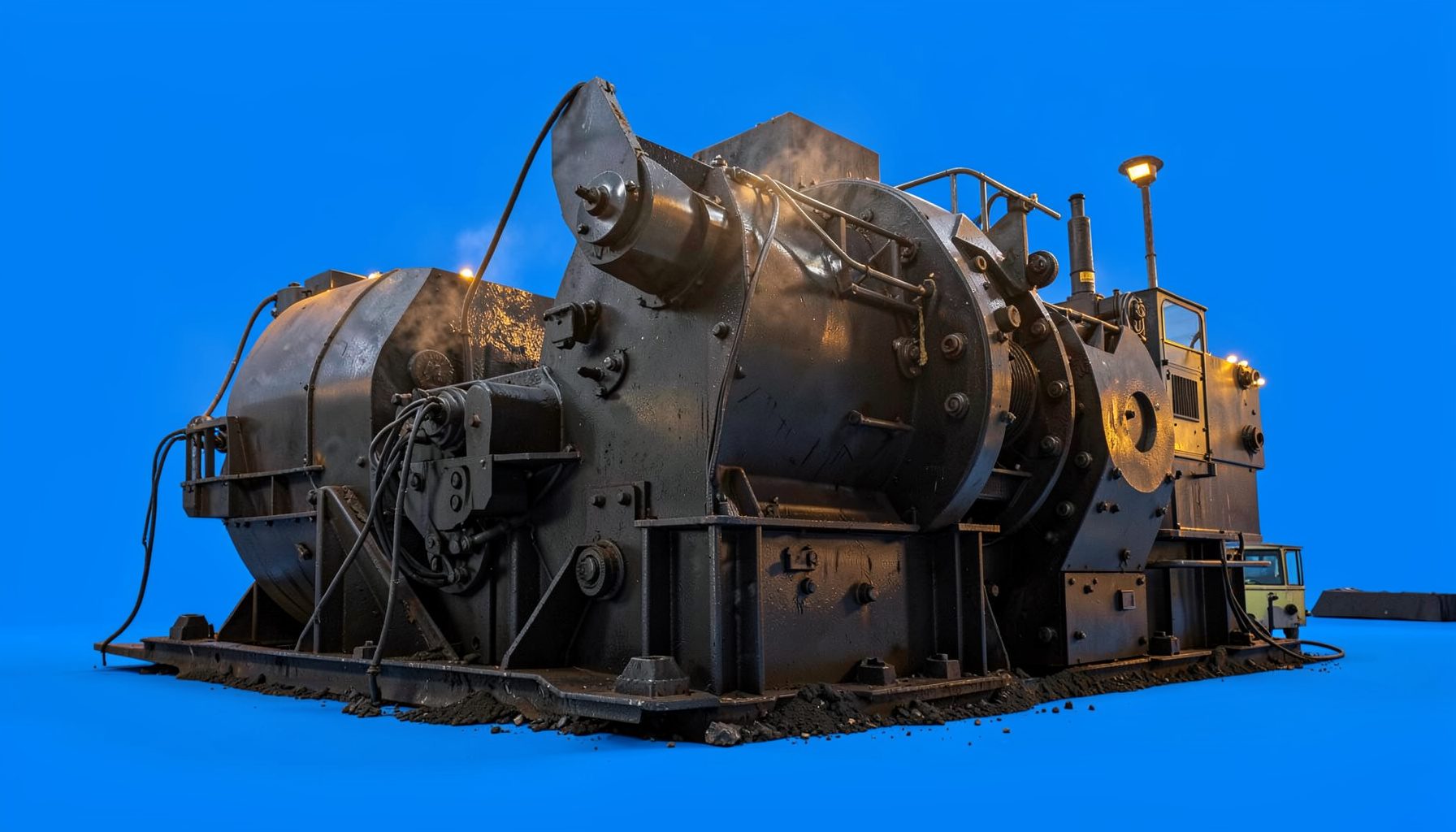
Best practices for lubricating large ball mill trunnion bearings
Large ball mill trunnion bearings are the massive plain bearings that support the mill shell at each end and carry radial loads, thrust, and the effects of alignment drift. Their slow rotation, enormous diameter, shock loads, and contamination exposure make lubrication a controlled engineering task rather than a simple top-up. A stable lubricant film prevents metal-to-metal contact, galling, excessive heat, and premature bearing failure.
The correct method depends on the mill design, OEM manual, lubricant supply, and operating climate. Operators using Shanghai CME crushing, grinding, screening, and material-handling equipment need dependable upstream and downstream availability so a mill lubrication fault does not stop the entire circuit. Sound trunnion lubrication combines the right lubricant, clean application, accurate replenishment, and condition-based decisions.
| Lubrication approach | Typical arrangement | Main advantages | Main risks | Common fit |
|---|---|---|---|---|
| Grease lubrication | Scheduled or metered injection into a sealed trunnion housing | Simple servicing; lubricant remains near the bearing; useful during stop periods | Overpacking, seal damage, channelling, and incompatibility | OEM-approved grease systems |
| Splash or bath oil | Reservoir surrounds the trunnion while an oil ring distributes lubricant | Passive operation; visible oil level; full-film lubrication at speed | Level sensitivity, leakage, heat, and limited monitoring | Moderately sized mills with flooded-sump designs |
| Circulating oil | Pump, filter, cooler, flow controls, and measuring instruments | Controlled flow and cooling; supports oil analysis and remote monitoring | Pumps and piping require maintenance; leaks can be costly | Large mills requiring continuous circulation and monitoring |
Trunnion bearing fundamentals for mill crews
Most large trunnion bearings are hydrodynamic plain bearings: the journal rotates inside a sleeve while oil or grease forms the separating film. Cone- and gear-driven mills also transmit axial forces through the trunnions, while liner wear and foundation settlement can change alignment. Bearing capacity therefore depends on maintaining the specified clearance and loading geometry, not merely keeping the lubricant reservoir full.
At operating speed, adequate viscosity and feed rate create a full film that carries load without surface contact. During startup, shutdown, and low-speed barring, that film is easier to lose, so pre-lubrication and a controlled restart matter. Unusual noise, rising metal temperature, or lubricant darkening can indicate mixed lubrication, contamination, seal failure, or overload.
These risks become costly at remote iron-ore operations in Western Australia’s Pilbara, where a stopped mill can strand a long train of haul trucks. The same uptime logic applies across the crushing circuit: a review of mobile crushing plant economics explains how mobile configurations can reduce haulage exposure. Reliable bearings remain essential whichever transport option the site chooses.
Match the lubricant to the duty
Start with the mill manufacturer’s approved lubricant and lubrication schedule, then match it to local duty. Grease-lubricated housings require the specified NLGI consistency, base-oil viscosity, additive package, and quantity. Oil systems require the specified viscosity at actual bearing-metal temperature, filtration, cooling provisions, and oil-change criteria. Generic heavy-duty grease is not a safe substitute for an approved formulation.
Assess load capacity, operating temperature, start-stop frequency, exposure to water, wash water, dust, and contamination from mills and crushers. Extreme ambient heat in the Pilbara or the Bowen Basin near Mackay changes lubricant selection and replenishment intervals. A product that handles heat but separates with water, or lacks the required antiwear and film-strength additives, remains a poor choice.
Australian supply conditions also affect lubricant quality control. Imported drums, pumps, seals, and replacement parts may pass through the Australian Border Force, with tariff classification, origin, GST, and duty requirements depending on the goods. Melbourne and Sydney industrial suppliers can broaden the market, but each site should approve a supplier that provides batch traceability, clean storage, and technical data before lubricant reaches a remote mill.
Prepare the housing and lubrication circuit
Isolate and de-energise the mill before opening a bearing housing or servicing a lubrication line. Follow the site’s lockout or tagout process, verify zero energy, relieve pressure, and use hazardous-energy controls aligned with Safe Work Australia guidance and applicable AS/NZS requirements. Never inject lubricant while the drive or mill is energised, and keep hands and tools clear of rotating trunnions, pinch points, and pressurised lines.
Inspect the housing, end seal, labyrinth, sight glass, drain, vent, pipework, filter, cooler, and level or flow switch before adding lubricant. Look for cracked seals, scored journals, rust, water ingress, blocked passages, and evidence that lubricant has bypassed its intended path. Oil-bath systems need the correct level for the specified mill orientation; circulating systems need verified pump direction and unrestricted flow.
Clean the lubricant-inlet area before connecting a hose or transfer pump. Use dedicated, clean containers and a filter appropriate to the OEM and lubricant supplier. Avoid introducing water, dust, solvent, or old grease from workshop drums. Preserve the housing’s sealing arrangement, because a neat refill cannot compensate for a damaged labyrinth that allows abrasive fines to reach the journal.
Replenish accurately without overpacking
Replenish by condition and schedule rather than by habit. For grease systems, the OEM’s calculated recharge amount should enter the bearing at the specified point without overpacking; excessive grease can overheat the journal, damage seals, and create pressure that drives lubricant past the housing. For oil systems, compare measured level or calculated consumption with the baseline and investigate sudden losses before topping up.
When a seal is opened or a component is replaced, clean the cavity and verify lubricant compatibility before reassembly. Do not mix greases with different thickeners or base oils unless the lubricant supplier and OEM have documented compatibility. Label every container with product, grade, batch, and date. Treat an unexplained increase in consumption as a leakage or contamination problem, not simply a signal for more lubricant.
Document the date, bearing position, lubricant type, quantity added, operating hours, temperature, and responsible technician. These records reveal whether one trunnion consumes lubricant faster than its counterpart and support predictive maintenance. Feed preparation can also affect contamination and load, and the principles behind selecting a cone crusher liner profile help operators preserve stable feed rather than tolerate a drifting crushing circuit.
Control lubrication during mill startup and shutdown
Use the OEM startup sequence to establish the lubricant film before the mill accelerates. Confirm reservoir level, pump output, line pressure, flow indication, and the absence of leaks; centralized lubrication systems may need a prescribed pre-circulation period. Keep the mill clear during the first rotation and never rely on a manual push to start a heavy shell. If a barring device is authorised, use it only under the site’s isolation procedure.
During operation, compare pressure and flow with the normal range and check bearing-metal temperature rather than relying only on a hand check. Insufficient flow, air entrainment, wrong viscosity, blocked filters, or a failing pump can cause a bearing to run in a mixed film. Excess flow may also create heat or agitation, so a high reading is not automatically proof that the system is well lubricated.
Follow the shutdown instruction for pumping and cooling. Maintain the specified film while the shell slows, then stop the system only after residual heat and pressure have been controlled. A pump that fails during a controlled stop can leave the bearing without circulation. With Shanghai CME feeders, conveyors, mobile crushing plants, and mineral-processing machines operating as one circuit, clear handovers help prevent a lubrication fault from becoming a wider production outage.
Monitor temperature, consumption, and contamination
Establish baseline readings for each trunnion and trend them against time and operating load. Useful indicators include bearing-metal temperature, vibration, lubricant level, consumption, pump hours, pressure, flow, seal leakage, and oil-analysis results. Infrared thermography can reveal hot spots, while acoustic listening can identify rough or rumbling changes. Compare left and right bearings, but investigate differences rather than assuming symmetry means both are healthy.
A temperature rise can come from inadequate lubricant, overload, misalignment, mill sag, a failed seal, or excessive grease. Low consumption can reflect a leak just as readily as good sealing. Check the complete lubrication and mechanical system before changing lubricant grade. Record thresholds with the OEM and plant engineers so an alarm reflects the specific bearing design rather than an arbitrary site-wide limit.
Oil analysis should track viscosity, water, particle count, oxidation indicators, and wear metals at the interval set by the lubricant supplier and OEM. Examine filters and magnetic traps for ferrous debris, and inspect the seal and lubricant path whenever an abnormal trend appears. Controlled sampling, clean practice, and consistent laboratory procedures make results comparable and turn trunnion lubrication data into useful maintenance evidence.
Standardise maintenance across Australian sites
Turn the procedure into a site standard covering daily checks, scheduled greasing, oil top-ups and changes, seal inspections, oil analysis, spare parts, and escalation. Name responsible roles, specify tools and approved products, and retain batch and operating-hour records. Train crews to distinguish a normal observation from a stop-and-investigate condition, with final decisions governed by the mill manual and site safety rules.
Plan logistics around Australian operating distances. Replacement lubricants and parts imported for a Pilbara site may arrive through Fremantle and Perth before travelling to the mine, while Queensland operations may draw from Brisbane and Mackay supply routes. Keep critical lubricants, pumps, seals, and filters in climate-controlled storage, and align stock levels with each mill’s consumption and expected lead time.
Review trends across every ball mill and compare lubrication performance with production, downtime, and maintenance history. Shanghai CME Mining and Construction Machinery Co., Ltd. provides crushing, grinding, screening, washing, conveying, and mineral-processing equipment for international quarry, cement, construction, and mining markets, so dependable bearing care supports a broad installed base. Further industry equipment resources can help maintenance teams connect bearing practice with adjacent plant reliability and make trunnion lubrication a measured, repeatable operating discipline.