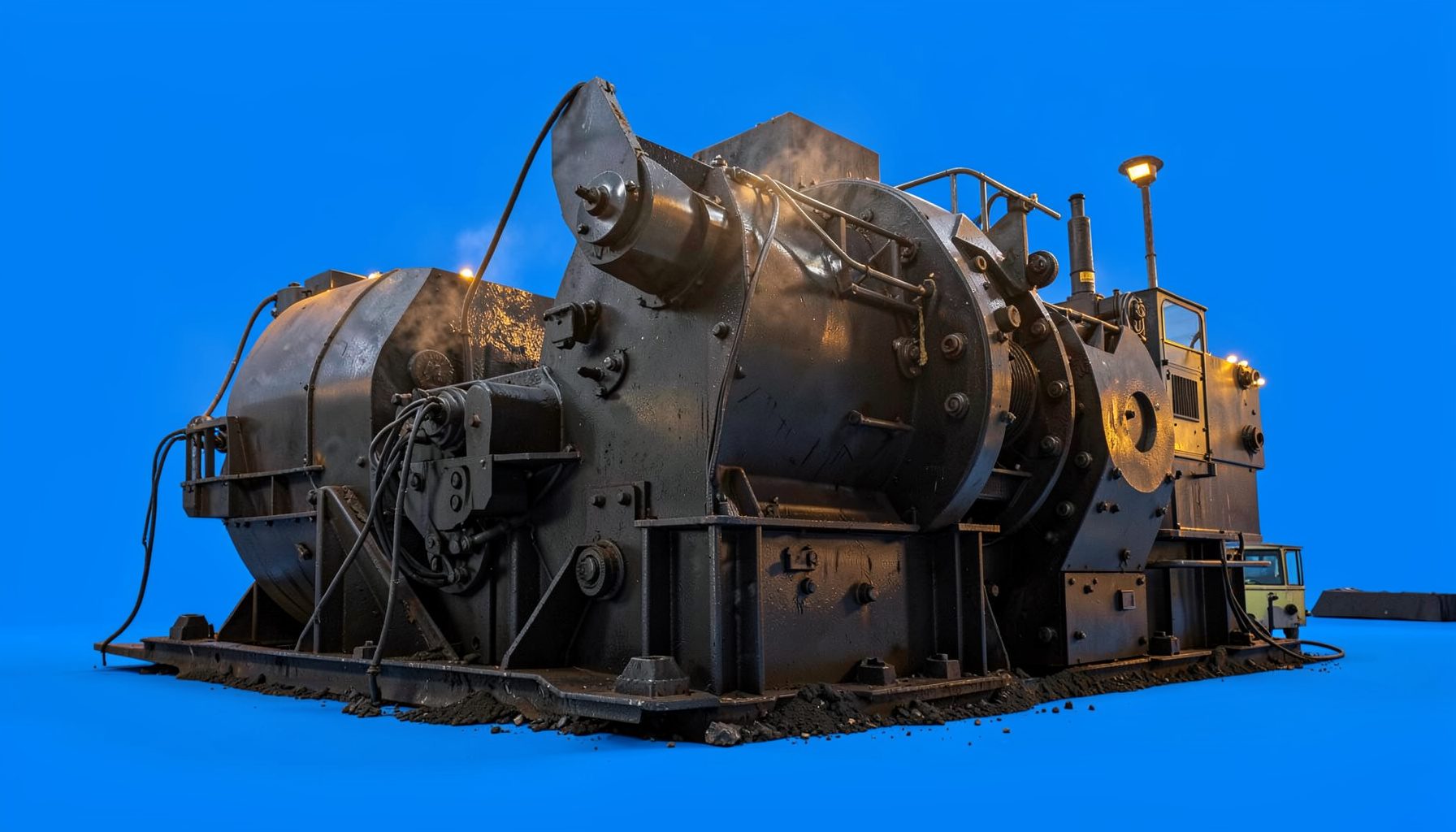
Why a modern trapezium mill belongs in your mining plant
Fine powder is a valuable product in many Australian operations, from quarry dust and mineral fillers to cement raw materials and coal-based industrial applications. Yet producing a consistent fine fraction can consume substantial power, wear grinding parts quickly and create dust-control problems when an older mill is pushed beyond its practical capacity.
A modern trapezium mill gives plant managers a more controlled way to reduce mineral feed to a narrow particle-size range. Its upgraded grinding chamber, classifier and transmission system can improve throughput while reducing unnecessary recirculation. For businesses supplying construction materials around Perth, Brisbane, Newcastle or regional Queensland, that combination can support both product quality and operating discipline.
The right investment depends on feed characteristics, moisture, target fineness and available services. It also depends on how well the mill fits with crushers, screens, conveyors, bag filters and storage equipment already installed. A complete review of the process is therefore more useful than choosing a grinder by headline motor size alone.
Match fine grinding to the material and product
Trapezium mills are designed for dry grinding of non-metallic minerals and other materials that require a fine, uniform powder. Common feedstocks can include limestone, calcium carbonate, gypsum, dolomite, kaolin, talc and selected ores. The machine uses grinding rollers and a ring to apply compression and attrition, while an air classifier separates finished particles from coarse material that needs further grinding.
This circulation helps the operator control the final product more precisely than a basic impact pulveriser. If the plant sells several grades of mineral powder, classifier adjustment can make it easier to move between specifications without completely changing the grinding circuit. The actual result still depends on hardness, moisture, feed size and the desired residue or micron range.
Australian quarry and mineral-processing sites often handle feed from different benches or deposits over the year. A modern mill with a practical adjustment range can cope better with those variations than a machine selected for one ideal laboratory sample. Sampling the feed during wet and dry periods is especially important for sites in Queensland or Western Australia, where seasonal conditions can affect storage and material handling.
Lower energy use through controlled recirculation
Energy is a major cost in a grinding plant because every oversize particle sent around the circuit requires another pass through the mill. An efficient classifier limits this unnecessary work by separating acceptable fines from particles that still need attention. Improved airflow design also helps maintain a stable grinding zone, provided the fan, ducting and filter are correctly sized.
For an Australian operation running long shifts or FIFO-supported rosters, small reductions in specific energy consumption can accumulate into meaningful annual savings. The relevant measure is usually kilowatt-hours per tonne of saleable product, rather than the motor rating in isolation. Managers should compare that figure at the intended fineness and moisture level, not at a supplier’s most favourable test condition.
A modern drive and transmission arrangement can also reduce losses associated with poorly aligned or heavily loaded components. Maintenance teams should monitor vibration, bearing temperature, mill differential pressure and fan current. When these readings are trended together, operators can identify a blocked filter, worn roller or unstable feed before it becomes an unplanned shutdown.
Improve dust control and workplace conditions
Fine mineral powder presents a serious airborne-dust challenge. A trapezium mill should therefore be assessed as part of an enclosed system that includes sealed transfer points, negative-pressure ducting, a reliable bag filter and suitable product discharge. Simply installing a powerful grinder without upgrading extraction can shift the problem from the mill room to conveyors, packing stations and access ways.
Australian workplaces operate under state and territory work health and safety requirements, and mine operators also work within site-specific risk controls, exposure monitoring and documented maintenance procedures. Crystalline silica controls are particularly important where silica-bearing stone is processed. Dust suppression is not a substitute for enclosure and filtration when the process is dry and produces respirable particles.
Good housekeeping matters as much as the collector itself. Avoiding compressed-air cleaning, repairing leaks promptly and checking filter differential pressure can reduce secondary dust. On a hot, dry site near Perth or the Pilbara, sealed equipment and properly designed ventilation are valuable for both worker protection and plant reliability.
Make maintenance more predictable
The value of a grinding mill is closely connected to how easily it can be inspected and serviced. Modern trapezium mills commonly provide more accessible wear components, improved sealing and clearer inspection points than older designs. These features can reduce the time needed to check rollers, grinding rings, classifiers, gearboxes and lubrication systems.
A planned maintenance programme should include oil sampling, vibration checks, fastener inspections and measurement of wear profiles. For mills operating beside a ball mill or other rotating equipment, the same discipline should apply across the whole grinding area. A useful reference on bearing lubrication analysis explains why oil condition can reveal contamination, overheating and developing component damage before a bearing fails.
Spare-parts planning is equally important for remote Australian sites. A quarry outside Newcastle may have quicker freight access than a mine near Port Hedland, but neither location benefits from holding the wrong roller assembly or filter bags. Before purchase, confirm lead times, interchangeability, recommended inventories and the supplier’s technical support arrangements.
Integrate the mill with the whole plant
A fine-grinding circuit performs best when upstream and downstream equipment are properly matched. Jaw or cone crushers should deliver a consistent feed size, while vibrating feeders need to regulate the mill inlet without surging. Conveyors, bucket elevators, cyclones, classifiers, dust collectors and silos must all handle the required flow without creating bottlenecks.
Where a project needs staged production or a temporary processing location, a mobile crushing unit can prepare feed before material is transferred to a fixed grinding circuit. A track-mounted crushing option may suit deposits, infrastructure projects or quarry extensions where relocation is part of the operating plan. It is still necessary to check whether the mobile unit can deliver the feed gradation and tonnage required by the mill.
CME’s broader mobile plant range illustrates how crushing and screening equipment can be considered as part of a coordinated material-processing system. A mobile arrangement will not automatically solve fine-powder production, but it may improve excavation flexibility and reduce double handling before the grinding stage.
Electrical design deserves early attention. A plant near Brisbane may have easier access to grid power than a remote Western Australian operation relying on generators or a hybrid system. Engineers should assess starting current, harmonic effects, transformer capacity, standby generation and whether variable-speed control can help balance production with available power.
Select capacity using real operating data
Choosing a mill by nominal tonnes per hour is risky because capacity changes with hardness, feed moisture, product fineness and airflow. A plant targeting a coarse mineral filler will have a different duty from one producing a very fine powder for cement or industrial use. The design basis should state feed size, bulk density, moisture, hardness, required particle-size distribution and annual operating hours.
Testing representative samples is the best way to establish a realistic capacity range. Include material from different parts of the deposit and, where relevant, samples collected after rain or extended storage. The test should measure energy consumption, product fineness, circulating load and filter performance rather than reporting only the maximum output.
Operators should also allow for future product changes. Demand from civil construction can shift with infrastructure programmes, while cement, quarry and mining customers may request different grades. A classifier with practical adjustment and a mill that can operate steadily below maximum load offer more commercial flexibility than an installation designed around one fixed specification.
When comparing suppliers, evaluate the complete cost of ownership. Purchase price is only one element; power, grinding-element replacement, filter bags, lubrication, labour, downtime and freight can dominate the budget over several years. A supplier that can provide layout guidance, commissioning support and operating data may reduce project risk even if the initial quotation is not the lowest.
Build a safer, more efficient powder circuit
Automation can make the modern mill easier to operate and easier to protect. Interlocks can stop feed when airflow falls, detect abnormal bearing temperatures and prevent the mill from running under unsafe lubrication conditions. A central control system can also record production, pressure, motor load and alarms for shift-to-shift review.
Operators should still receive practical training in feed control, classifier adjustment, filter inspection and emergency procedures. Clear start-up and shutdown sequences prevent material from accumulating in the grinding chamber or ductwork. Keeping critical sensors clean and calibrated is essential; unreliable instrumentation can lead staff to compensate with excessive airflow or feed-rate changes.
Routine maintenance equipment should match the site environment. Appropriate industrial power tools can assist with inspection and repair work, but tools must be selected and managed under the mine’s electrical, battery, hazardous-area and isolation procedures. Lock-out and tag-out remain fundamental whenever guards are removed or rotating parts are exposed.
The following comparison highlights the practical differences between a conventional older installation and a modern trapezium mill circuit:
| Operating factor | Older grinding installation | Modern trapezium mill circuit |
|---|---|---|
| Product control | Wider variation in final fineness | Classifier-based control of particle size |
| Energy performance | Higher recirculation and less stable loading | Better separation and controlled grinding |
| Dust management | More leakage and inconsistent extraction | Enclosed flow with coordinated filtration |
| Maintenance | Difficult access and reactive repairs | Planned inspection points and condition monitoring |
| Feed flexibility | Sensitive to changes in moisture or hardness | Broader operating adjustment when correctly configured |
| Plant integration | Often limited by legacy equipment | Designed around crushers, feeders, fans and conveyors |
| Australian site suitability | May require extensive retrofit work | Can be specified for remote access, power and dust needs |
For a quarry or mineral-processing plant in Australia, the best investment is a mill that delivers measurable performance under actual site conditions. Modern grinding technology can improve fine-powder consistency, reduce avoidable energy use and support stronger dust-management practices, but only when the surrounding circuit is designed with equal care. A properly sized trapezium mill, backed by planned maintenance and reliable process control, can become a durable production asset rather than an isolated equipment upgrade.