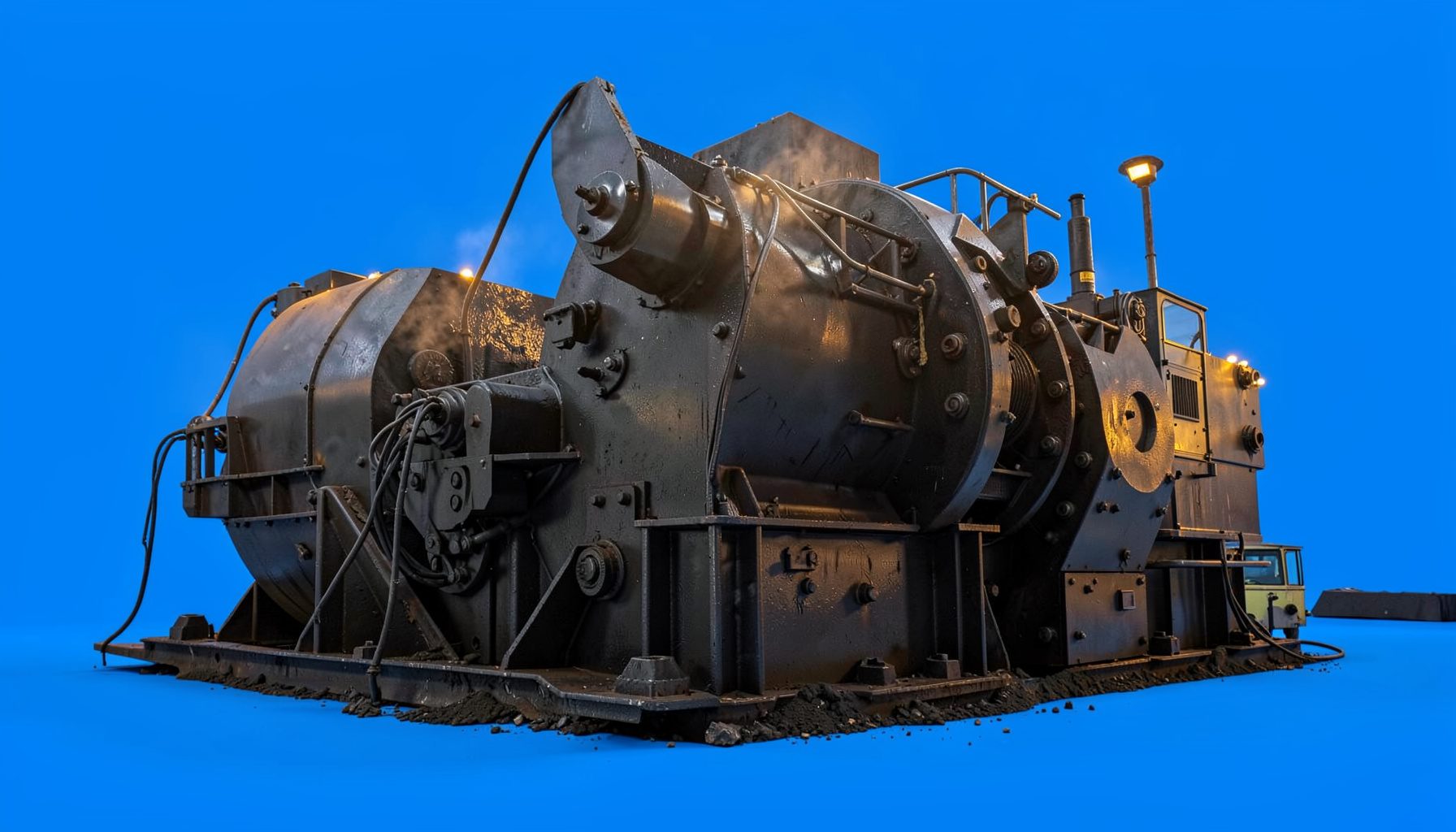
Why Vibrating Feeders Improve Crushing Operation Consistency
A crushing circuit performs best when material enters the primary crusher at a controlled, predictable rate. If the feed surges, the chamber can become overloaded; if it arrives in irregular bursts, valuable capacity is left unused. Vibrating feeders help regulate this flow between the hopper and the crusher, creating a steadier operating rhythm across the plant.
This matters in quarrying, mining, construction, cement production and aggregate processing. A feeder does more than move rock forward. Its vibrating deck can absorb fluctuations from loading equipment, separate fines before crushing and present material to the crusher in a more even layer. The result is improved throughput, more stable product grading and less avoidable stress on downstream equipment.
For Australian operations, consistency has a practical commercial value. A quarry outside Brisbane, a hard-rock site near Perth or an iron ore operation in Western Australia may handle changing geology, long haul distances and strict production schedules. Equipment that keeps material moving smoothly can support reliable output through demanding shifts, including the high-temperature conditions common in parts of Queensland and the Pilbara.
| Crushing requirement | Without controlled feeding | With a vibrating feeder |
|---|---|---|
| Material flow | Irregular surges and gaps | More consistent feed rate |
| Crusher loading | Frequent overload or underfeed | More balanced chamber loading |
| Fines management | Fines may enter the crusher unnecessarily | Grizzly section can remove suitable fines |
| Wear pattern | Uneven stress on liners and parts | More uniform contact and wear |
| Plant coordination | Conveyors and screens operate unevenly | Better synchronisation across the circuit |
Regulating material flow into the crusher
A vibrating feeder uses controlled oscillation to move bulk material from a hopper towards a primary crusher. The vibration causes particles to advance along the feeder deck in a steady stream rather than dropping unpredictably in large masses. Feed speed can be adjusted to match the crusher’s rated capacity and the wider plant’s production target.
Stable feed conditions allow the crusher to maintain a more consistent crushing action. In a jaw crusher, an even supply supports regular compression cycles and reduces the chance of a large surge filling the chamber. In a cone crusher, a controlled feed helps maintain the desired crushing cavity, which is important for both capacity and product shape.
The feeder also provides a buffer between loading equipment and the crushing machine. Excavators, wheel loaders and dump trucks rarely deliver material at perfectly regular intervals. A properly sized hopper and vibrating feeder can absorb these differences, preventing every change in truck arrival or bucket size from being transferred directly to the crusher.
Reducing overloads and uneven wear
Uncontrolled feed can create short periods of excessive force. Large rocks may strike the crusher suddenly, while a dense pocket of material can restrict movement through the chamber. Repeated events of this kind increase mechanical stress and can contribute to premature wear on jaw plates, mantles, concaves and other wear-resistant components.
A vibrating feeder helps spread the load over time. Its deck presents rock progressively, allowing the crusher to process a more uniform volume during each operating cycle. This can support steadier motor loading and reduce the sharp fluctuations that complicate maintenance planning and energy management.
Feed distribution also affects liner wear. When material enters from one side or falls in inconsistent streams, particular areas of the crushing chamber may receive greater impact. Operators reviewing crusher liner guidance should consider feeder performance alongside ore characteristics, chamber design and liner profile. A balanced feed supports more even use of the wear surfaces.
Removing fines before primary crushing
Many vibrating feeders incorporate a grizzly section or a spacing arrangement that allows smaller particles to pass through before the main crushing stage. This is especially useful when blasted rock contains a significant quantity of natural fines. Sending material that is already close to the required size through a primary crusher can waste energy and increase unnecessary wear.
Pre-screening through the feeder can improve the effective capacity of the crusher. The machine can concentrate on oversize rock that requires size reduction, while smaller material moves towards a conveyor or subsequent screening stage. The exact arrangement depends on feed gradation, moisture, material hardness and the required final product.
Australian quarry materials can vary substantially between deposits. A basalt quarry serving Melbourne or Sydney may have a different feed profile from a limestone operation near Adelaide or a hard-rock site in the Northern Territory. A feeder with a suitable grizzly arrangement gives operators greater flexibility when natural fines, clay or mixed-size rock are present.
Moisture must be assessed carefully. Damp, sticky material can bridge in a hopper or build up on a grizzly, reducing the benefit of pre-screening. In these conditions, feeder selection should account for deck design, amplitude, material flow properties and access for cleaning. A well-planned installation maintains separation without creating a new blockage point.
Supporting efficient plant coordination
Crushing plants include several connected stages: feeding, primary crushing, secondary or tertiary crushing, screening, conveying and stockpiling. If one stage operates at a different rate from the next, material can accumulate in transfer points or leave downstream machines starved. A vibrating feeder provides a controllable starting point for coordinating the whole circuit.
Controls can link feeder speed with crusher demand, hopper level and conveyor operation. When the crusher is ready for material, the feeder can maintain its target rate. If a downstream conveyor stops or a screen requires attention, the feed can be reduced or stopped in a controlled manner. This approach helps protect equipment and limits spillage around the plant.
Consistent feeding is valuable for mobile crushing plants as well as fixed installations. A mobile unit may be relocated between quarry benches, road projects or recycling areas, where site conditions change frequently. A reliable feeder helps the jaw or impact crusher handle variable loading while reducing the need for constant manual adjustment.
For a contractor working on a road upgrade near Sydney or a civil project around Perth, production time is closely linked to transport and site access. A feeder that reduces interruptions can make it easier to keep crushers, screens and conveyors working within the planned shift. This supports predictable aggregate supply when delivery windows and local traffic conditions are tight.
Selecting and maintaining the right feeder
Feeder capacity should be matched to the crusher inlet, hopper volume and required tonnes per hour. Important factors include the maximum lump size, bulk density, abrasiveness, moisture content and the percentage of fines. The feeder must withstand the impact of incoming rock while providing enough deck area and stroke to move material at the intended rate.
Vibrating feeders may use different drive arrangements and deck configurations. Some are designed for heavy-duty primary applications, while others suit lighter-duty aggregate or recycling work. A grizzly feeder can combine conveying and scalping, whereas a plain vibrating pan feeder may be preferable when the circuit does not require preliminary separation.
Installation details affect performance. The hopper should be designed to avoid dead zones and bridging, with sufficient clearance for maintenance and inspection. The feeder needs an appropriate support structure, isolation springs and access to drive components. Incorrect alignment or inadequate support can cause excess vibration, noise and accelerated component wear.
Routine inspection should cover spring condition, drive components, bearings, fasteners, deck liners and the grizzly bars. Operators should monitor unusual noise, changes in vibration, reduced feed rate and material build-up. These signs can indicate a blocked discharge, worn liner, loose component or change in feed characteristics. Preventive maintenance is particularly important at remote Australian mines, where replacement parts and specialist technicians may require significant travel.
Shanghai CME Mining and Construction Machinery Co., Ltd. supplies equipment for crushing, grinding, screening, washing and mineral processing applications, including vibrating feeders and complete crushing plant systems. For a project requiring equipment selection or circuit coordination, operators can use the company’s technical contact details to discuss operating conditions, material properties and production requirements.
A vibrating feeder is a relatively compact part of a processing plant, yet it has a strong influence on the behaviour of every stage that follows. By controlling the feed rate, removing suitable fines and distributing rock more evenly, it helps crushers work within a stable operating range. That stability can improve capacity, reduce avoidable wear and produce more dependable aggregate or mineral-processing results across Australian sites.