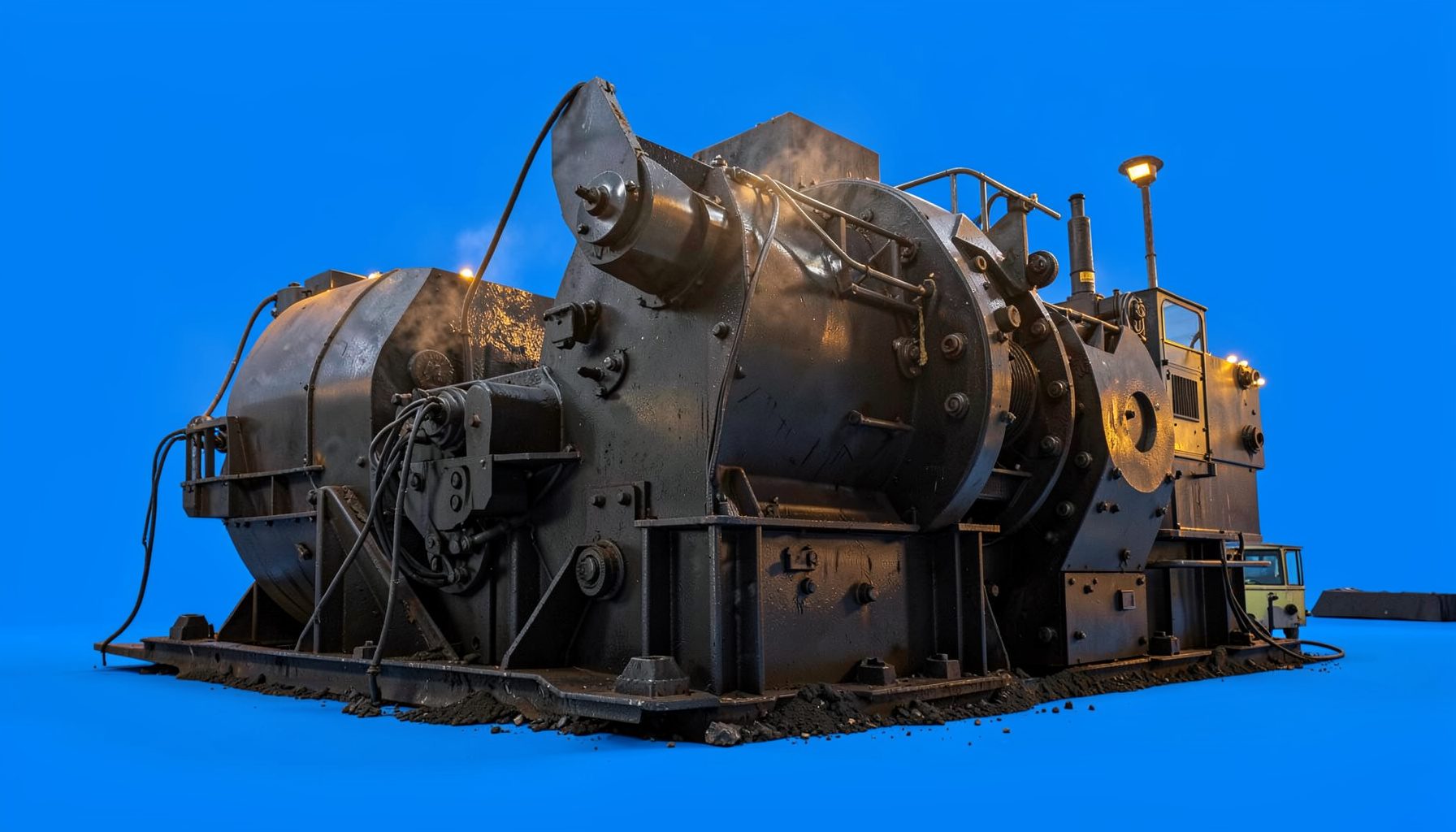
How Hammer Wear Changes Particle Size Distribution
A hammer mill is often selected because it can reduce feed material quickly, handle a broad range of products, and produce a useful size range with relatively simple mechanical action. Its performance, however, depends on the condition of the hammers, the screen, the rotor speed, and the characteristics of the material entering the chamber. As the hammers wear, the finished product can change gradually before the shift team notices an obvious loss of capacity.
Particle size distribution is the spread of particle sizes in the discharge, rather than a single average size. A worn hammer may still break material, but it applies impact less effectively and at a different point in the crushing chamber. This can increase the proportion of oversize particles, create an unpredictable amount of fines, or produce a wider distribution that causes trouble in downstream screening and grinding.
For Australian quarries, mineral processors, cement plants, and aggregate producers, this issue is tied closely to operating conditions. Hard feed from Western Australia, abrasive rock around Newcastle or Queensland, and dusty, hot work environments can accelerate wear. A contractor working around the Pilbara may also have very different maintenance access and spare-parts constraints from a fixed plant near Melbourne or Brisbane.
Understanding the relationship between hammer condition and product grading helps operators set inspection intervals, choose suitable wear materials, and avoid compensating for mechanical wear with unsuitable process settings. It also supports better decisions when integrating hammer mills with screens, conveyors, feeders, and other crushing equipment.
How A Hammer Mill Produces Its Product
Inside a hammer mill, a rotor carries swinging or fixed hammers that strike incoming material at high velocity. The impact fractures particles, while repeated collisions between the material, hammers, breaker plates, and liner surfaces continue the reduction process. Material generally leaves through a perforated screen once it is small enough to pass through the selected aperture.
The final grading is shaped by residence time in the chamber. A particle that passes through the screen quickly may experience only limited impact, while a larger or tougher piece remains in the grinding zone until it breaks down. Rotor speed, feed rate, moisture, material hardness, and screen open area all influence this process. Hammer condition is one of the central variables because the hammer face determines how efficiently kinetic energy is transferred to the feed.
In a well-maintained machine, the hammers present a reasonably consistent striking profile around the rotor. This creates a repeatable impact pattern and helps the mill deliver a stable product. When several hammers are damaged or worn at different rates, the rotor becomes less uniform and the crushing action varies throughout each revolution.
Why Wear Changes Particle Size Distribution
A new hammer has a defined working edge or face that meets the feed with a particular impact angle. Wear rounds that edge, shortens the effective profile, and reduces the area that delivers concentrated force. Instead of receiving a sharp, energetic strike, some particles may be pushed, rubbed, or struck less directly. Hard pieces then remain larger for longer, increasing the coarse fraction in the discharge.
Wear can also broaden the distribution of particle sizes. Some easily fractured feed may still become very fine, while tougher pieces are insufficiently reduced. The result is a product containing both fines and oversize material, even when the average product size appears acceptable. This variation can be especially troublesome where the next stage requires a narrow grading, such as concrete aggregate production or controlled feed to a ball mill.
Uneven wear introduces another source of instability. If one side of a hammer wears faster because of an uneven feed pattern, segregation, moisture variation, or a damaged liner, the impact balance around the rotor changes. Operators may see vibration, higher power fluctuations, and inconsistent discharge grading at the same time. Continuing to run in this condition can increase stress on bearings, shafts, screens, and drive components.
For a practical overview of size-reduction machinery used across industrial applications, buyers can compare grinding equipment options alongside the mill’s feed characteristics and required product specification.
What Operators See In The Finished Product
The most common sign of hammer wear is a gradual rise in oversize particles. A screen may be correctly installed, yet material that should have been reduced before reaching the screen can bridge openings or pass through only after repeated contact. If the screen is damaged or enlarged by abrasion, the apparent effect of hammer wear becomes even more pronounced.
Fines can also increase, particularly when worn hammers force material to remain in the chamber for longer. Rather than breaking cleanly through high-energy impact, particles may undergo repeated rubbing and secondary collisions. This can create excess dust and a less efficient use of power. In applications where fines have low commercial value, the loss may be significant even if throughput remains steady.
The table below summarises typical relationships between hammer condition and process observations. These are operating tendencies rather than fixed rules, because feed hardness, moisture, screen aperture, and rotor speed can change the result.
| Hammer condition | Likely impact action | Typical particle-size effect | Other operating signs |
|---|---|---|---|
| New or correctly dressed | Strong, consistent impact | Stable target grading | Predictable power draw and throughput |
| Moderately worn | Lower impact concentration | More coarse particles and wider spread | Gradual capacity decline |
| Severely rounded | More rubbing and repeated contact | Increased fines plus persistent oversize | Higher energy per tonne and dust |
| Unevenly worn around rotor | Irregular impact pattern | Variable grading between samples | Vibration and fluctuating load |
| Cracked, chipped, or missing | Localised loss of impact | Uncontrolled coarse fraction | Noise, imbalance, and component stress |
Sampling is essential because visual inspection alone can be misleading. A sample taken from one conveyor location may not represent the complete discharge, especially when the plant is operating intermittently. Australian sites often use belt cuts, cross-stream samplers, or regular laboratory grading to identify a trend before the product moves outside specification.
The Role Of Hammers, Screens, And Rotor Speed
Hammer wear should never be assessed in isolation from the screen. A smaller aperture may restrict output and increase residence time, while a larger aperture can allow coarse particles to escape. If operators fit a tighter screen to compensate for worn hammers, capacity may fall and power draw may rise. If they open the screen to protect throughput, the coarse fraction may become unacceptable.
Rotor speed changes the energy available at each impact. Increasing speed can temporarily improve reduction when hammers are slightly worn, but it also increases wear rate, noise, dust, and mechanical loading. It is not a substitute for replacing a hammer that has reached its service limit. The correct speed depends on the material, desired product, rotor design, and manufacturer’s operating range.
Feed rate must also be controlled. Overfeeding can fill the chamber, cushion impacts, and make worn hammers appear even less effective. Underfeeding may produce excessive impact on the liners and hammers, increasing fines and wasting power. A vibrating feeder with a stable delivery rate generally gives better control than irregular loading from a front-end loader.
Material moisture has a similar effect. Damp feed can stick to screens, reduce open area, and encourage build-up inside the chamber. In tropical Queensland or during wet-season operations, this can make the size distribution look like a wear problem when blocked screen openings are the main cause. Checking screen condition and moisture should therefore accompany every hammer inspection.
Measuring Wear Before Product Quality Falls
A planned inspection should include hammer length, working-face profile, retaining hardware, rotor balance, breaker plates, liners, and screen openings. Measurements should be compared with the original dimensions or the supplier’s minimum service limits. Replacing hammers based only on calendar time is less reliable because abrasive feed can produce very different wear rates from one site to another.
A useful maintenance record links hammer measurements with production tonnes, feed type, power draw, throughput, and grading results. This creates a wear curve for the specific plant. For example, a quarry processing abrasive basalt may discover that its product remains stable for a certain tonnage before the coarse fraction rises sharply. A recycling operation handling mixed demolition material may experience a less predictable pattern due to steel contamination, concrete variability, and tramp material.
Operators should inspect for uneven faces and compare corresponding hammer positions around the rotor. Hammers may be reversible in some designs, allowing a fresh working edge to be presented before replacement. Reversal must follow the equipment manufacturer’s instructions, since incorrect fitting can affect balance, clearance, and fastening security.
Sampling should be performed at consistent intervals and under comparable operating conditions. A sieve analysis can show whether the percentage passing key sizes is changing. Where a narrow specification is important, monitoring the P80 or the percentage retained on critical sieve sizes provides more useful information than relying on a single average size.
Selecting Wear Parts For Australian Conditions
Wear-part selection should reflect the feed material and the cost of changing components at the site. Manganese steel, alloy steel, and other specialised wear materials offer different balances of toughness, impact resistance, and abrasion resistance. A very hard hammer may last well against abrasive rock but can be vulnerable to fracture where the feed contains tramp steel or large impact loads.
Remote Australian operations place extra value on predictable service life. A mine near Kalgoorlie or a quarry in the Northern Territory may need to hold critical hammers, bolts, screens, and liners because a short delivery delay can stop production. The right inventory level depends on lead time, machine size, local fabrication capability, and the consequences of an unplanned shutdown.
Mobile crushing plants add another layer of complexity. Equipment moved between benches, stockpiles, and temporary work fronts may process changing feed types and encounter more variable loading. Guidance on track mobile plants is relevant when planning maintenance access, relocation requirements, and the way a mobile circuit can be arranged around a hammer mill and its screening stage.
Dust control and housekeeping also matter. Fine material can settle around bearings, drives, and inspection points, while hot conditions increase the importance of lubrication and ventilation. In the Australian summer, a scheduled inspection during a cooler shift can be safer and more effective than delaying work until a high-temperature shutdown becomes unavoidable.
Integrating The Mill With The Whole Circuit
Hammer wear affects more than the mill discharge. An increase in coarse particles can overload the return stream from a screen, raise circulating loads, and reduce the useful capacity of downstream crushers or mills. Extra fines may blind a screen, alter moisture conditioning, or change the binder demand in products used for cement, asphalt, or manufactured sand.
The feeder should deliver a consistent burden, while conveyors must prevent segregation before sampling and downstream processing. A poorly positioned transfer point can cause fines to separate from coarse particles, giving operators a misleading sample. Correct chute design, belt speed, and sampling location help distinguish a real change in particle-size distribution from a handling effect.
Plant control systems can support early detection. Trends in motor current, vibration, bearing temperature, feed rate, and screen efficiency can be compared with laboratory grading. A rising power draw combined with declining throughput often points to restriction, build-up, or worn impact surfaces. A sudden vibration increase is more urgent and may indicate imbalance, loose hardware, or a damaged hammer.
Procurement teams should also separate technical references from unrelated promotional content online; even bonus-code listings are not substitutes for verified equipment data, drawings, or wear-part specifications. For industrial decisions, dimensions, material grades, operating limits, and service recommendations should come from the manufacturer or a qualified engineering source.
Building A Reliable Wear Management Routine
A dependable routine combines daily observation, scheduled measurement, and product testing. Operators can record unusual noise, dust, vibration, feed changes, screen build-up, and motor behaviour during each shift. Maintenance staff can then compare those observations with measured hammer profiles and sieve results rather than treating each problem as an isolated event.
The replacement decision should consider product quality, energy use, throughput, safety, and the risk of secondary damage. Running a hammer well beyond its useful profile may appear to save a wear-part cost, but it can increase tonnes per hour of electricity, overload the screen, damage retaining hardware, and create an unplanned outage. Timely replacement is often cheaper when the full circuit cost is included.
Hammer wear is therefore a process-control issue as much as a maintenance issue. Consistent impact surfaces help maintain a predictable particle-size distribution, protect downstream equipment, and support accurate production planning. When Australian operators combine suitable wear materials with disciplined inspection, representative sampling, and stable feed control, the hammer mill can continue delivering reliable performance across demanding quarrying, mining, recycling, and aggregate applications.