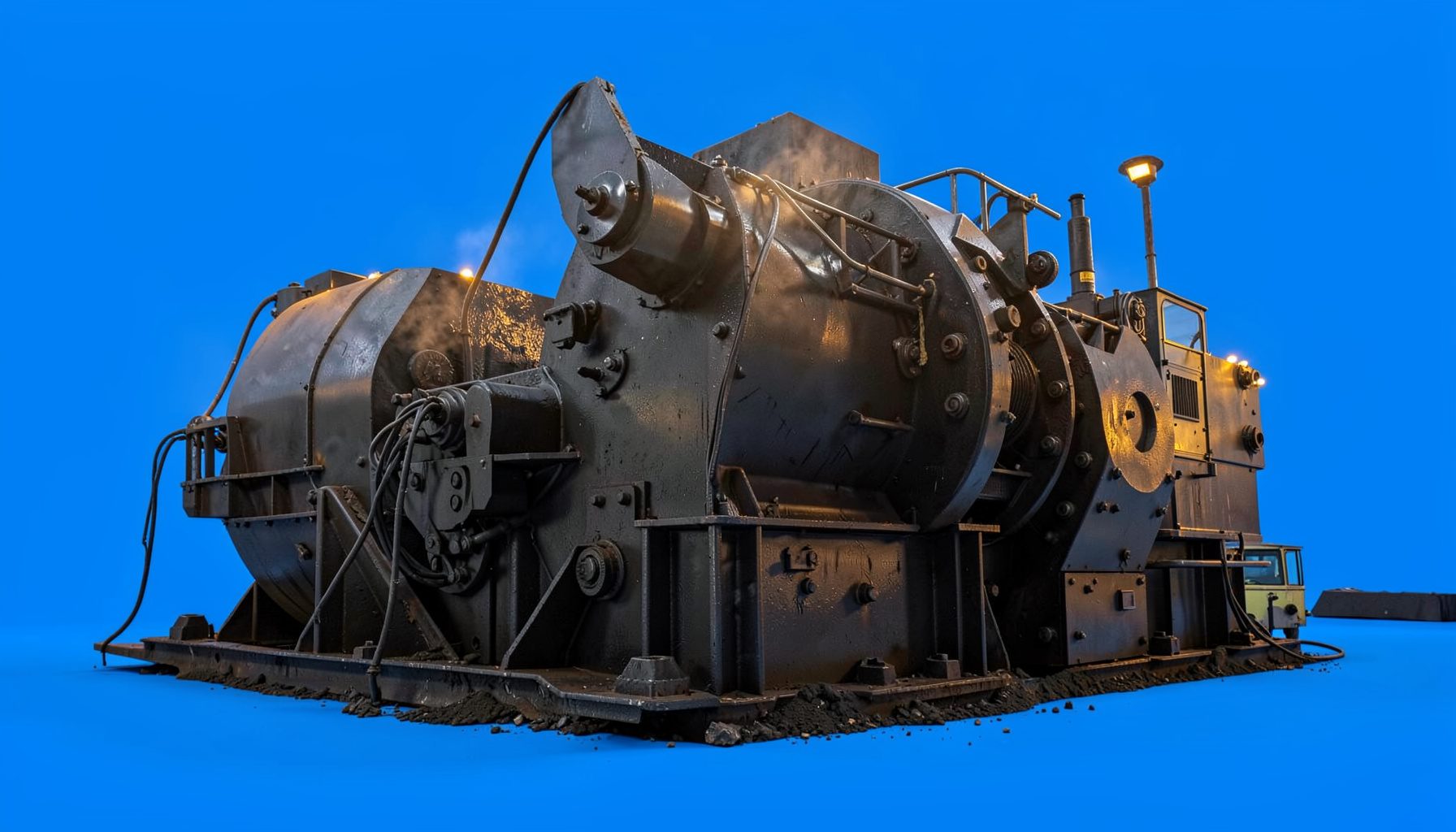
Boosting Primary Crusher Performance With a Vibrating Grizzly Feeder
Australia runs one of the largest hard-rock extraction sectors on the planet. From the iron-ore pits around Newman and Tom Price in the Pilbara to the coal operations threading through the Hunter Valley, the country's quarries and open-cut mines move enormous volumes of blasted rock every working day. How that material is conditioned before it reaches the primary jaw or cone crusher has become a defining factor in how efficiently those sites operate.
A vibrating grizzly feeder occupies the front line of that conditioning work. The unit combines a pan or trough feeder with a set of heavy-duty grizzly bars that oscillate on a linear or elliptical trajectory. Oversize boulders ride along the bars and discharge off the end of the unit, while finer material drops through the gaps onto a conveyor belt or directly into the crusher feed bin. The machine performs the work of a scalping screen and a feed apron in a single, compact module.
Installing such a unit ahead of a primary crusher reshapes the economics of the entire downstream circuit. Fines bypass the crushing chamber, the chamber sees a narrower top-size range, and the process line breathes more easily. For operators around Kalgoorlie, Mount Isa, or the basalt quarries servicing Sydney's motorway and metro upgrades, those gains appear as lower liner consumption, fewer unplanned stoppages, and tighter product sizing across the stockpile.
The sections that follow examine how vibrating grizzly feeders deliver these benefits, what design choices matter for Australian operating conditions, and where the unit fits within a broader pre-crushing train.
How a Vibrating Grizzly Feeder Works
The core of a vibrating grizzly feeder is a pair of eccentric shafts or a single eccentric drive mounted beneath a rigid steel pan. The drive forces the pan and its bolted-on grizzly bars to vibrate at a fixed frequency, typically between 700 and 900 cycles per minute for heavy-duty aggregate duty. Material fed onto the pan from a dump truck, loader, or upstream bin is thrown forward in small increments while gravity pulls the fines downward through the bar gaps.
Grizzly bar spacing is selected according to the open-side setting of the downstream crusher. A primary jaw crusher with a 150 mm OSS might be paired with bars set at 100 mm or 125 mm, while a primary gyratory fed with run-of-mine hard rock may require bars at 200 mm or wider. The bars are usually fabricated from manganese steel or abrasion-resistant plate, with tapered profiles that let sticky material release cleanly rather than bridge across the openings.
Stroke length and amplitude are tuned to the feed material. Wet, clay-rich overburden from Queensland's Bowen Basin or Victoria's greenstone belts needs a higher amplitude to shake fines through the bars, while dry, competent granite from a Perth granite quarry can be processed with a gentler stroke that protects the drive bearings. Variable-frequency drives are increasingly common on Australian sites, letting the operator dial performance up or down as feed character changes through the shift.
A well-tuned vibrating grizzly feeder removes 20 to 40 percent of the feed as already-sized fines, sending that fraction straight to a stockpile or secondary stage. The remaining coarse fraction arrives at the primary crusher in a controlled, evenly distributed layer, letting the chamber work at its optimum nip angle for far longer stretches of the day.
Wear Life, Crusher Protection, and Reduced Downtime
Putting a scalping stage ahead of the crusher dramatically lowers the impact events inside the crushing chamber. When a 1.5 metre boulder tumbles into a jaw crusher unannounced, the hydraulic tramp release fires, the toggle seat absorbs a shock load, and the cheek liners take an uneven hit. Multiply that by hundreds of truck loads per shift and the wear profile becomes punishing. Grizzly bars absorb the kinetic energy of oversize rocks and deflect fines around the crusher entirely.
The benefit shows up directly in liner life. Australian operators routinely report 30 to 50 percent longer intervals between manganese change-outs on jaw and cone crushers fitted with a properly sized scalping feeder. In remote operations such as those supporting the major Pilbara iron-ore networks, where a liner change can mean flying in a fitter team and shutting a 24-hour production line, every extra week of liner life is worth serious money.
Maintenance planning is the other side of the same coin. A vibrating grizzly feeder has no liners inside a crushing chamber and no tight CSS to reset. Routine inspection, bearing greasing, and bar replacement can be scheduled into a quiet shift without disrupting the production tonnage curve. Plant managers looking to formalise that discipline can draw on guidance such as proper crusher maintenance schedules, which walks through inspection checklists, lube intervals, and condition-monitoring thresholds that suit heavy-duty Australian duty cycles.
Dust is another wear factor. The grizzly feeder vents fines past the crusher, so the dust load inside the crusher house drops noticeably. In regional New South Wales, where the NSW Environment Protection Authority requires dust suppression and monitoring around quarry boundaries, that side benefit helps sites stay compliant with air-quality licence conditions while protecting workers from respirable crystalline silica exposure.
Throughput, Product Shape, and Stockpile Quality
Capacity gains come from two directions. The primary crusher no longer wastes strokes on material small enough to bypass it, and the chamber receives a more uniform feed that lets the operator push the closed-side setting tighter without choking. The combined effect is a step change in tonnes-per-hour rather than a marginal improvement.
In basalt and dolerite quarries around Melbourne and Hobart, where contractors sell premium concrete aggregate to city infrastructure projects, a vibrating grizzly feeder ahead of a primary jaw can lift nameplate capacity by 20 to 30 percent. Fines routed directly to the product conveyor also reach the stockpile already sized, which improves the final product gradation and reduces the load on the secondary and tertiary screens further downstream.
Product shape is influenced as well. Because the grizzly bars screen by particle dimension rather than purely by weight, flaky and elongated pieces tend to ride over the bars and feed the crusher in a more cubical orientation. That carries through to the final aggregate, helping producers meet the shape requirements of AS 2758.1 for concrete aggregate and the tighter specifications demanded by state road authorities such as Main Roads Western Australia.
For operators building a new greenfield circuit or upgrading an ageing plant, integrating a vibrating grizzly feeder is often the simplest way to lift capacity without adding a second primary crusher. Equipment manufacturers such as Shanghai CME Mining and Construction Machinery supply these units as standalone modules or as part of fully engineered complete plants, so they can be matched to existing jaw or cone crushers with minimal structural rework.
Energy Efficiency and Operating Cost Savings
Crushing is energy-intensive, and Australia carries some of the highest industrial electricity tariffs in the developed world. Anything that reduces the kilowatt-hours consumed per tonne of finished product has a direct, measurable impact on the mine gate cost. A vibrating grizzly feeder contributes on several fronts.
By sending bypass fines around the primary crusher, the unit removes the largest single energy draw in the circuit. A primary jaw crushing basalt at 600 tonnes per hour might draw 250 kW; if 25 percent of that feed can be routed past the crusher, the site immediately saves the energy that would have been spent on those fines. The vibrating feeder itself draws only a fraction of that power, typically 15 to 30 kW depending on size.
Reduced recirculating load is the second efficiency lever. When a crusher is fed too much oversize, it produces excess reject that has to be re-handled by return conveyors. With the grizzly bars controlling top size, recirculation falls, conveyor motors run for fewer hours, and the diesel burned by wheel loaders servicing the stockpile drops accordingly. In a diesel-driven mobile spread at a Pilbara exploration camp, those litres add up quickly.
Wear parts consumption is the third cost lever. Manganese liners, toggle plates, and crusher drive belts all last longer when the chamber is fed properly sized material. Spare parts inventories can be trimmed, and the working capital tied up in liner stock on the warehouse floor can be released for other projects. Over a full financial year, the cumulative saving often pays back the cost of the vibrating grizzly feeder itself.
Selection Considerations for Australian Operating Conditions
Choosing the right vibrating grizzly feeder for an Australian site involves more than matching throughput numbers. The country throws unique conditions at equipment, from outback heat above 45 °C to tropical Queensland humidity, and from Northern Territory road-train logistics to the strict compliance regime of urban New South Wales.
The Work Health and Safety Act and accompanying regulations enforced by SafeWork NSW, WorkSafe Victoria, and the equivalent bodies in each state set strict guarding, isolation, and noise requirements around vibrating equipment. Suppliers should be able to document compliance with AS/NZS 4024.1 for machinery safety and provide risk assessments aligned with the model WHS Regulations. Operators should also verify that drive guarding, walkways, and emergency stops meet site-specific requirements before commissioning.
Material character matters too. Highly abrasive iron ore from the Hamersley Range wears grizzly bars faster than competent granite, so a heavier bar profile or sacrificial wear plate is sensible. Sticky clay from a Victorian basalt quarry needs bars with sufficient opening geometry to prevent blinding, possibly combined with a scalping screen above the feeder for the worst sections of the pit. The selection process is iterative, and experienced suppliers will work through feed samples and duty cycles before quoting a build.
Total cost of ownership should drive the final decision rather than purchase price alone. A heavier, well-engineered feeder from a manufacturer with a local agent and stocked wear parts will out-perform a cheaper import with a six-week parts lead time. Australian operators are familiar with that calculus, and the long service life of a well-specified vibrating grizzly feeder is exactly what makes it such a sound investment ahead of any primary crusher.