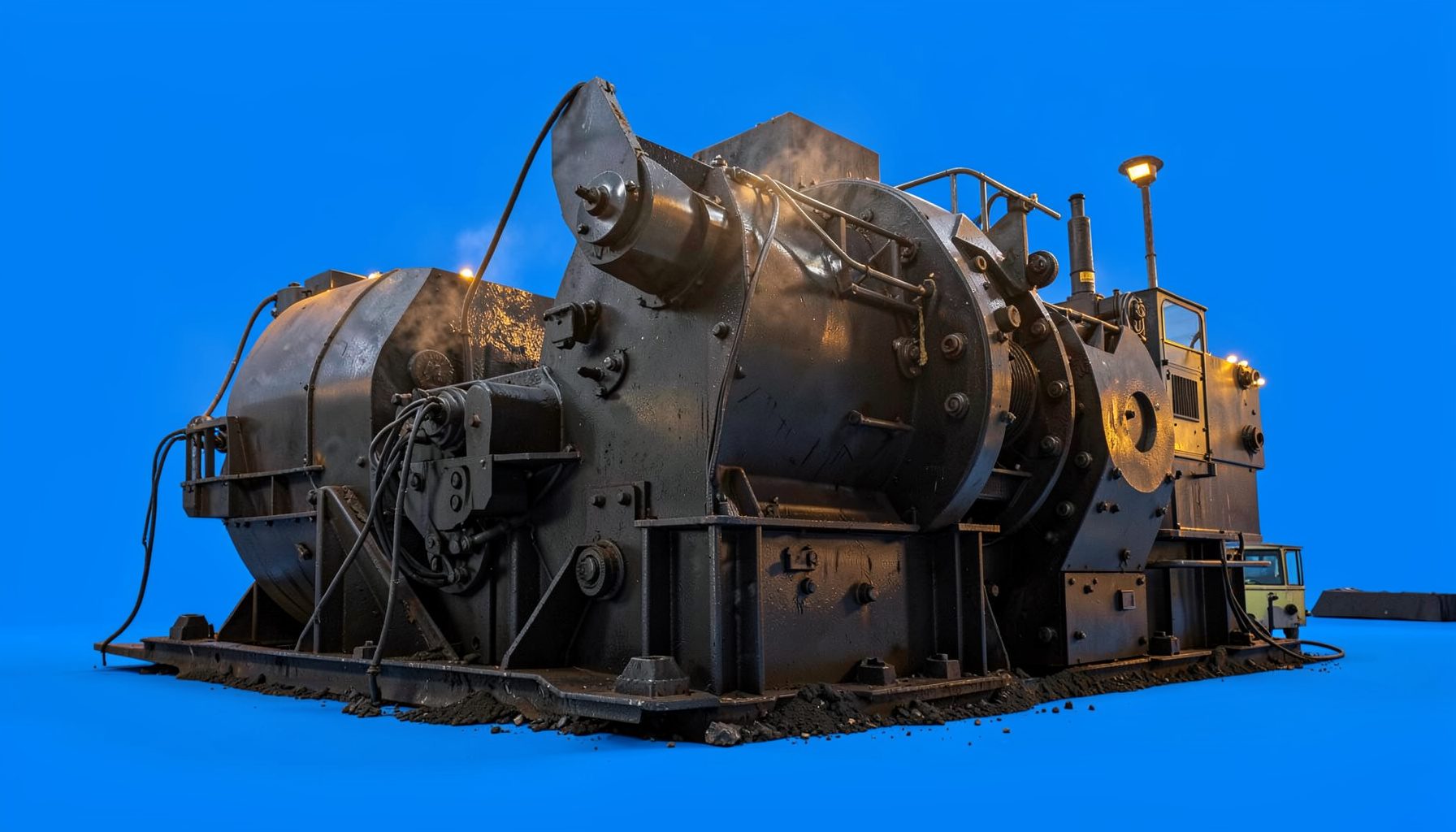
Closed-circuit grinding in cement production
A closed-circuit grinding system in cement production repeatedly separates ground material, returns coarse particles to the mill and sends only the required fine fraction forward. That feedback loop gives the plant tighter control over cement fineness than a simple once-through arrangement. It also reduces the amount of material ground beyond specification, which supports steadier output, lower wear and more efficient use of power.
For producers, the value is measured in tonnes per hour and cost per tonne of finished cement, not merely in the mill’s rated capacity. A well-designed circuit can raise practical throughput, hold a stable particle-size distribution and make automatic control easier to manage. The approach suits plants producing ordinary Portland cement, blended cement and specialised products where consistency in setting time and strength is essential.
Why closed-circuit grinding pays in cement
Grinding begins after clinker has been cooled and dosed with gypsum. In an open circuit, the mill discharges a mixture whose proportions vary as feed conditions change, so operators often accept too much coarse material or excessive fines to keep the plant running. A closed circuit places a classifier and cyclone or equivalent separator between the mill and the product route. Oversize particles travel back to the grinding chamber, while suitably fine material advances to storage, packing or further blending.
That arrangement changes the economics of production. Less energy is spent creating unwanted fines, circulating loads can be balanced against product fineness, and fewer off-specification tonnes need to be reprocessed. A stable loop also simplifies inventory control because the cement silo receives a more consistent product. Shanghai CME Mining and Construction Machinery Co., Ltd. supplies vertical mills and trapezium mills that can form part of a modern installation supported by feeders, conveyors and screening equipment.
How the circuit controls fineness
The separator is the active part of the loop. Airflow, rotor speed, fan pressure and cut-size settings determine which particles pass to the product stream and which return for another pass. Operators can therefore hold a narrow target even when clinker hardness, moisture or gypsum content shifts. Vertical roller mills commonly use a dynamic separator, while cyclone-based arrangements provide another route; the best choice depends on required capacity, feed size, available space and the level of automation already installed.
Good process control depends on measuring the result rather than simply trusting the setpoint. Particle-size distribution, residue on a sieve, Blaine fineness and setting behaviour should be checked against mill conditions, with alarms arranged to flag a drifting separator or inconsistent feed. Portable and laboratory precision testing instruments can support those checks when chosen to suit the Australian site’s climate and testing regime. Regular calibration and clear ownership of adjustments prevent the loop from becoming an unstable open circuit in practice.
Energy, wear and operating gains
Electricity is one of the largest variable costs in cement manufacture, so small gains per tonne accumulate quickly. Closed-circuit classification lets operators reduce overgrinding and avoid transmitting coarse particles through the entire finishing route. The mill can also be run close to its efficient operating window instead of being overloaded to compensate for poor classification. Payback should be calculated from energy saved, additional saleable tonnes and avoided reprocessing, with local tariffs and production schedules included rather than relying only on catalogue efficiency figures.
Grinding media and liners also respond positively to better classification. Returning coarse particles directly to the mill creates predictable impact, while eliminating oversized output reduces abrasion in downstream ducts, cyclones and separators. Maintenance planning becomes easier when circulating load and differential pressure are monitored for change. A lower feed rate may occasionally be accepted to protect the plant, whereas an open loop can tempt operators to push harder and accelerate wear. The result is often better availability, although the exact gain depends on equipment condition and operating discipline.
Consistency for clinker and blended cement
Consistency has direct commercial value because cement customers formulate around predictable performance. Fine particles influence hydration rate, while coarse particles can reduce early strength or contribute to uneven setting. A closed circuit holds the product closer to the specified fineness, producing less variation between silo batches. This matters when clinker is blended with slag, fly ash, limestone or other supplementary cementitious materials, because each feed has different grinding behaviour and a stable classifier setting gives the plant a cleaner control strategy.
Quality teams should connect mill settings with laboratory results and customer feedback. Records can show whether a strength shift followed a change in feed blend, separator condition or gypsum ratio. Product availability for cement process equipment can also be checked when planning replacement elements, pumps, gearboxes and liners, helping teams avoid treating an auxiliary shortage as a grinding fault. The core benefit is repeatable cement: fewer surprises at the packing line and more confidence that dispatched tonnes match the approved product.
Australian operating realities
Australian cement plants operate in a market shaped by major cities, long freight distances and strong demand from infrastructure and housing. Clinker is produced in facilities around New South Wales, Victoria, Queensland and Western Australia, then transported to grinding centres or shipped to local depots. A plant near Melbourne or Sydney may supply a dense construction market, while remote projects in the Pilbara, outback Queensland or regional New South Wales create additional demand for dependable bulk cement. Road-train conditions and bagged-product requirements make reliable output and clear order planning particularly important.
Australian operating conditions add another layer. Hot, dusty summers affect cooling, seals, sensors and worker routines, while long-distance maintenance support can make spare-part planning essential. Electricity prices and the carbon-accounting requirements associated with the Safeguard Mechanism encourage efficiency, and sites must satisfy applicable AS/NZS standards and environmental approvals. Local teams often value a fair dinkum installation that is easy to service, while FIFO rosters and contractor handovers reward training that transfers ownership clearly. Phrases such as “no worries” may signal approval, but the real measure is whether the mill starts, runs and stops predictably.
Equipment selection and commissioning
Equipment selection should begin with the cement specification and a realistic duty cycle. Feed size, required throughput, fineness tolerance, available power, maintenance skill and layout determine whether a vertical mill, trapezium mill or other grinding route offers the best outcome. Closed-circuit packages must include properly sized cyclones, ducts, fans, feeders, return chutes, liners and a separator capable of maintaining the target cut size. An equipment supplier network can provide useful cross-market references when evaluating auxiliary availability and spare-part support, although the final choice should be based on verified Australian project requirements.
Implementation works best when the mill, classifier and controls are commissioned as one system. Establish baseline energy, throughput, fineness, circulating load, vibration and maintenance data, then run performance tests across the intended operating range. The team should rehearse upset conditions such as a blocked chute, high moisture, a separator fault or inconsistent clinker feed. Clear bypass, lockout and recovery procedures protect both operators and equipment. After start-up, monthly reviews should track cost per tonne and product consistency rather than focusing only on tonnes per hour.
| Measure | Open-circuit grinding | Closed-circuit grinding |
|---|---|---|
| Material flow | Product leaves the mill after one pass | Coarse particles return until correctly classified |
| Fineness control | Mainly determined by feed rate and mill setting | Actively adjusted through separator settings and return rate |
| Overgrinding | Higher risk of producing unnecessary fines | Reduced by sending only the required fine fraction forward |
| Energy use | May rise when operators compensate for poor classification | Can be lower once the loop is properly tuned |
| Saleable output | Limited by the inability to classify material selectively | Better use of mill capacity when operating conditions are balanced |
| Equipment wear | Coarse carryover can abrade downstream components | Coarse material returns directly to the mill |
| Product consistency | More sensitive to feed and operating changes | Tighter particle-size control under stable feed conditions |
| Capital and complexity | Lower initial cost with fewer components | Requires additional separation, returns, controls and commissioning |
| Best suited to | Simpler duties with looser product requirements | Continuous production and specified or blended cement |
Closed-circuit grinding is therefore a practical route to higher efficiency and tighter cement quality, provided classification, maintenance and feedstock control are treated as a single operating discipline. Its strongest case appears in plants with continuous production, stable specifications and a close focus on cost per dispatched tonne. Under those conditions, the loop can improve equipment utilisation while delivering a more uniform product.