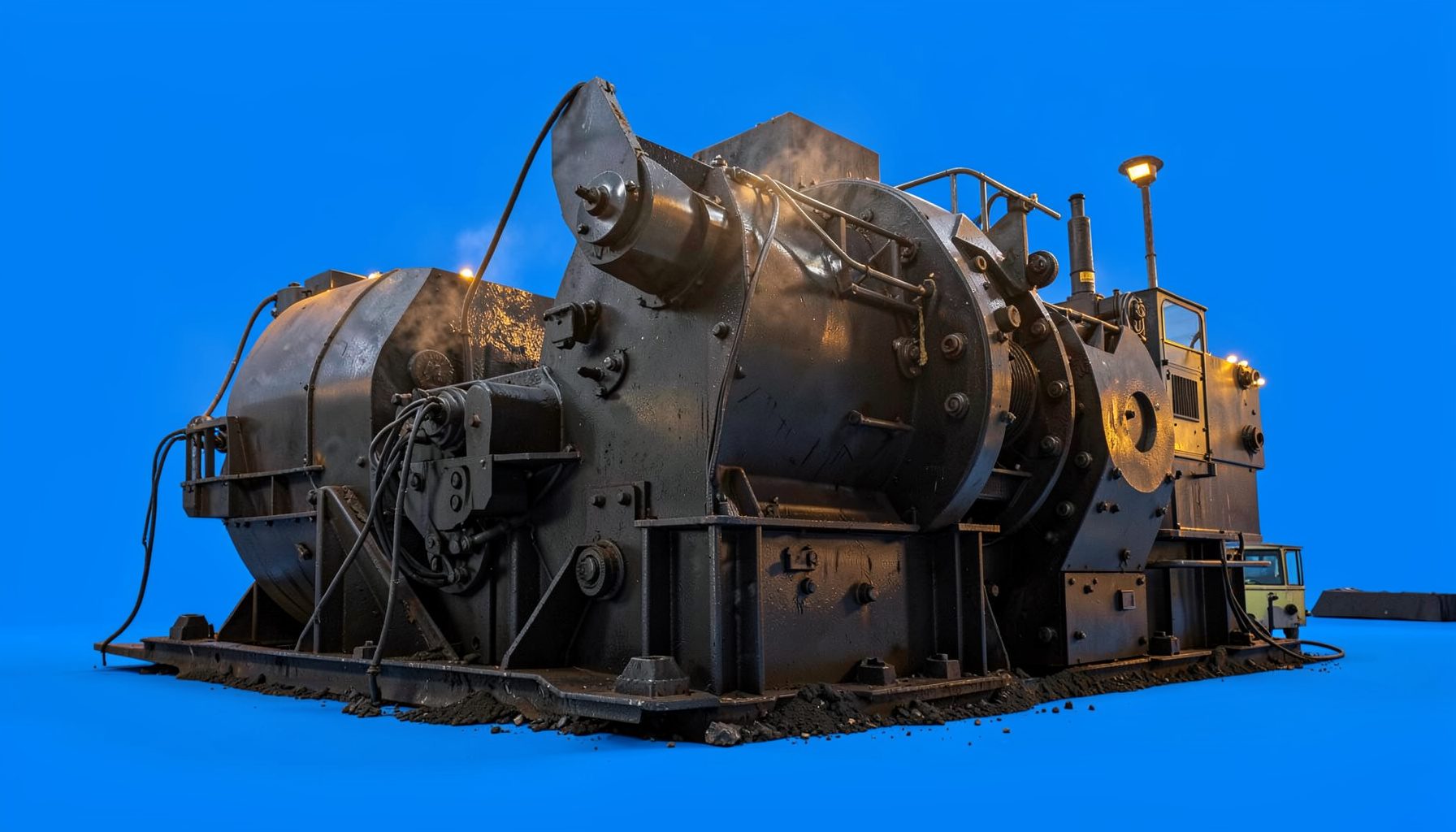
Advantages of Secondary Impact Crushers in Cement Production
Cement manufacturing depends on consistent size reduction, dependable material flow, and stable feed chemistry. After quarry blasting and primary crushing, limestone and other raw materials still contain oversized pieces that must be reduced before grinding, blending, and kiln preparation. A secondary impact crusher is designed for this stage, where controlled reduction can improve both plant efficiency and product consistency.
Unlike a primary crusher, which handles large run-of-quarry material, a secondary impact crusher receives a more controlled feed and delivers a smaller, more uniform product. Its impact action uses high rotor speed and breaker plates to fracture stone along natural weaknesses. This makes the equipment particularly useful for limestone, marl, gypsum, and other relatively soft to medium-hard materials commonly processed in cement plants.
Australian cement and quarry operations place strong emphasis on energy management, dust control, equipment availability, and compliance with site conditions. Plants near Sydney, Melbourne, Brisbane, and Perth often work within tight transport, noise, and environmental requirements. Selecting the right secondary crushing stage can therefore influence production costs, maintenance planning, and the reliability of the entire downstream process.
| Consideration | Secondary impact crusher | Cone crusher | Hammer crusher |
|---|---|---|---|
| Typical strength range | Soft to medium-hard rock | Medium-hard to hard rock | Soft to medium-hard material |
| Product shape | Cubical, well-graded particles | Generally cubical, depending on setting | Fine and often highly reduced |
| Main strength | High reduction and adjustable shaping | Continuous compression crushing | Strong single-stage size reduction |
| Suitable cement duty | Limestone and controlled secondary reduction | Abrasive or harder feed | Soft, low-abrasion feed |
| Maintenance focus | Blow bars, liners, rotor balance | Mantle, concave, lubrication | Hammers, grate and wear parts |
| Energy profile | Efficient where impact breakage suits the feed | Reliable under heavy-duty loads | Effective but may create excess fines |
Efficient Reduction of Limestone
The main advantage of a secondary impact crusher in cement production is its ability to achieve a high reduction ratio in a compact crushing stage. Limestone extracted from an Australian quarry may arrive from the primary crusher with a broad range of sizes. The impact rotor rapidly accelerates this material against breaker plates, producing smaller particles without requiring multiple compression cycles.
This high reduction capability can reduce the number of crushing stages required before raw material grinding. Fewer stages may mean a simpler material-handling route, fewer transfer points, and lower civil and electrical installation demands. The actual result depends on feed hardness, moisture, required product size, rotor speed, and crusher configuration, so laboratory testing and site trials remain important before final selection.
Secondary impact equipment is especially effective when the feed contains naturally fractured limestone. The material breaks readily under impact, allowing the machine to produce useful capacity without excessive power consumption. A properly selected unit can help maintain the feed rate to vertical mills or raw mills, preventing the crusher from becoming a restriction in the preparation line.
Consistent Particle Shape and Grading
Cement raw meal preparation benefits from a controlled feed size. When secondary crushing produces a relatively uniform and well-shaped product, the grinding mill receives material that is easier to process. More consistent particles can support stable mill operation, improve separator performance, and reduce fluctuations in the fineness of the raw meal.
Impact crushing also has a useful shaping effect. Instead of relying entirely on compression, the rotor throws material against impact surfaces, encouraging fracture through weak points. The resulting particles are often more cubical than heavily elongated pieces. This can improve packing behaviour in stockpiles and support smoother flow through hoppers, feeders, and conveyors.
Product grading is influenced by the rotor speed, breaker plate position, feed gradation, and wear condition. Operators can adjust these factors to balance throughput against fines generation. In a plant supplying cement markets around Melbourne or Adelaide, that flexibility can help accommodate changes in quarry benches, seasonal moisture, and production schedules without replacing the whole crushing system.
Lower Operating and Maintenance Burden
A secondary impact crusher can offer a practical balance between capacity and maintenance when it is matched to the correct material. The machine typically provides direct access to wear components, allowing technicians to inspect or replace blow bars and impact liners during planned shutdowns. Quick adjustment systems can also shorten the time needed to restore the desired product size.
Wear management is essential because cement raw materials may contain quartz, chert, or other abrasive inclusions. These contaminants can accelerate wear on blow bars and breaker plates even when the main limestone is relatively soft. Monitoring liner profiles, rotor balance, vibration, bearing temperature, and power draw helps maintenance teams identify deterioration before it becomes an unplanned stoppage. A structured crusher maintenance schedule can turn these checks into repeatable operating practice.
Replacement parts should be selected according to the actual feed, not simply the nominal crusher model. Different blow bar alloys and liner designs provide different levels of impact resistance and service life. Australian sites may also need to plan around long delivery distances, remote quarry access, and limited shutdown windows. Keeping critical wear parts available at the site can protect production during periods when freight to Western Australia or northern Queensland takes longer than expected.
Adaptability Across Cement Plant Layouts
Secondary impact crushers can be installed in stationary, semi-mobile, or mobile configurations. A stationary machine is appropriate for a long-life cement works with fixed quarry infrastructure, while a mobile arrangement may suit temporary extraction areas or operations that need to follow a changing quarry face. Integration with vibrating feeders, conveyors, screens, and dust suppression systems allows the crusher to function as part of a complete processing circuit.
A mobile crushing plant can be useful when material must be reduced close to the extraction point before being transported. This may shorten haul distances and reduce truck traffic on large sites. It can also support staged quarry development, where the final location of the extraction area changes over time. Guidance on mobile crushing plants illustrates how mobility can support flexible aggregate and mineral-processing arrangements, although each cement project still requires site-specific engineering.
Feed control has a direct effect on the performance of an impact crusher. A vibrating feeder can remove fine material before the rotor, regulate the loading rate, and prevent surges from reaching the crushing chamber. Screens can return oversize for another pass or separate material into different stockpile grades. This modular approach is useful for Australian facilities where a single plant may process several limestone sources or supply both cement production and local construction aggregate customers.
Energy, Dust, and Plant Integration
Every crushing stage influences the energy demand of the cement process. By producing an appropriately sized and shaped feed, a secondary impact crusher may reduce the work required in the raw grinding circuit. The benefit is greatest when the crusher operates close to its design capacity with a steady feed and when the product specification is aligned with the mill’s requirements.
Energy performance should be assessed across the complete line rather than by motor rating alone. A crusher that draws less power but creates excessive recirculation may be less efficient overall than a larger unit that delivers the target size in one pass. Engineers should examine throughput, circulating load, screen efficiency, conveyor demand, and raw mill performance when comparing alternative crushing arrangements.
Dust extraction and enclosure design are equally important. Impact crushing creates turbulence as material strikes the rotor and breaker plates, so transfer points, inspection doors, and discharge zones need suitable sealing and extraction. Water sprays may assist in some quarry environments, but excessive moisture can affect downstream handling and raw mix control. In areas near Brisbane or Sydney, where community expectations and regulatory scrutiny can be significant, well-designed dust control supports reliable operation and neighbour relations.
Digital monitoring can further improve control. Sensors for vibration, bearing temperature, motor load, and feed level provide information that operators can use to identify blockages or abnormal wear. Clear labelling, operating instructions, and durable plant signage also help crews work safely during inspections and changeovers; specialist industrial printing services can support the production of robust labels and identification materials for demanding plant environments.
Selecting the Right Crusher for Cement Duty
The best secondary impact crusher depends on the properties of the feed and the required final product. Key questions include the maximum feed size from the primary crusher, compressive strength, abrasiveness, moisture content, clay content, required capacity, and target product gradation. A unit intended for clean limestone may perform very differently when the quarry face includes hard silica bands or sticky wet clay.
Capacity calculations should account for seasonal and operational variation. Australian quarries can face dry, dusty periods as well as intense rainfall events that alter feed moisture and material flow. The crusher, feeder, screens, and conveyors should be sized as a balanced system rather than selecting one machine around a theoretical maximum. Surge bins and controlled feeding can protect the impact chamber from sudden loading changes.
Supplier support is another important consideration. Access to wear parts, commissioning assistance, operator training, and technical advice can determine whether the equipment achieves its expected service life. Shanghai CME Mining and Construction Machinery Co., Ltd. supplies crushing, screening, grinding, conveying, and mineral-processing equipment for quarrying, cement, mining, and aggregate applications. Its equipment range includes impact crushers and complete plant components that can be evaluated for a cement project’s material and layout requirements.
A secondary impact crusher is most advantageous when its reduction performance matches the raw material and the rest of the process is designed around it. With controlled feeding, suitable wear protection, effective dust management, and regular inspections, it can provide reliable limestone reduction, useful particle shape, and stable support for the grinding and kiln stages. For cement producers seeking a flexible secondary crushing solution, that combination can strengthen both daily productivity and long-term plant efficiency.