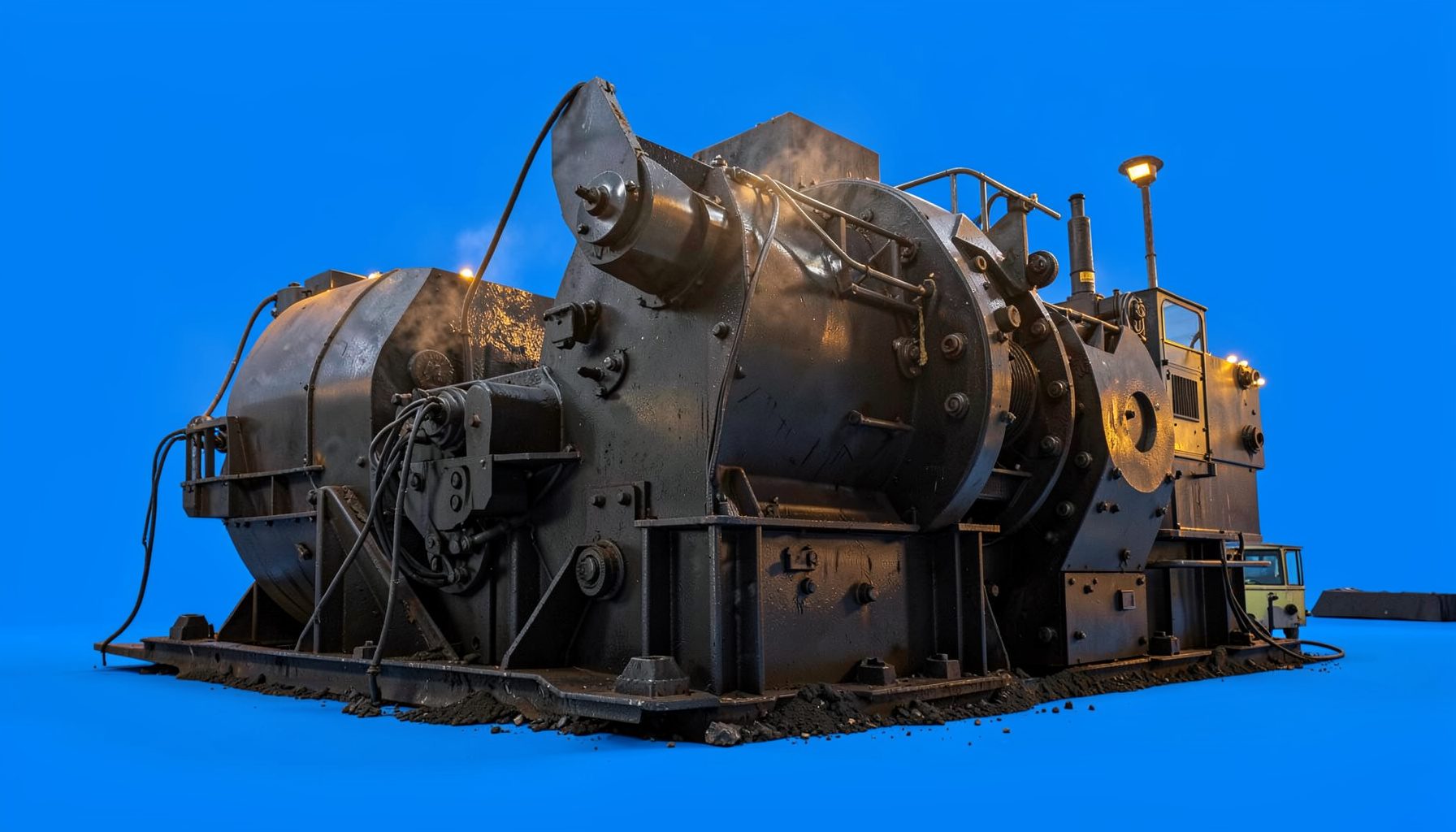
Optimising roll gap for coal preparation
In a roll crusher, the clearance between the rolls is one of the most influential settings for controlling product size, throughput and energy use. A gap that is too wide allows oversize coal to pass through, while a gap that is too tight can increase power draw, fines generation, vibration and mechanical wear.
The correct setting depends on the coal’s top size, moisture, hardness, clay content and required product specification. Operators in Australia may be reducing run-of-mine coal for a wash plant, preparing thermal coal for power generation or producing a consistent feed for downstream screening. Each duty calls for a measured approach rather than a fixed gap chosen by habit.
Why the roll gap matters
The roll gap is the smallest working distance between the opposing roll surfaces or teeth. Material is drawn into this zone, compressed, sheared or nipped, and released after breaking. In a double-roll crusher, the setting generally has a direct influence on the maximum size of the discharged product, although the actual product distribution also depends on feed properties and crusher design.
A smaller clearance usually produces a finer product and improves control of top size. It can also reduce the quantity of oversize sent to a screen or secondary crusher. However, excessive compression can increase circulating load, create unnecessary fines and push the drive motor towards its power limit. Coal that contains hard bands of stone or pyrite can make this effect more severe.
A wider setting normally supports higher capacity and lower energy consumption. It may be suitable when the crusher’s role is simply to break large lumps before screening. The trade-off is a broader size distribution and a greater risk that material above the desired specification will pass through.
Start with the coal and the duty
Gap selection should begin with a clear description of the feed, rather than the crusher alone. Record the top lump size, average feed size, moisture percentage, bulk density and proportion of clay or shale. Friable sub-bituminous coal may break readily at a relatively open setting, while tougher bituminous coal can require more torque and a closer examination of roll speed and tooth profile.
Moisture has a particularly strong effect on coal preparation. Wet, sticky feed can bridge across the opening, smear onto smooth rolls or reduce the effective capacity of the crusher. In a Queensland wet season operation, surface water and clay contamination may change the feed behaviour from shift to shift. A gap that worked during a dry campaign may then produce blockages or uneven discharge.
The target product should be expressed in measurable terms. “Fine coal” is too vague for reliable adjustment. A specification such as 95% passing 50 mm, a controlled top size for a screen, or a nominated preparation-plant feed range gives the operator a basis for testing. For background on broader processing practices, coal preparation guidance can be considered alongside the crusher manufacturer’s instructions and site test data.
Establishing a practical setting
The nominal gap should be selected from the required product size, the roll diameter, the roll profile and the manufacturer’s recommended operating range. A toothed roll crusher can accept larger lumps and use intermeshing teeth to pull material through, while a smooth-roll machine relies more heavily on compression and friction. The same measured clearance will not produce identical results on both designs.
Begin with a conservative setting inside the approved range and run a stable sample. Avoid changing the gap while feed rate, moisture or upstream sizing is also changing. Collect representative samples from the discharge at regular intervals, screen them and record the percentage retained above the target size. This separates the effect of the setting from normal feed variation.
If too much oversize is present, reduce the gap in small increments and allow sufficient time for the changed material to pass through the system. If the product contains excessive fines or the motor load rises sharply, open the gap slightly, reduce the feed rate or inspect the roll surface. A sudden change in current may indicate a tramp event, a blocked chute or a damaged tooth rather than an incorrect gap.
Comparing crusher settings
The best operating point balances product control, capacity, power demand and wear. It is rarely the smallest available clearance. A coal preparation plant should compare several stable settings using the same sampling method and similar feed conditions.
| Operating condition | Typical product effect | Power and capacity effect | Suitable response |
|---|---|---|---|
| Wide roll gap | More oversize and a coarser distribution | Higher capacity and lower specific energy in many cases | Use for primary lump reduction or when screens remove oversize |
| Moderate gap | Balanced top-size control and throughput | Generally stable motor load | Suitable starting point for routine coal preparation |
| Tight roll gap | Finer product and less oversize | Higher power, lower capacity and greater fines risk | Use only when the product specification requires it |
| Uneven gap | Variable product size, possible side-to-side oversize | Vibration, unstable loading and irregular wear | Stop safely and inspect alignment, bearings and adjustment |
| Gap affected by worn teeth | Increasing oversize despite unchanged setting | Falling capacity and rising recirculation | Replace or rotate worn components according to the design |
The table describes operating tendencies rather than guaranteed results. A wet, clay-rich feed may behave like a much finer setting because it packs into the crushing zone. Conversely, a very dry and hard feed can pass through with more oversize if the roll profile is worn or the feed is not presented evenly across the width.
Measuring performance at the plant
A gap adjustment is successful only when the discharge meets the required size without creating unacceptable operating penalties. Useful measurements include crusher motor current, tonnes per hour, product moisture, screen oversize, fines percentage, bearing temperature and vibration. Trending these values is more reliable than judging the product by eye from the conveyor.
Sampling should cover the full width and operating cycle of the discharge stream. A grab sample from one side of a belt may miss segregation or a local flow problem. For a plant serving the Hunter Valley, where contracted product specifications can be closely tied to shipment schedules, a consistent sampling routine helps identify drift before it affects a train load or vessel parcel.
Cameras and automated monitoring can assist with detecting build-up, uneven flow and visible oversize, but lighting conditions influence image quality. When a camera-based system is used around a transfer point or crusher, the ambient light effects should be considered during installation, calibration and day-to-night operation. Dust, glare and shadows can otherwise create false alarms or hide a developing blockage.
Managing Australian operating conditions
Coal sites in Queensland’s Bowen Basin and New South Wales’ Hunter Valley commonly deal with long conveyors, high production targets and changing feed from multiple pits or stockpiles. The crusher gap may need a different setting for a hard fresh face than for weathered coal containing clay and friable bands. Plant control rooms should retain setting records against mine area, seam, moisture and product result.
Australian operations also place strong emphasis on dust control, guarding, isolation and documented verification under site work health and safety systems. A gap must never be checked by reaching into the crushing chamber or by bypassing an interlock. Hydraulic or mechanical adjustment systems should be operated according to the equipment procedure, with stored energy released and the crusher isolated before inspection.
Communication on site is often direct: if the rolls are “pulling hard”, “choking up” or “making too much dust”, those observations are useful starting points but need to be linked to measurements. A disciplined shift log can turn practical language from the field into trends that maintenance and process engineers can act on. This is especially valuable for fly-in, fly-out teams where the next crew may not have seen the original feed condition.
Responding to wear, tramp and blockage
Roll wear changes the effective crushing geometry even when the adjustment scale shows the same gap. Worn teeth may lose their ability to grip large lumps, while a damaged segment can create a local opening that allows oversize through. Check tooth height, profile, segment condition and roll parallelism during planned inspections.
Tramp metal and unbreakable rock require a defined protection strategy. A hydraulic overload relief system can allow the rolls to separate and pass the object, but repeated trips should be investigated rather than accepted as normal operation. Frequent releases may indicate poor upstream scalping, inadequate magnet performance or a change in mining conditions.
If the crusher plugs, stop the feed and follow the site isolation and clearing procedure. Do not use a loader bucket, bar or improvised tool against an energised crusher. After the blockage is removed, inspect the rolls, bearings, drive coupling, chute liners and adjustment system. A blockage can shift the rolls or damage a tooth, leaving an apparently normal gap that produces unstable sizing.
Integrating the crusher with the wider circuit
Roll-gap optimisation should be coordinated with feeders, screens, conveyors and stockpiles. An accurately set crusher cannot compensate for an erratic feeder that delivers surges or a screen that is blinded by wet fines. Feeders should provide an even layer across the roll width, and transfer chutes should minimise segregation and uncontrolled impact.
The screen cut size also affects the best crusher setting. If the screen removes oversize efficiently, a slightly wider gap may deliver better tonnes per hour with acceptable recirculation. If there is no practical secondary crushing stage, a closer and more carefully monitored setting may be needed to protect the final product specification.
Stockpile management affects moisture and segregation after crushing and washing. Good stockpiling practices help preserve a consistent material blend, which makes gap trials more meaningful. When feed conditions are controlled, the operating team can distinguish a genuine crusher adjustment benefit from a temporary change in coal quality.
A robust optimisation process therefore combines a measured roll clearance with feed control, product sampling, power monitoring and maintenance inspection. For equipment supplied as part of a broader crushing and screening circuit, including jaw, cone, impact, feeder and conveyor systems, the roll crusher should be judged by its contribution to the complete coal preparation line rather than by gap size alone.