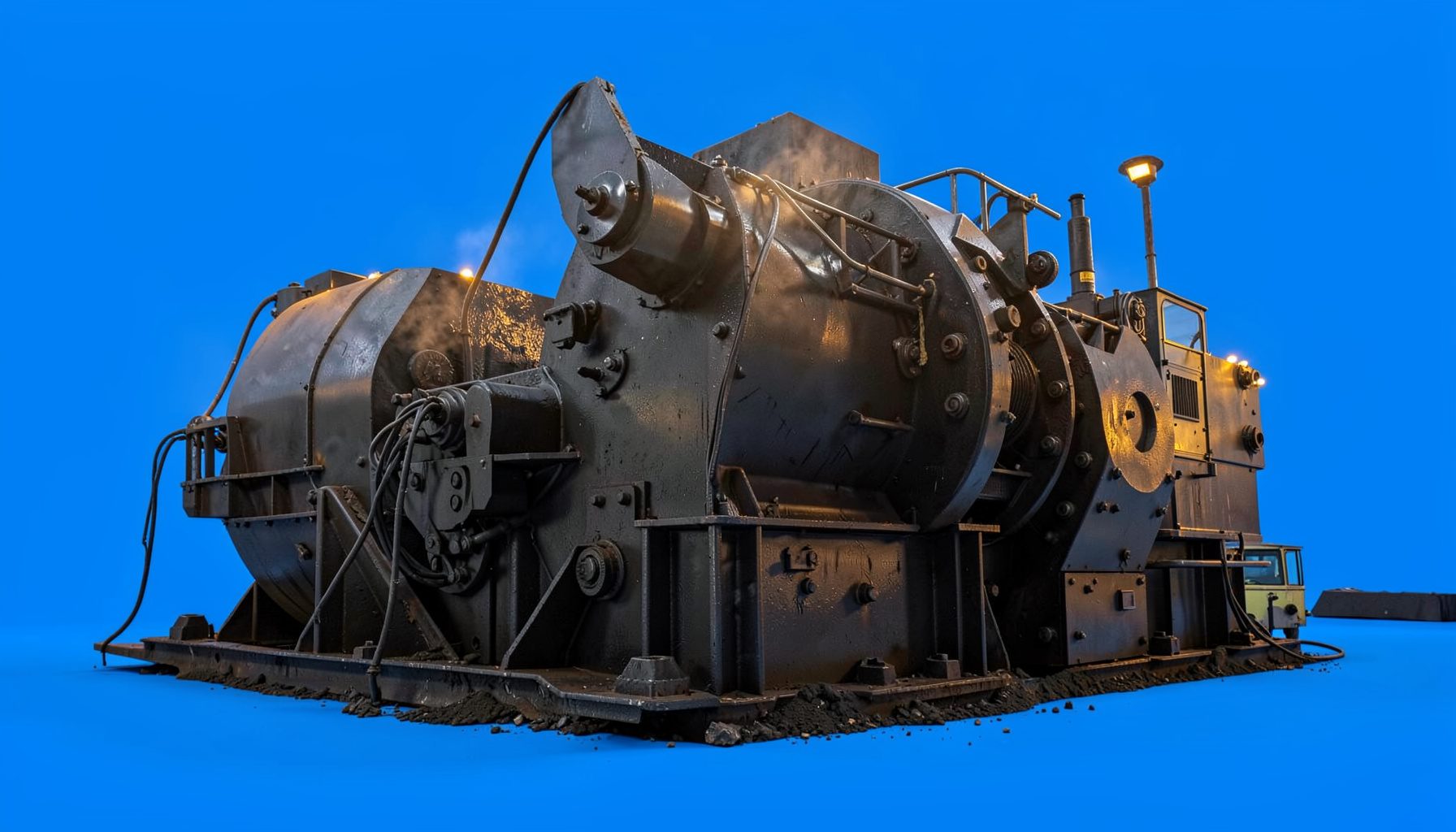
Mobile cone crushers bring flexibility to multiple aggregate sites
Australia's aggregate industry stretches across vast distances, from the basalt quarries outside Melbourne to the granite deposits of Western Australia's Pilbara region. Producers servicing multiple pits need equipment that can move between sites without dismantling a fixed plant every time the reserves shift. Mobile cone crushers have become a practical answer for contractors handling short-term contracts, regional councils managing road-base programs, and mining suppliers working across remote lease areas. The ability to load, transport, and commission a cone crusher in a single day has reshaped how aggregate schedules are planned in the country.
For Australian operators, the case for mobile units is partly about logistics. A single crusher can be set up at a greenfield quarry near Newcastle one month, then relocated to a hard-rock site outside Toowoomba the next, with only a standard low-loader required. That kind of portability suits a market where road haul distances are long, project lengths vary, and seasonal demand swings between infrastructure builds in the south and resource projects further north. Producers who previously invested in stationary plants are increasingly adding tracked cone crushers to their fleets to protect margin when tender work changes.
Shanghai CME Mining and Construction Machinery Co., Ltd. supplies mobile cone crushers as part of a wider range of crushing, screening, and washing equipment used across quarrying, construction, and mineral processing. The company's mobile units are designed for contractors who need genuine flexibility rather than a stationary machine that simply sits on skids. The same engineering group also builds jaw crushers, impact crushers, sand-making machines, and vertical mills, so plant layouts can be matched to site conditions without mixing brands.
Why Australian operators choose mobile cone crushers
The Australian quarrying scene rewards equipment that can be redeployed quickly. A contractor winning a railway ballast contract in regional New South Wales may have only six months to complete the work before crews move to a follow-on project near Rockhampton. Setting up a permanent crushing circuit for such a short window rarely makes financial sense, especially when the borrow pit may close and the next job begins hundreds of kilometres away. Tracked cone crushers reduce the fixed-cost burden because they arrive on site already assembled, with feeders, conveyors, and control panels integrated.
Another driver is the geographic spread of Australian infrastructure work. Major road upgrades, such as the Pacific Highway duplication programs, have required crushed rock from multiple borrow sources spread along the corridor. Mobile cone plants can be rotated between sources as each pit is worked out, keeping production continuous and reducing double-handling of material. This approach also helps when councils seek to minimise land disturbance, because a mobile unit occupies a smaller footprint and can be removed once a section is finished, allowing the area to be rehabilitated without a permanent concrete slab being left behind.
Cost control is the third factor. Mobile cone units typically require a smaller site crew than a fixed plant, since there is no need for cranage to lift major components during installation. Operators also avoid the civil works associated with footings, retaining walls, and aggregate feed bins. For regional producers servicing the housing and civil markets around Adelaide, Perth, or the Gold Coast, those savings can be the difference between a profitable contract and one that breaks even.
How mobile cone crushers handle multiple sites
The core of any mobile cone crusher is a robust cone chamber that accepts feed from a primary jaw or impactor and reduces it to the sizes required for road base, concrete aggregate, or asphalt feed. What makes the mobile version distinct is the chassis, track system, and integrated product conveyor. A tracked cone plant can be folded into transport mode, hauled by a standard prime mover, and unfolded on the new pad in a matter of hours. Wheeled variants are also available for shorter relocations between sites served by sealed roads.
Set-up time matters most when the crusher is moving between pits that are close together, such as the cluster of hard-rock quarries around Geelong or the basalt fields used for rail ballast between Lithgow and Mudgee. A crew that can reposition the secondary and tertiary stages in a single shift keeps the loader operator productive and avoids the cost of an idle machine. For work in more remote areas, including the goldfields of Western Australia or the copper operations of South Australia, the same principle applies, but with longer haul distances between sites.
Plant pairing is another consideration. Many Australian operators run a mobile jaw crusher as the primary unit and follow it with a mobile cone crusher for secondary and tertiary reduction. The cone handles the shaping and sizing work, while the jaw breaks down the initial feed. This pairing allows producers to process a wide range of feed sizes without committing to a single fixed location, and it is particularly common in contract crushing businesses that move from one tender to the next. For additional perspective on the broader trends shaping mobile plant design, the team behind https://genoptics-spr.com/ has published useful background on aggregate processing economics.
Engineering features that support relocation
Modern mobile cone crushers are built around components that survive frequent lifting, transport, and vibration. The frame is reinforced to handle the twisting loads encountered when the unit is dragged over uneven haul-road surfaces, and the lubrication system is designed to prime quickly after a long road move. Dust suppression is integrated, which is important in the dry conditions of the Australian outback where wind-blown fines can otherwise create compliance headaches with state environmental authorities.
The control systems on current mobile units allow operators to monitor crusher setting, oil temperature, and power draw from a single panel. Remote telematics is increasingly common, letting a maintenance manager in Brisbane review production data from a plant running near Mount Isa. This kind of visibility is valuable for FIFO service teams who may be hundreds of kilometres from the closest depot and need to plan parts runs in advance. Producers running multiple mobile plants across the country often standardise on a single control platform, which simplifies training and reduces the risk of operator error when crews swap between machines.
Wear management is also engineered with relocation in mind. Liners are designed to be replaced on site using standard lifting gear, and modular conveyor sections can be unbolted and crated if a particularly rough site is likely to damage them. The optional pre-screen on many mobile cone plants removes fines before they enter the cone, which reduces wear and improves final product shape, particularly important when producing manufactured sand for the Sydney and Melbourne construction markets.
Production efficiency across diverse applications
Mobile cone crushers are not limited to a single product specification. Depending on the closed-side setting and the chamber profile, the same unit can produce coarse road-base, drainage aggregate, concrete aggregate, or fine crusher dust. Producers supplying civil contractors in suburban Sydney often switch between products several times a week as job specifications change, and a mobile cone plant can be reconfigured between campaigns without a full shutdown.
Fuel efficiency has become a competitive differentiator. Direct-drive electric and hybrid diesel-electric configurations are now offered alongside traditional diesel-hydraulic drives, and they suit sites with generator power or grid connections. For remote Australian operations, diesel-hydraulic remains the default, but the hybrid option is gaining ground at larger urban recycling yards where noise and emissions regulations are tightening. Choosing the right power source depends on duty cycle, site infrastructure, and the cost of diesel in the region, which can vary widely between the Northern Territory and the southern states.
Dust and noise compliance is particularly relevant around populated areas. Local councils in places like the Mornington Peninsula, the Yarra Valley, and the Adelaide Hills have specific operating hours and noise limits that affect how long a crusher can run each day. Mobile cone units with acoustic enclosures, water misting systems, and variable-speed fans are easier to permit in these environments. Producers servicing both remote quarries and suburban recycling sites appreciate the flexibility of running the same platform across very different regulatory settings. Operators planning a new installation can review wet and dry screening options to see how downstream sizing interacts with the cone stage.
Comparing mobile cone crusher configurations
| Configuration | Mobility | Best suited for | Typical production range | Power source |
|---|---|---|---|---|
| Tracked heavy-duty cone | Track-mounted, all-terrain | Remote hard-rock quarries, multi-pit contract work | 200–500 tph | Diesel-hydraulic |
| Wheeled mobile cone | Road-going wheels | Urban recycling, regional road projects | 100–250 tph | Diesel or hybrid |
| Tracked hybrid cone | Track-mounted with electric drive | Sites with grid power, urban quarries | 150–350 tph | Diesel-electric hybrid |
| Compact mobile cone | Skid or track, single-axle trailer | Small civil jobs, landscaping supply | 50–120 tph | Diesel-hydraulic |
| Modular mobile cone | Containerised modules | Export projects, large fixed-tender sites | 250–600 tph | Diesel-electric |
A tracked heavy-duty cone is the typical choice for an Australian contractor running between Pilbara iron-ore satellite pits or servicing gold operations in the Kalgoorlie region. A wheeled unit makes more sense for a council crushing drainage rock within a 100-kilometre radius of a regional centre. The hybrid configuration is increasingly specified for inner-urban quarries around Brisbane, where noise limits are strict but production rates must remain high.
When evaluating options, producers should weigh transport width and mass against local road regulations, since oversize permits add cost and time to every relocation. A detailed look at the wider product line shows how mobile cone units can be paired with mobile screens, stackers, and washing equipment to build a complete processing circuit. For producers weighing plant finance against more speculative decisions, choices can feel as uncertain as placing a crypto casino deposit, but the math is usually clearer when the work pipeline is well understood.
The Australian aggregate market will continue to reward operators who can move equipment, crews, and product specifications quickly. Mobile cone crushers sit at the heart of that flexibility, offering the production capacity of a fixed plant with the logistical advantages of a trailerable unit. For contractors running tenders across multiple states, the equipment choice is less about horsepower and more about how fast the unit can be working at the next site.