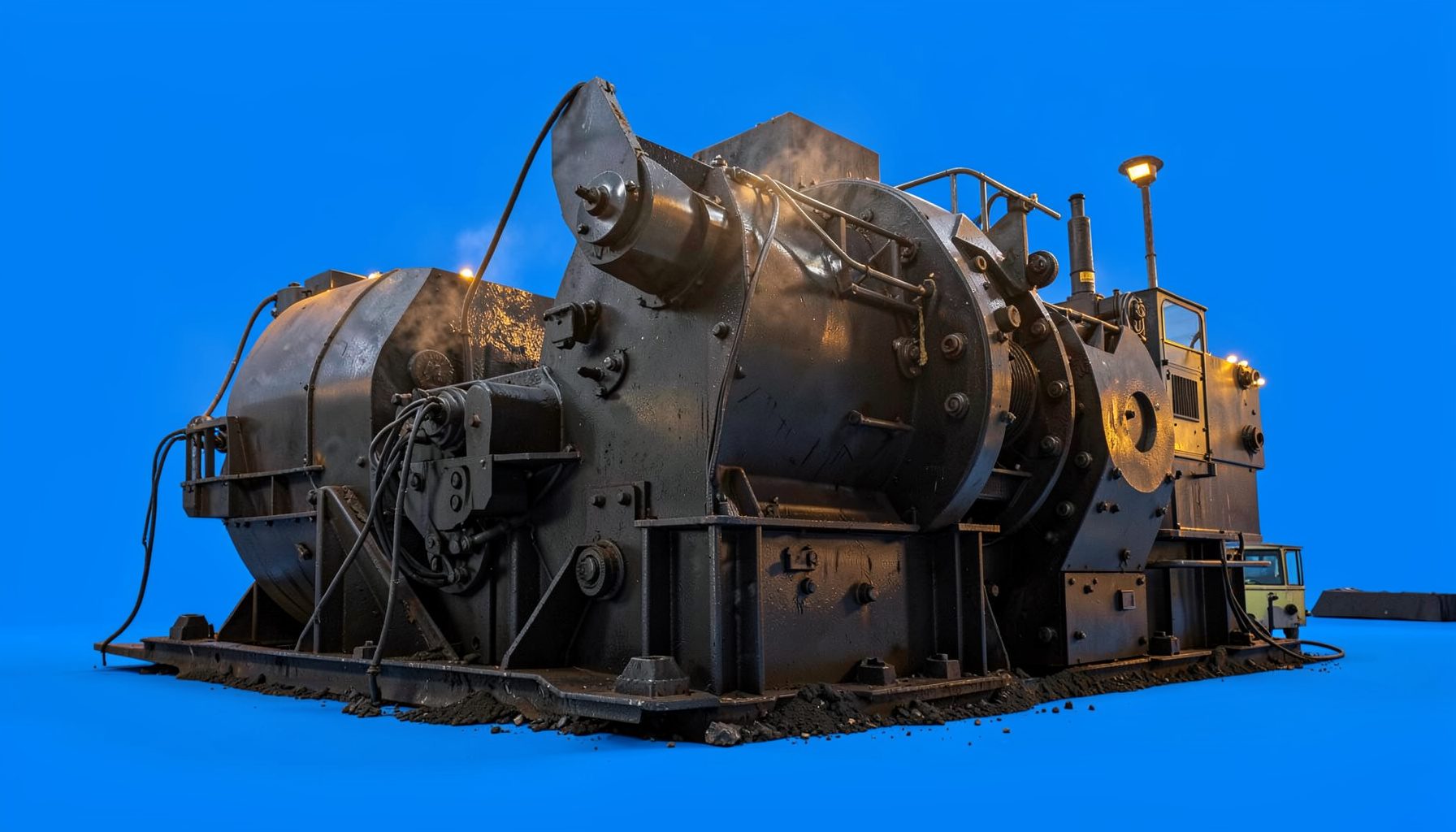
Verify crusher throughput with a controlled field test
Crusher throughput testing establishes whether a crusher can sustain a defined production rate while meeting the required product gradation. The useful figure is measured tonnes per hour (t/h) at a stated closed-side setting, feed condition and moisture level, not a catalogue maximum. Feed rate and finished-product rate should be reported separately whenever screening, washing, recirculation or stockpiling creates a difference.
A defensible trial links calibrated mass measurement with timed operating data and physical product samples. It records interruptions, diverted material, moisture and power draw, allowing another engineer to reproduce the result. The method applies to jaw, cone and impact crushers as well as mobile crushing plants, giving quarry managers and equipment suppliers an auditable basis for accepting capacity or diagnosing underperformance.
| Measurement method | Best suited to | Required control | Main limitation |
|---|---|---|---|
| Calibrated belt scale | Continuous crusher or plant output | Certified test mass and zero check | Scale can drift with belt tension and material loading |
| Stockpile survey | Fixed sites without a belt scale | Surveyed volume and measured bulk density | Moisture and compaction affect conversion |
| Calibrated hopper or feeder | Short feed-rate trials | Known feed density and gravimetric metering | Measures feed rather than finished product |
Define the test basis and production baseline
Define the operating basis before collecting data. State whether the acceptance rate is feed tonnes per hour or finished-product tonnes per hour, the target size and gradation, maximum fines, moisture basis, closed-side setting (CSS) and permitted downtime. These variables determine capacity, so a rate achieved at one CSS cannot be transferred to another setting without retesting.
At an Australian aggregate operation, acceptance may be tied to a buyer’s road-base specification rather than a nominal machine rating. Melbourne construction and quarry customers often impose delivery windows and site-access constraints, so plan enough time for normal truck movements without extending the trial only when operations are unusually quiet. Express all measurements in t/h, cubic metres and millimetres; do not mix a short-ton figure with Australian tonnes.
Build a baseline from at least three recent production shifts. Extract average feed rate, CSS, product gradation, moisture, power consumption, belt loading and stoppage causes from the control system or site logs. Remove commissioning days, major liner changes and abnormal feed conditions. This baseline reveals whether the test should confirm existing capacity, identify a bottleneck or challenge a supplier’s guaranteed performance.
Control feed condition and crusher settings
Use representative feed, preferably from the working face or a recently reclaimed stockpile. Take multiple small increments across several locations and depths, combine them, then split a laboratory sample; a single shovel scoop is not representative. Screen the feed and record size distribution, rock strength, shape, moisture and tramp material. A crusher fed only one narrow size fraction may show a rate that the normal quarry blend cannot sustain.
Measure moisture close to the trial because wet feed changes apparent tonnage, belt loading and screening efficiency. Use a validated moisture meter and confirm it against an oven-dry check when moisture is critical. Keep material in a covered container, record the sample time, and avoid presenting a wet-weight result as a dry-tonne result. For washed products, distinguish free water from water retained in the fines.
Set and verify the CSS after the crusher reaches operating temperature. Record chamber setting, liner condition, feed opening, eccentric position where applicable and screen-cut point. A worn liner, blocked chamber or incorrect toggle position can reduce the effective setting even when the displayed value is unchanged. Lock out the crusher while adjusting tools, and follow Safe Work Australia principles and the site-specific work health and safety plan, including exclusion zones, silica-dust and noise controls.
Choose reliable throughput measurements
Choose a mass method that matches the installation. A calibrated belt scale is usually best for continuous discharge because it provides a timestamped mass and rate, but verify zero, test with certified weights and check belt tension and loading. For a short trial, a certified hopper or gravimetric feeder can measure feed t/h. Weigh the finished crusher output instead when screens, transfers or wash water make the product flow more complex.
Where no scale exists, use a stockpile survey. Survey the before-and-after pile with RTK GPS, total station or laser, determine compacted bulk density and apply the measured conversion factor. Account for pile shape, bulking, compaction and the time interval between surveys. Loader-bucket counts can support logistics, but they are too uncertain for acceptance unless every bucket is calibrated and the material condition is stable.
For mobile-crushing fleets, field observations on tracking mobile plants show why travel, stockpiling and screening must be separated from crusher-only results. Record feeder setting, conveyor speed, track position and operating cycle while the machine is working so a stationary test does not credit time lost to movement or feed preparation. Use the same measurement boundary for every machine being compared.
Execute a steady-state test run
Complete pre-start checks on guards, lubrication, hydraulic pressure, feed routing, screen condition, belt tracking and emergency stops. Warm the crusher and let hydraulic oil, bearings and liners stabilise. Establish steady feed and adjust the CSS only within the test procedure. Whether the installation uses a fixed jaw, cone or impact crusher from Shanghai CME Mining and Construction Machinery Co., Ltd. or one of its mobile plants, the same controlled operating state is required before timing starts.
Run the measured interval after the circuit is full and stable. A practical trial often lasts 30 to 60 minutes, provided the feed remains representative and no significant feed interruption occurs. Start and stop the calibrated scale together with the product stream, and record start, stop and every stoppage separately. Exclude startup surge and depressurisation from the active measurement period rather than hiding it in an averaged rate.
Calculate throughput as net tonnes divided by exact elapsed hours. If a belt scale reports both gross and tare values, use the net mass; if material is diverted, report gross and accepted-product rates. Capture crusher current or power draw, oil temperature, CSS, feed rate and screen pressure at regular intervals. These trends reveal a plugged chamber, uneven loading or worn components that a single average t/h value would conceal.
Confirm product gradation and consistency
Sample the product while the trial is running. Take evenly spaced increments across the full belt width, combine them and split the sample for sieve analysis. Report retained sizes, fines percentage and, where relevant, particle-shape and density data against the specified gradation. The same cut points and sampling points should be used for baseline and trial runs, especially where a quarry is near Melbourne with mixed feed sources.
Confirm that the measured rate was sustainable and representative. Divide the run into shorter intervals and compare tonnes per interval, CSS, moisture and gradation; a high overall average can hide an early surge followed by starvation. Repeat a second sample set after any adjustment. If the crusher output feeds mineral recovery, keep crushing performance separate from extraction results; the silver leaching comparison shows how downstream chemistry can change outcomes independently of crusher capacity.
Check product consistency against the acceptance specification, not merely against the crusher’s feed rate. A machine may achieve excellent t/h while producing excessive dust, undersize or a poorly graded product, which can lower effective production after screening or rework. Record rejected tonnes, returned fines and downstream bottlenecks. Where product is sold into the Australian market, state the test against the applicable buyer or local specification so the commercial meaning of the result is clear.
Reconcile mass and investigate variance
Close the test with a mass balance. On a consistent wet or dry basis, dry feed tonnes should approximately equal the sum of finished product, accepted stockpile change, diverted tonnes, spillage and measured losses. Reconcile belt-scale totals with survey volumes and loader or truck movements, then investigate any gap. Set the tolerance before the trial; an internal screening target of about 5 percent is common, while contractual acceptance may require a tighter agreed limit.
Common causes of mismatch include an uncalibrated belt scale, moisture changing during the run, an inaccurate pile-density factor, material retained in screens or conveyors, and product diverted to a bypass. Recheck zero points, survey control, timestamps and stock boundaries before blaming the crusher. Repeat the balance after corrections, since a throughput claim based on incompatible measurements is not reliable.
Local weather can materially affect the figures. Dry conditions around Perth can make a wet-weight calculation look artificially high if moisture is assumed to be zero, while rain near Brisbane can raise feed moisture and reduce screening efficiency. Measure moisture and bulk density on the day, report wet and dry rates where necessary, and avoid comparing a dry Perth stockpile with a post-rain Brisbane feed as if the conditions were identical.
Document results and confirm capacity
Repeat the trial at least twice, preferably on separate reclaimed stockpiles or production blocks. A stable result within the stated tolerance supports acceptance; a result that changes sharply with feed gradation or moisture defines the operating envelope. Retest after maintenance or CSS changes and compare like-for-like records. Three valid runs are often more persuasive than one extended run because they reveal repeatability and setup sensitivity.
Issue a concise performance report with machine serial number, test date, feed source, feed gradation and moisture, CSS, liner and screen condition, belt settings, power data, gross and net t/h, product gradation, stoppages and mass-balance results. For imported test equipment, ask a licensed customs broker to verify the tariff classification, Australian Customs duty, GST and temporary-admission treatment. Crusher machinery generally falls within HS heading 8474, but the exact model and intended use must be confirmed.
For installations where serviceability and field support affect uptime, broader plant support resources can provide useful context for maintenance planning and mobile-to-fixed comparisons. Use them to improve the test protocol, not to replace site measurements. The final capacity claim should identify the exact configuration, feed and product conditions under which the stated t/h was achieved.
The verified result is then an operating statement: the measured production rate, product quality and repeatability at a defined CSS under recorded feed conditions. That evidence supports warranty discussions, procurement decisions and production planning while giving operators a clear reference for detecting future loss of performance.