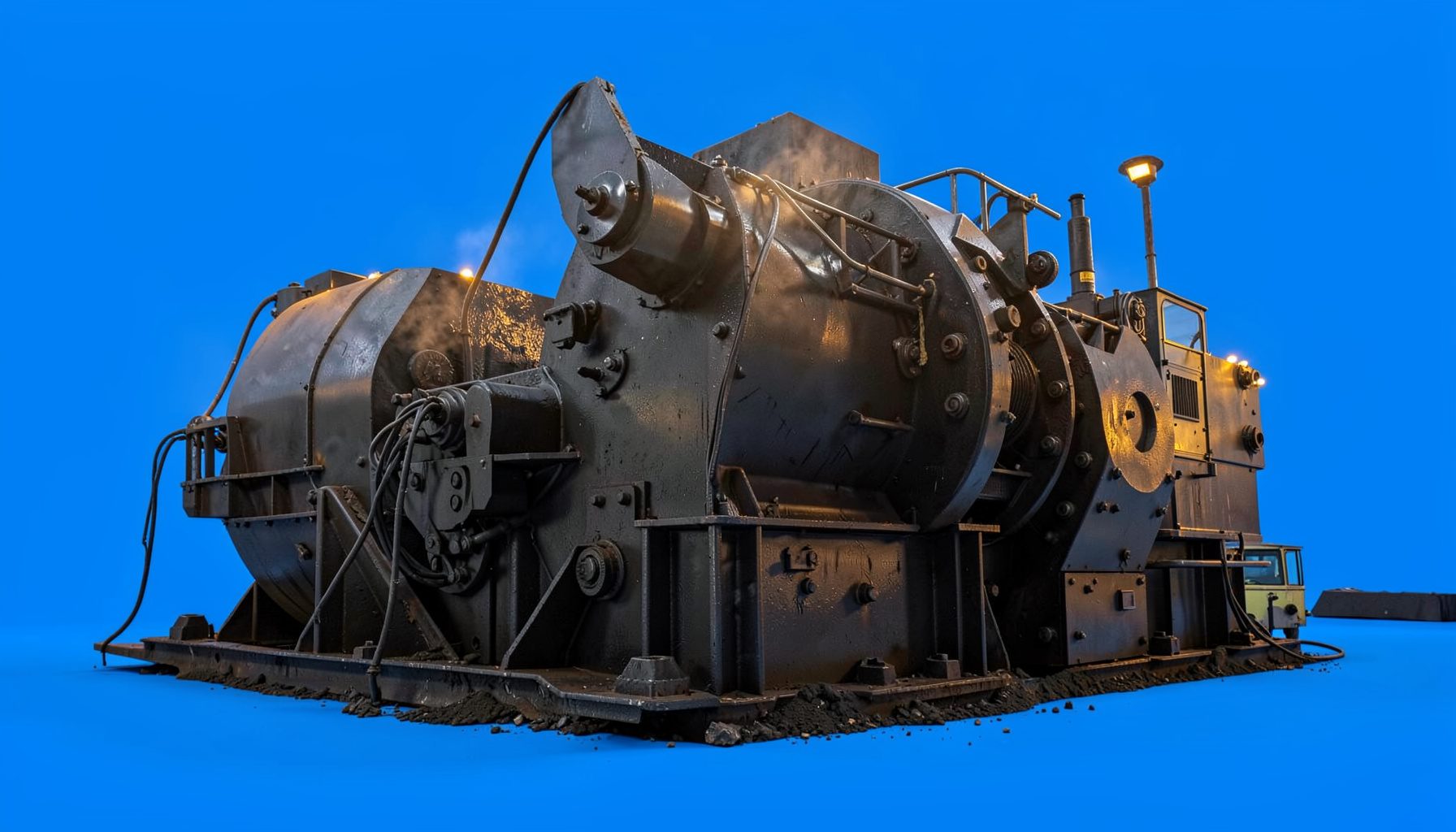
Hard rock jaw crushers for demanding quarry operations
For quarry managers in Australia, the choice of primary crushing equipment shapes every shift that follows. A hard rock jaw crusher sits at the front of almost every aggregate plant stretching from the basalt pits of the Hunter Valley to the gold-bearing ironstones of Western Australia's Goldfields. The wrong machine means choked feed boxes, blown toggle plates, and unplanned shutdowns; the right one keeps the whole chain moving downstream. Selecting one is less about brand loyalty and more about matching the machine to the rock, the haul distances, and the production tonnage the operation actually requires.
Australia's quarry sector feeds a constant appetite for road base, concrete aggregate, and railway ballast, particularly as Perth and Brisbane keep expanding outward and the inland rail corridor demands millions of tonnes of crushed stone. With operating costs rising across the country, decision-makers are paying closer attention to throughput per litre of diesel, wear-part life, and the safety standards set out by state mining regulators and Safe Work Australia. That makes the equipment selection conversation more nuanced than it was a decade ago, when any half-decent jaw would do the job.
Matching the crusher to the rock you mine
The first question an operations engineer in Kalgoorlie or Mackay should ask is the geological one: what is the bond work index of the face, and how abrasive is the ore? Granite, basalt, dolerite, and iron-bearing hematite each behave differently inside the crushing chamber. A high-silica basalt from a New South Wales quarry, for example, will punish swing jaw liners far faster than a softer sandstone, even when the closed-side setting is identical. Geological surveys and core sampling become essential first steps; a crusher sized on guesswork is rarely sized correctly.
Beyond hardness, the operator should weigh the presence of clays, fines, and moisture, especially in tropical Queensland where seasonal rains turn stockpiles into sticky masses. A jaw chamber that handles dry granite in the Pilbara may struggle with wet, clay-laden feed on the east coast. Variable feed conditions call for a wider discharge setting range and, often, a pre-screening grizzly to scalp fines before they enter the crushing chamber, protecting the wedge mechanism from packing.
Equally important is the feed size that the loader or excavator actually delivers. Australian quarries commonly operate with 70-tonne haul trucks dumping directly into the primary, which means the feed opening has to swallow rocks well over one metre across. Under-sizing the gape forces operators to use hydraulic hammers upstream, slowing the whole cycle. Visiting a manufacturer's crushing equipment gallery before purchase lets buyers compare measured feed openings against the largest boulder expected on site, rather than relying on brochure illustrations.
Production targets and tonnage calculations
Once the rock is understood, the conversation turns to throughput. A common trap is to look only at peak hourly rating and ignore the average day-long performance, which depends on feed availability, operator breaks, and the blasting pattern. A jaw rated at 700 tonnes per hour in the data sheet might realistically deliver 480 tonnes across a standard Australian 10.5-hour shift when downtime for blasting, refuelling, and tyre changes is factored in.
To size correctly, planners multiply the expected annual output by an availability factor that reflects the local climate and shift pattern. Sites in remote Northern Territory often run 24-hour fly-in fly-out rosters, which push availability above 90 percent, whereas metropolitan quarries outside Adelaide tend to operate single daily shifts to satisfy noise restrictions, capping effective utilisation. The chosen crusher should comfortably exceed the realistic peak demand, leaving headroom for harder zones, harder rock, or expanded contracts.
Australians also place weight on the electrical versus diesel question. Mains-powered units suit urban and suburban operations linked to the grid, while diesel-hydraulic machines dominate remote sites where running a high-voltage line from Horizon Power or Ergon Energy would be uneconomical. The maintenance schedule, refuelling logistics, and exhaust management plan each need to match the chosen power source, or the tonnage target quietly evaporates.
Chamber profile and toggle geometry
The chamber profile of a jaw crusher is not a single figure but a relationship between the fixed jaw, the moving swing jaw, and the toggle angle. A steeper nip angle improves reduction at one stroke but raises liner wear, while a flatter chamber suits abrasive rock at the cost of cubicity. Quarry operators in the Pilbara typically favour aggressive chambers for high tonnage, accepting more frequent liner changes in exchange for throughput. By contrast, hard-rock aggregate producers near Melbourne and Geelong, supplying the city's concrete market, often prioritise a flatter chamber that delivers a cleaner product shape with fewer slabs.
Toggle plate design has evolved considerably. Modern composite toggle plates last substantially longer than the older manganese designs and cushion the machine against tramp metal, which matters when excavator buckets accidentally introduce broken teeth or ground-engaging tools. A reliable hydraulic assist for toggle adjustment also shortens setting changes from half a shift to under an hour, freeing labour and reducing exposure to the hazards flagged in the state's mining and quarrying safety notices.
Selecting the chamber also involves thinking about what the downstream cone or screen can handle. A jaw that produces too many fines forces the secondary cone to work harder on material it was never sized for, accelerating liner wear across the entire circuit. Smart operators therefore balance jaw reduction with the capacity curves of downstream machines, ideally using a flowsheet simulation before committing. Reviewing an integrated products catalogue that combines jaw, cone, and screen data makes this kind of planning far more efficient.
Mobility and on-site flexibility
Hard rock quarrying does not always stay in one place; pits migrate as the resource is exhausted, and many Australian operations expand from one face to another without rebuilding the plant. For these sites, a track-mounted primary offers compelling value because it travels between benches, follows the loader, and eliminates the need for a permanent conveyor network. A track-mounted mobile crusher is especially attractive for smaller contractors servicing rural road projects through New South Wales and Queensland, where each new contract begins on a greenfield site with no infrastructure in place.
Mobility comes with trade-offs. Wheeled or tracked units carry a weight penalty, which constrains the maximum feed opening and motor power compared to a fixed plant. For high-tonnage iron ore or copper operations, a stationary or skid-mounted primary paired with a long conveyor remains more productive. The choice usually comes down to whether the operation values flexibility or raw hourly output, and most quarries work that trade-off into their five-year plan rather than treating it as a short-term decision.
Local regulations also influence the verdict. Several Australian councils and state environment authorities apply stricter noise and dust limits to mobile plants that move closer to residential areas, which is why urban recycle yards and inner-city quarries often prefer stationary or semi-fixed installations. Builders working alongside infrastructure projects for Main Roads Western Australia or Transport for NSW also factor in the contractor's own rules, since permit conditions frequently cap on-site crushing windows to protect nearby communities.
Maintenance, wear parts and long-term value
A jaw crusher is a long-term purchase, and the cheapest unit on the quotation sheet often ends up the most expensive once wear parts are counted. In hard-rock Australian conditions, swing jaw and fixed jaw liners typically need replacement every four to twelve weeks, depending on rock type and CSS. Cast manganese liners remain the workhorse choice for very abrasive applications, while ceramic-composite inserts have earned a reputation for extending service life in iron ore and taconite operations.
Servicing access matters more than brochures suggest. Side doors that swing wide, hydraulically lifted wedges, and modular toggle assemblies turn a four-hour liner change into a much shorter task. For remote operators who fly fitters into the Pilbara, this directly affects whether the site runs at planned output or suffers chronic stoppages waiting on parts. Australian buyers increasingly ask vendors to demonstrate change-out procedures rather than accept written guarantees.
The local supply chain also plays a role. Wear parts shipped from overseas factories can take several weeks by sea, and quarries in Tasmania or far north Queensland have learned to hold generous spares inventories. Vendors with regional warehouses in places like Townsville, Wagga Wagga, or Perth reduce downtime and let operations keep maintenance crews productive. A well-supported crusher, paired with reliable parts logistics, tends to outproduce a cheaper unit that sits idle waiting for a wear plate to clear customs.