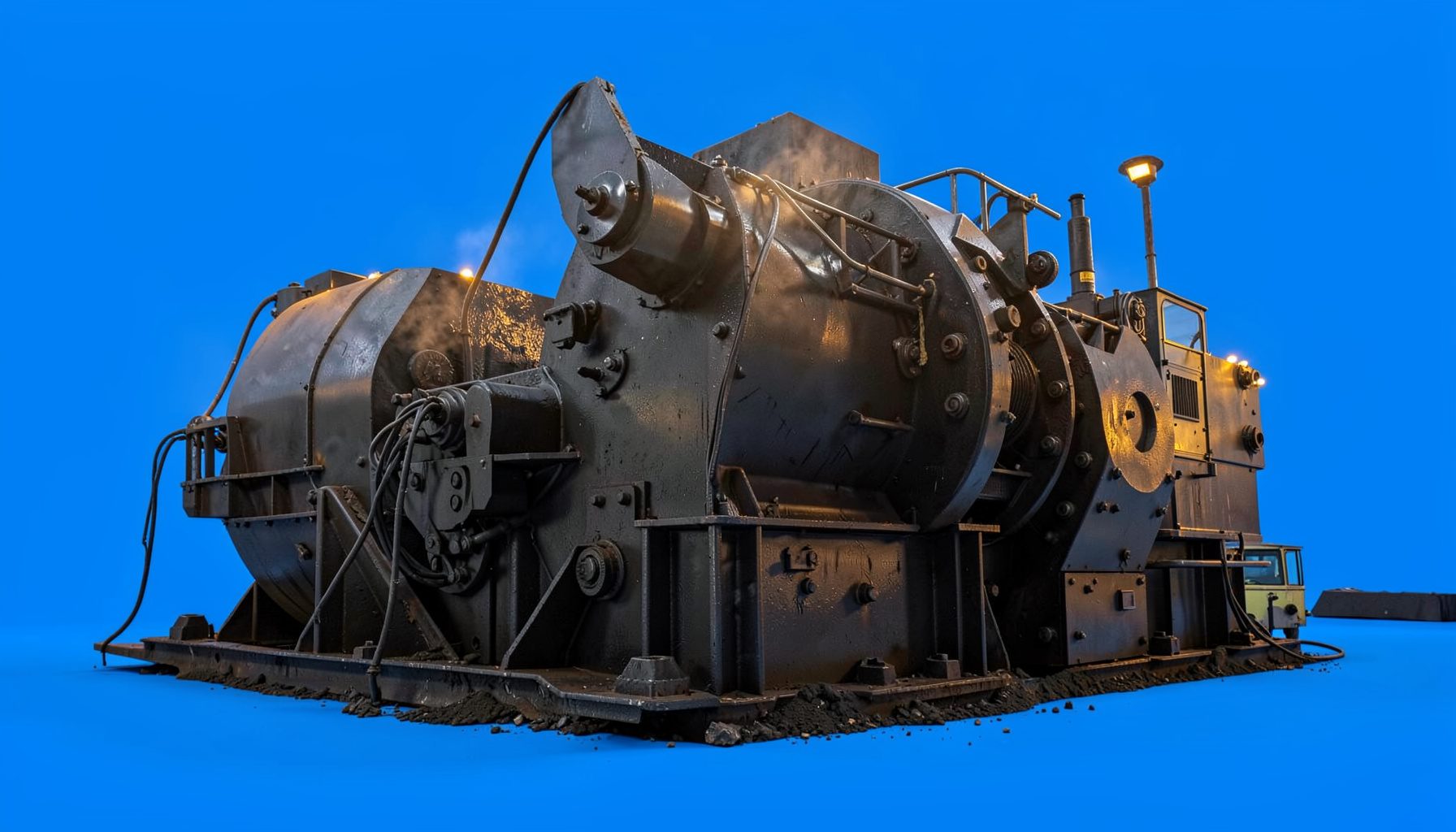
Aggregate washing systems for drought-prone quarry operations
Australia's quarries operate on one of the driest inhabited continents, where a failed wet season can reshape the economics of an entire aggregate operation. From the Pilbara iron-ore belt to basalt quarries outside Melbourne, producers have learned that reliable water supply cannot be assumed. Water-efficient aggregate washing systems have moved from sustainability aspiration to procurement priority, especially for projects in New South Wales and Queensland.
Modern wash plants must now deliver clean, in-specification product while consuming a fraction of the water once considered standard. Closed-loop circuits, dry screening, and hybrid configurations have shifted from niche curiosity to mainstream specification, particularly for remote sites where bore water is expensive and discharge permits are difficult to secure.
The water reality in Australian quarrying
The climate story behind the equipment choice begins with rainfall variability. Perth's dams have repeatedly dropped below 30% capacity in the past decade, and similar stress affects catchments serving Adelaide, Toowoomba and regional Western Australia. For quarry operators, this translates into higher bore pumping costs, restricted draw rates, and tighter scrutiny from state water authorities. In the Pilbara, dewatering and dust-suppression demand already compete with nearby mine operations, and a wash plant that consumes 4-5 cubic metres of fresh water per tonne of feed is becoming a serious liability.
Compliance pressure compounds the issue. New South Wales and Victoria have moved to enforce stricter sediment and turbidity limits on site discharge, and Queensland's Department of Resources has begun reviewing water-take licences for hard-rock quarries near the Great Artesian Basin fringe. Aggregate producers supplying infrastructure works for the Sydney Metro or the Western Sydney Aerotropolis must demonstrate responsible water stewardship to remain on tender lists. Local councils, particularly in the Hunter and Illawarra regions, increasingly require a site water balance as part of development approval.
Dry and semi-dry alternatives to traditional wash plants
The most direct answer to scarce water is to avoid water altogether. Dry and semi-dry systems use air classification, vibrating screens, and high-velocity air streams to separate fines from coarse aggregate without the slurries that define conventional sand washing. For quarries in Western Australia's goldfields or the iron-rich ranges of South Australia, where clay content is moderate, these systems can produce a saleable product with no process water at all.
Semi-dry configurations go further by combining dry screening with a controlled mist or fog system that suppresses dust while still enabling fines removal. The result is a marketable sand fraction with dramatically lower water demand. Sand production plants near Kalgoorlie and Albany have piloted this approach to supply concrete aggregate for mining camp construction, where carting washed sand over long distances is uneconomic.
| Method | Typical water use (m³/t) | Product quality | Best site conditions |
|---|---|---|---|
| Traditional wet wash | 3.0 – 5.0 | Highest, cleanest | Areas with secure water permits |
| Semi-dry air classification | 0.2 – 0.5 | Good for concrete sand | Low-clay feed, dry climate |
| Water-recycling wet wash | 0.4 – 1.0 | Equivalent to wet wash | Most sites with settling ponds |
| Hybrid dry + rinse | 0.8 – 1.5 | High, flexible | Variable feed, premium product |
These alternatives do carry trade-offs. Dry systems struggle with high-clay or highly weathered feed, and dust-suppression hoods require careful maintenance. For producers supplying concrete-grade sand under AS 2758 specifications, a dry-only line may not meet the silt content limit. The configuration chosen must always reflect the deposit, not just the climate.
Water recycling and closed-loop designs
Where wet washing is unavoidable, the priority shifts to reusing every drop. Closed-loop wash plants route effluent through hydrocyclones, dewatering screens, and lamella thickeners before returning clarified water to the spray bars. A well-designed system can recycle 85-95% of process water, reducing fresh-water draw to a small top-up that accounts for evaporation and moisture lost with the product. In regional Victoria, several basalt quarries have achieved recycling rates above 90% simply by adding a properly sized settling tank and an automatic flocculent dosing unit.
The economics improve further when dewatered sand is the desired product. Dewatering screens on a closed circuit crushing line can drop product moisture to around 12-15%, acceptable for most road-base and concrete applications. Combining a dewatering screen with a cyclone cluster creates a flexible split: coarse material is dewatered by vibration while the fines pass through the cyclone for thickening and water recovery.
Operators should still plan for blowdown. Even the most efficient closed loop accumulates dissolved salts and ultrafine solids that must eventually be discharged or used on-site for dust suppression. Many Australian sites now install dedicated geotextile-lined polishing dams to meet EPA requirements for suspended solids before any release.
Hydrocyclone and dewatering screen combinations
Cyclones and dewatering screens form the workhorse pairing of modern water-efficient wash plants. Hydrocyclones separate fine sand from wash water using centrifugal force, with underflow reporting to the dewatering screen for moisture reduction and overflow returning to the process sump. The pairing handles feed variations well, which matters in Australia where a single storm event can dump weeks of fines into a stockpile.
For operations with high silt content, log washers or attrition cells can be added upstream. These agitated tanks scrub clay-bound fines from coarse aggregate before the material reaches the main wash screen, protecting the cyclones from overloading. Plants supplying the M1 Pacific motorway upgrade between Sydney and Newcastle have used this configuration to process highly weathered sandstone feed that would otherwise blind conventional screens.
The capacity match between cyclone, screen, and pump matters more than brand selection. A cyclone that is too small produces a sandy overflow that pollutes the water circuit, while a screen with insufficient vibration capacity leaves the product too wet for direct sale. For a typical 200-tonne-per-hour operation, a 360 mm cyclone paired with a 2.4 m dewatering screen is a common starting point, though remote Pilbara sites often require one size larger to compensate for feed variability.
Modular and containerised wash plants
Mobility matters when water availability changes between projects. Modular wash plants built into containerised frames can be relocated as a single unit, allowing operators to move production closer to a secure water source or away from a community under drought restrictions. For contract washing businesses serving the Bowen Basin coal sector and remote Queensland road projects, this flexibility avoids the cost of building permanent infrastructure where water permits are temporary.
Containerised plants also simplify commissioning. Skid-mounted pumps, pre-plumbed cyclone manifolds, and pre-wired control cabinets mean a new wash line can be operational within days of arrival. The same logic that supports remote construction in the outback now supports fast deployment of aggregate washing systems onto new civil contracts across Australia's east coast. Some operators pair their mobile wash plant with a complete plant configuration that includes a feed bin, conveyor, and radial stacker, reducing on-site engineering.
The constraint is transport width. Modules wider than 2.5 m require special permits on many Australian roads, particularly through the Blue Mountains and winding coastal routes. Reputable suppliers size their skids to standard ISO container dimensions to keep road transport straightforward, and to allow the unit to be shipped internationally when a project migrates to Indonesia, the Pacific, or back to Africa.
Sensor integration and real-time monitoring
Water efficiency improves further when operators can see what is happening in real time. Turbidity sensors, flow meters, and pressure transmitters now feed directly into the plant's PLC or SCADA system, allowing automatic adjustment of pump speeds, water addition, and flocculent dosing. A wash line fitted with turbidity monitoring integration can detect a rising silt load in the recirculation water and trigger a controlled bleed before product quality is compromised.
For quarries in regulated catchments, this visibility is also a compliance asset. Continuous turbidity records stored on the SCADA historian support site discharge reporting and provide evidence of responsible operation to the regulator. In the Hunter Valley, where coal and aggregate operations share waterways, this kind of data trail has become a routine requirement in environmental management plans.
The investment is modest relative to a full wash plant. A modern multi-parameter probe with auto-clean costs a fraction of a single cyclone, and the payback in reduced water, chemical, and reject handling is usually under twelve months. When tied to cloud reporting, the same data allows head office to benchmark multiple sites and identify where a site is drifting from best practice.
Selecting the right configuration for your site
The right water-light aggregate washing system depends on three site-specific factors: feed characteristics, product specification, and water access. A hard-rock basalt quarry in western Victoria with a secure bore and a settled water licence will choose a different configuration to a sandstone operation in central Queensland where bores are unreliable and clay content is high. A site producing only road-base may accept 18% moisture on the dewatering screen, while a site supplying concrete aggregate for a high-rise project in Brisbane's CBD needs sand below 12% moisture.
Producers should also consider the long-term product mix. A wash plant that fits today's asphalt sand requirement may need to be reconfigured in five years if the operation pivots toward manufactured sand for concrete. Modular designs that accept additional cyclones, thicker capacity, or extra dewatering stages give that flexibility. Reviewing the broader washing product catalogue of available options, and discussing with the manufacturer how each module can be added later, is often the cheapest insurance against future rework.
The final step is a written water balance. Calculating the site's expected water use, recovery, and discharge under normal and worst-case conditions reveals whether the proposed system will hold up through a hot, dry summer. Operations that complete this exercise before purchase rarely face a water-driven shutdown; those that skip it often do.