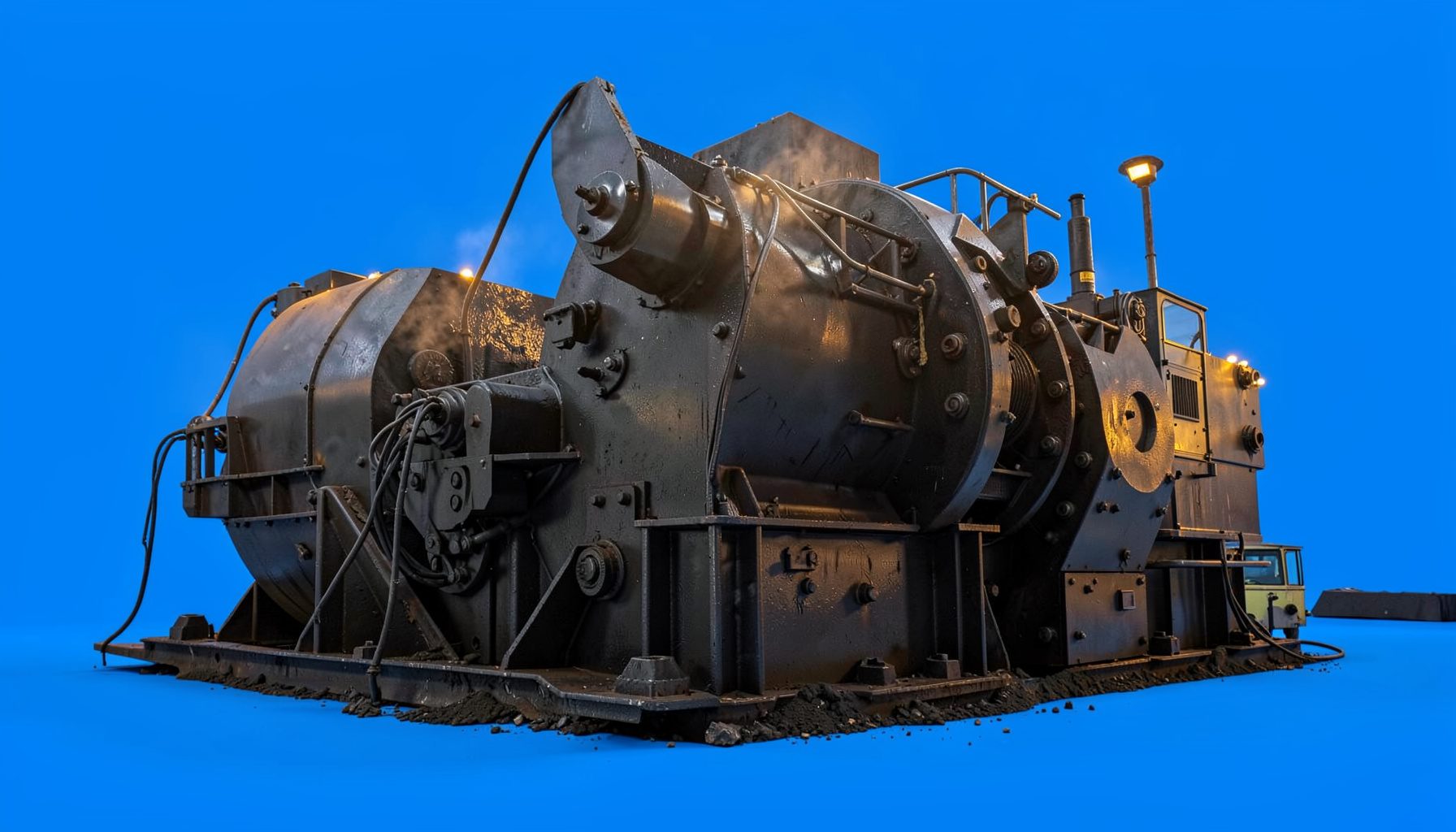
A guide to selecting the perfect sand-making machine for your needs
Australia is in the middle of one of its busiest infrastructure-building periods in decades. Major projects in Sydney, Melbourne, and Brisbane, combined with resource developments across the Pilbara and Bowen Basin, are creating sustained demand for manufactured sand that meets strict Australian Standards. At the same time, regulators in New South Wales, Victoria, and Western Australia have progressively restricted river-sand extraction, forcing quarries and contractors to rely more heavily on mechanical crushing and shaping equipment.
Choosing the right sand-making machine shapes far more than the final product. It influences energy consumption, wear-part budgets, water usage, and whether a site can keep operating under local noise and dust limits. Operators in regional Queensland or the Pilbara also have to think about long lead times for spare parts and the challenges of servicing equipment on remote fly-in fly-out rosters. The sections below walk through the practical choices an Australian buyer has to make.
Understanding the main sand-making machine types
Sand is no longer a by-product. In most modern Australian quarries, fines are deliberately produced and classified to feed concrete plants, asphalt plants, and even engineered fill used in road base. The machines that produce this material fall into a few distinct categories, and each behaves differently with the abrasive, often iron-rich feed found in places like the Hawkesbury sandstone near Sydney or the granites of the Pilbara.
Vertical shaft impact crushers, often abbreviated as VSI or VSI5X units, use a rock-on-rock or rock-on-metal crushing chamber to fracture feed material. They are widely used around Melbourne and Brisbane for shaping concrete sand because they tend to produce cubical grains with fewer flaky particles. Horizontal shaft impact crushers, or HSI machines, deliver higher reduction ratios in a single pass and are often preferred for softer feed such as the limestone processed across parts of South Australia.
Cone crushers, while traditionally used for coarse aggregate, are increasingly configured for sand production through fine crushing chambers and small eccentric throws. Plants that already run a cone in the secondary stage can sometimes retrofit it for sand duty, and resources on improving cone crusher throughput explain how chamber geometry and CSS settings influence fines output. Fine jaw crushers and double-roller crushers sit at the lower end of the capacity scale and are mostly seen in smaller regional operations.
Key technical specifications worth comparing
Once the broad category is chosen, the next step is matching machine specifications to the actual feed and product targets. The most important numbers to look at are maximum feed size, rotor or roller diameter, installed motor power, throughput at a given CSS setting, and the resulting product gradation curve.
For Australian quarries, throughput matters as much as peak capacity. A machine rated at 200 tonnes per hour on a clean limestone feed will behave differently when processing the iron-stained basalt common around Bunbury in Western Australia or the variable hornfels near Canberra. Buyers should always ask vendors for curves plotted against Work Index or abrasive index rather than relying on brochure figures.
Rotor speed is another quiet but critical parameter. Higher rotor speeds in VSI units tend to produce finer, better-shaped particles, but accelerate wear on anvils and throwing shoes. Wear material selection, including whether the rotor uses high-chrome iron or tungsten carbide inserts, has a direct effect on cost per tonne in abrasive Australian conditions. Discharge grading, including the number and angle of screen decks that follow the crusher, decides whether the plant needs extra classification or whether a single pass delivers finished sand.
Other specifications often overlooked include the noise level at seven metres, the dust suppression injection points, and whether the lubrication system is rated for ambient conditions above 45 degrees, which is common at inland sites like Mount Isa or Broken Hill during summer. A machine that performs well in a temperate climate can struggle in the Outback heat without the right oil-cooling package.
Comparing common sand-making machine configurations
The summary below shows the typical operating envelope for the four configurations most often considered by Australian buyers.
| Machine type | Best feed size | Typical capacity (t/h) | Product shape | Wear part cost | Ideal application |
|---|---|---|---|---|---|
| Vertical shaft impact (VSI) | Up to 50 mm | 60–500 | Cubical, low flakiness | Moderate to high | Premium concrete sand, manufactured sand for mortars |
| Horizontal shaft impact (HSI) | Up to 300 mm | 100–800 | Angular, slightly flaky | High | Soft to medium rock, large-scale quarry fines |
| Fine cone crusher | Up to 60 mm | 80–400 | Rounded, well-graded | Low to moderate | Sand from hard basalt and granite, retrofit projects |
| Double-roller crusher | Up to 30 mm | 30–150 | Flat, flaky if mis-set | Low | Small regional operations, brick and block sand |
A VSI is usually the right answer when the target product is a premium manufactured sand that has to meet strict grading and shape criteria in metro markets. HSI units suit high-volume quarries where output tonnage matters more than shape, especially when the feed is relatively soft. Fine cone crushers win where producers already own a cone chassis and want to add a sand circuit without a major rebuild. Roller presses are best kept for niche applications such as brick-making sand in regional Victoria, where volumes are modest and capital budgets are tight.
Larger operations often combine a primary jaw, a secondary cone, and a tertiary VSI to deliver a complete plant that produces coarse aggregate, road base, and sand in a single layout. Vendors that supply integrated complete crushing plants can usually pre-engineer the conveyors, screens, and classification towers so that the plant arrives in only a handful of modules and can be commissioned faster on remote sites.
Australian site conditions and regulatory considerations
Local rules shape equipment selection as much as geology does. In New South Wales, the Environment Protection Authority requires dust emissions from crushing plants to be controlled through water sprays or enclosure, and noise limits at residential receivers are typically set around 35 to 40 dBA during night operations. Victorian quarries around the Mornington Peninsula and Geelong face similar but slightly different rules under Environment Protection Authority Victoria guidelines.
Western Australia applies its own framework through the Department of Mines, Industry Regulation and Safety, which requires mine operators in the Pilbara and Goldfields to lodge mine plans that include noise, dust, and vibration management. Queensland operators face additional obligations under the Environmental Protection Act, particularly when crushing plants are within a kilometre of sensitive receptors, which is common around growing centres like Toowoomba and Cairns.
Water availability is a recurring constraint. Many inland sites have limited allocation under their state water licensing regimes, so wet sand production systems that recirculate process water are increasingly favoured over dry-only configurations. Some operators near the Murray-Darling Basin also have to manage sediment-laden runoff under the Basin Plan, which influences how wash water is contained and recycled.
Transport logistics matter too. A 30-tonne crusher delivered from a port like Fremantle or Botany Bay still needs to travel sealed roads to reach a remote quarry, and permit rules for over-dimensional loads differ by jurisdiction. Plants designed in modules that fit standard 40-foot containers are easier to move around sites that shift every few years, a common pattern in contracting crushing work in regional New South Wales.
Total cost of ownership, parts, and after-sales support
Capital cost is the easiest number to compare, but it rarely tells the full story on an Australian site. The bigger drivers over a five-year horizon are wear-part consumption, energy draw, downtime, and the speed at which replacement rotors, anvils, or rollers can be sourced and fitted. A machine that looks cheaper on a quote can quietly cost more per tonne once those factors are included.
Spare-part logistics deserve close attention. Components shipped from overseas manufacturing hubs can take several weeks to clear customs at major ports and reach sites in the Kimberley or far north Queensland. Buyers should confirm whether the manufacturer holds regional consignment stock, what the agreed lead time is for wearing parts, and whether technical service teams can be dispatched from Australian bases. Reading the manufacturer profile often reveals the size of the global service network and where authorised agents are located.
Local commissioning and operator training are equally important. A well-designed sand-making machine can still underperform if operators are unsure how to tune CSS, rotor speed, or feed distribution. Suppliers that include structured training and remote diagnostics tend to deliver higher availability in the first twelve months, which is when most wear and process issues surface.
Finally, think about the full project life. A quarry near a growing regional centre like Warrnambool or Bundaberg may expand over the next decade, while a contract crushing job on a remote iron ore project may only run for two years. The ideal machine is the one that matches both the technical requirements on day one and the likely operational scenario across the asset's working life, backed by a service network that can keep it running through long Australian summers and the occasional cyclonic deluge along the Top End.